“You brought poke bowls? That’s a party!” my friend said, eyes lighting up as I rolled in with containers filled with vibrant cubes of marinated fish and a rainbow of toppings. Honestly, I wasn’t even sure if a poke bowl bar would work for a casual backyard luau-themed get-together. But as everyone gathered, mixing their favorite combos, laughter and chatter filled the air. The bright colors, bold flavors, and that unmistakable fresh ocean aroma transported us to an island vibe, no matter the city heat. It wasn’t planned to be a big deal—just something quick and fun after a long week—but it turned into this unforgettable, relaxed feast.
I remember watching my neighbor, who’s Hawaiian, casually assemble his bowl, nodding approvingly at the balance of textures and flavors. That moment made me realize how much this Fresh Hawaiian Luau Poke Bowl Bar with Colorful Toppings wasn’t just about food—it was about sharing a little aloha spirit, the joy of customization, and the simple beauty of fresh ingredients coming together. Since then, I’ve found myself making poke bowls at home more often, tweaking toppings and sauces, and honestly, it’s become my go-to for easy entertaining that feels fancy without the fuss.
What stuck with me was how approachable and vibrant this poke bowl bar is. It’s not just a recipe—it’s a little celebration in a bowl, inviting everyone to play with flavors and colors. And you know, in a world where meals can sometimes feel rushed or repetitive, this one quietly reminds you to slow down just a bit and savor the freshness. That’s why I keep coming back to this recipe and sharing it with friends. It’s my little island moment on a plate, anytime I need a break from the daily grind.
Why You’ll Love This Fresh Hawaiian Luau Poke Bowl Bar Recipe
After testing and tweaking this poke bowl bar more times than I can count, I can say it really hits the mark on flavor, ease, and fun. Whether you’re hosting friends or just craving something fresh and colorful, this recipe delivers. Here’s why it’s become a favorite:
- Quick & Easy: You can pull together the marinated fish and toppings in under 30 minutes, making it perfect for busy weeknights or impromptu gatherings.
- Simple Ingredients: Most items are pantry staples or easy to find at your local market—no exotic shopping runs required.
- Perfect for Casual Entertaining: Setting up a poke bowl bar invites everyone to customize their own bowls, adding a fun interactive element to dinners or parties.
- Crowd-Pleaser: From kids to adults, the combination of fresh fish, crunchy veggies, and savory sauces always gets rave reviews.
- Unbelievably Delicious: The marriage of tender marinated ahi tuna, nutty sesame notes, and bright, crisp toppings makes this bowl a flavor-packed comfort food.
What really sets this poke bowl apart is the balance of textures and the vibrant, colorful toppings that add more than just looks. The marination technique—using a blend of soy, sesame oil, and a touch of sweetness—really lets the fish shine without overpowering it. Plus, setting it up as a DIY bar is a total game-changer. It’s not just another poke bowl; it’s a fresh, festive experience that brings people together, no stress or fuss involved. Honestly, it’s like bringing a little Hawaiian sunshine right to your table.
What Ingredients You Will Need
This Fresh Hawaiian Luau Poke Bowl Bar relies on simple, wholesome ingredients that work in harmony to create bold flavors and satisfying textures without complicated prep. Most ingredients are staples or easy substitutes if needed.
- For the Poke Base:
- Fresh ahi tuna, sashimi-grade, cut into ½-inch cubes (quality matters here—look for bright color and firm texture)
- Soy sauce (I prefer Kikkoman for a balanced salty flavor)
- Sesame oil (toasted, for that nutty aroma)
- Rice vinegar (adds a subtle tang)
- Honey or brown sugar (a touch of sweetness to balance)
- Fresh ginger, grated (adds a zingy freshness)
- Garlic, minced (for depth)
- Green onions, thinly sliced (for mild onion flavor)
- Red pepper flakes or togarashi (optional, for a kick)
- For the Base of Bowls:
- Short-grain sushi rice, cooked and slightly cooled (sticky enough to hold but fluffy)
- Or substitute with mixed greens or cauliflower rice for a lighter option
- Colorful Toppings:
- Cucumber, thinly sliced or diced (refreshing crunch)
- Avocado, diced or sliced (creamy texture)
- Shredded carrots (adds sweetness and color)
- Edamame, shelled and cooked (nutty protein boost)
- Pickled ginger (bright, tangy contrast)
- Seaweed salad (adds umami and vibrant green color)
- Radish slices (for peppery crunch)
- Sesame seeds, toasted (nutty finish)
- Crispy fried onions or garlic chips (texture pop)
- Fresh cilantro or microgreens (herbal brightness)
- Optional Sauces & Garnishes:
- Spicy mayo (mix mayo with sriracha to taste)
- Unagi sauce (sweet soy glaze)
- Wasabi or wasabi mayo (for heat)
- Fresh lime wedges (to squeeze over)
For a gluten-free version, swap regular soy sauce with tamari. And if sashimi-grade tuna isn’t available, salmon can be a delicious alternative. In summer, I love swapping the seaweed salad for fresh mango chunks for a tropical twist. These tweaks keep the poke bowl bar fresh and exciting every time.
Equipment Needed
Setting up a poke bowl bar doesn’t require fancy kitchen gadgets, but having the right tools helps keep prep smooth and quick.
- Sharp chef’s knife: Absolutely necessary for cutting fish and veggies cleanly and safely. A dull blade makes prep frustrating and uneven.
- Cutting board: Preferably separate boards for fish and veggies to avoid cross-contamination.
- Rice cooker or heavy pot: For perfectly cooked sushi rice. I’ve found a rice cooker can be a lifesaver for consistent results.
- Mixing bowls: Multiple sizes for marinating the fish, tossing toppings, and mixing sauces.
- Measuring spoons and cups: For precise seasoning in the marinade.
- Serving bowls or trays: To lay out the rice, fish, and toppings attractively for the poke bowl bar.
- Small serving spoons or tongs: For guests to easily assemble their bowls.
If you don’t have a rice cooker, no worries—a heavy-bottomed pot with a tight-fitting lid works just fine. I prefer using ceramic or glass bowls for serving because they hold temperature well and look inviting. For those on a budget, repurposing small glass containers or even colorful bowls you already own can add charm without extra expense.
Preparation Method
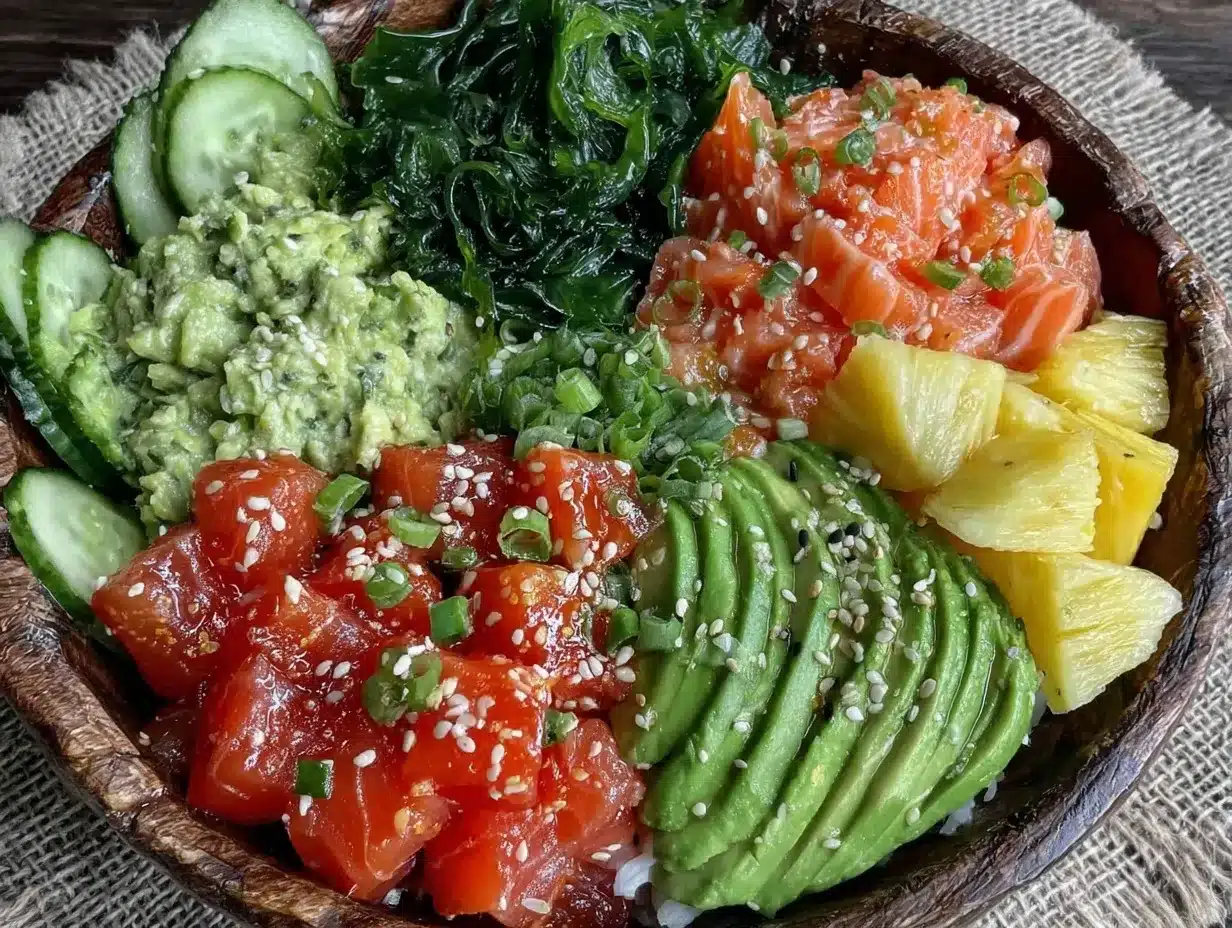
- Cook the rice: Rinse 2 cups (400 g) of short-grain sushi rice under cold water until the water runs clear to remove excess starch. This prevents the rice from being too sticky. Cook in a rice cooker or on the stove with 2 ¼ cups (530 ml) water. Once cooked, fluff gently with a fork and let cool slightly for about 15 minutes.
- Prepare the poke marinade: In a medium bowl, whisk together ¼ cup (60 ml) soy sauce, 1 tablespoon (15 ml) toasted sesame oil, 1 tablespoon (15 ml) rice vinegar, 1 teaspoon (5 ml) honey or brown sugar, 1 teaspoon (2 g) grated fresh ginger, and 1 minced garlic clove. Stir in 1 tablespoon (6 g) thinly sliced green onions and red pepper flakes to taste if using.
- Marinate the fish: Add 1 pound (450 g) of cubed sashimi-grade ahi tuna to the marinade. Toss gently to coat every piece, cover, and refrigerate for 10–15 minutes. Don’t marinate longer than 20 minutes or the acid will start to “cook” the fish, changing its texture.
- Prep the toppings: While the fish marinates, wash and prepare all toppings: slice cucumber thinly, dice avocado just before serving to avoid browning, shred carrots, cook edamame according to package instructions, slice radishes, and drain seaweed salad. Toast sesame seeds in a dry skillet over medium heat for 2 minutes until fragrant, stirring constantly to avoid burning.
- Arrange your poke bowl bar: Set out the cooked rice or greens in a large bowl or platter. Place the marinated fish in a shallow dish. Arrange each topping in small bowls or platters with serving spoons or tongs for easy access. Include sauces like spicy mayo and unagi sauce in squeeze bottles or small bowls for guests to drizzle.
- Assemble and enjoy: Invite everyone to build their own bowls. Encourage mixing textures and colors for the full Hawaiian luau experience. Suggest sprinkling toasted sesame seeds and a squeeze of fresh lime for that finishing touch.
Quick tip: If the rice cools too much and becomes firm, sprinkle a few drops of water and gently fluff to bring back softness. Also, keep the avocado separate until serving to maintain its bright green color. I once left it prepped too early and ended up with a mushy mess—lesson learned!
Cooking Tips & Techniques
Getting poke bowls just right is all about balance and freshness. Here are some tips I picked up along the way:
- Use sashimi-grade fish: This isn’t just a safety recommendation; it also guarantees the best texture and flavor. Always buy from trusted sources.
- Marinate briefly: The fish only needs 10–15 minutes to soak up the marinade flavors without losing its fresh texture. Over-marinating can make it mushy.
- Rice texture matters: Sushi rice should be sticky but not mushy. Rinsing it properly before cooking is key. If you want to skip rice, mixed greens or cauliflower rice make excellent bases.
- Balance your toppings: Combining crunchy, creamy, and tangy elements keeps every bite interesting. I always include something pickled, like ginger or radishes, to cut through the richness.
- Toast your sesame seeds: This small step adds a fragrant nuttiness that makes a big difference.
- Multitasking: While the fish marinates, prep your toppings to maximize efficiency. I like to cook the rice the day before to save time on the day of serving.
- Watch your knife skills: Even cuts make for a prettier poke bowl and ensure balanced bites.
One time, I forgot to toast the sesame seeds and the poke felt a bit flat. Little details like that truly bring the dish to life. Also, don’t rush the assembly; giving guests time to explore toppings makes the whole meal more festive and memorable.
Variations & Adaptations
One of the best things about this poke bowl bar is how adaptable it is. Here are a few variations I’ve enjoyed:
- Vegetarian/Vegan: Swap the fish for cubed firm tofu or marinated tempeh. Use tamari instead of soy sauce for gluten-free, and add extra seaweed salad and edamame for protein.
- Seasonal twists: In warmer months, fresh mango or pineapple chunks add tropical sweetness. In cooler seasons, roasted sweet potato cubes bring a cozy element.
- Spicy variation: Mix sriracha or chili garlic sauce into the marinade or offer a spicy mayo drizzle for those who like heat.
- Different proteins: Salmon, cooked shrimp, or even cooked octopus make great alternatives if you want to switch things up.
- Low-carb option: Use cauliflower rice or mixed greens as the base instead of traditional sushi rice to keep it lighter.
Personally, I’ve tried a version with seared salmon cubes that added a smoky depth. It’s delicious but loses that classic raw poke feel, so I usually save it for chillier days. For a party touch, I sometimes include a creamy avocado dressing inspired by the tang in my fresh Greek yogurt veggie dip with herbs.
Serving & Storage Suggestions
Serve your poke bowls fresh and slightly chilled for the best experience. The rice should be at room temperature or a little warm, but the fish and toppings are best cold. Presentation-wise, scattering a few extra sesame seeds or a sprig of microgreens on top makes the bowls pop.
This dish pairs beautifully with crisp white wines or tropical cocktails, and for a full meal, consider sides like loaded nachos supreme or a light cucumber salad.
If you have leftovers, store the fish and toppings separately from the rice in airtight containers in the fridge. Consume within 24 hours for safety and freshness. When reheating rice, sprinkle a few drops of water and microwave covered to keep it moist. The flavors actually deepen if you let the fish marinate a bit longer in the fridge, but avoid letting it sit too long to keep that fresh poke texture.
Nutritional Information & Benefits
This poke bowl bar is not just a feast for the eyes but also a wholesome meal packed with nutrients. A typical serving provides approximately 400-500 calories depending on toppings, with a great balance of protein, healthy fats, and complex carbs.
- Ahi tuna: High in lean protein and omega-3 fatty acids, great for heart and brain health.
- Fresh veggies: Loaded with fiber, vitamins, and antioxidants to support digestion and immunity.
- Sesame oil and seeds: Provide healthy fats and a boost of minerals like calcium and magnesium.
- Sushi rice: Offers energy-sustaining carbs; swap for cauliflower rice to reduce carbs for keto or low-carb diets.
- Gluten considerations: Use tamari for gluten-free options to accommodate sensitivities.
From a wellness perspective, this poke bowl bar feels nourishing without heaviness—perfect for those who want a satisfying meal that’s also light on the stomach and full of fresh, clean flavors.
Conclusion
This Fresh Hawaiian Luau Poke Bowl Bar with Colorful Toppings is more than a recipe—it’s a way to bring people together around fresh, vibrant food that you customize your way. Whether you’re feeding a crowd or enjoying a solo meal, the mix of textures, colors, and bright flavors always impresses without stress.
I love how easy it is to tailor this poke bowl bar to any occasion or craving. Each time I put it out, it sparks conversation and creativity—plus, it’s a healthy, delicious break from the usual dinner routine. If you try this recipe, feel free to tweak the toppings or marinade to match your taste buds. And hey, I’d love to hear your favorite combinations or any fun twists you come up with!
Remember, fresh ingredients and a little playful assembling make all the difference. Here’s to many happy poke bowl moments ahead!
FAQs About Fresh Hawaiian Luau Poke Bowl Bar
What type of fish is best for poke bowls?
Sashimi-grade ahi tuna is the classic choice due to its firm texture and mild flavor. Salmon is a great alternative. Always buy from a trusted source to ensure freshness and safety.
Can I make the poke bowls ahead of time?
You can marinate the fish up to 15 minutes ahead and prep toppings in advance. However, assembling is best done right before serving to keep textures fresh and colors vibrant.
How can I make this poke bowl gluten-free?
Simply substitute regular soy sauce with tamari or coconut aminos. Avoid any toppings or sauces that contain gluten-based ingredients.
What can I use if I don’t eat raw fish?
Try marinated cooked shrimp, seared salmon, or cubed tofu as tasty alternatives that still deliver on flavor and texture.
How do I store leftover poke bowl ingredients?
Keep fish and sauces separate from rice and veggies in airtight containers in the fridge. Consume within 24 hours for best freshness and safety.
Pin This Recipe!
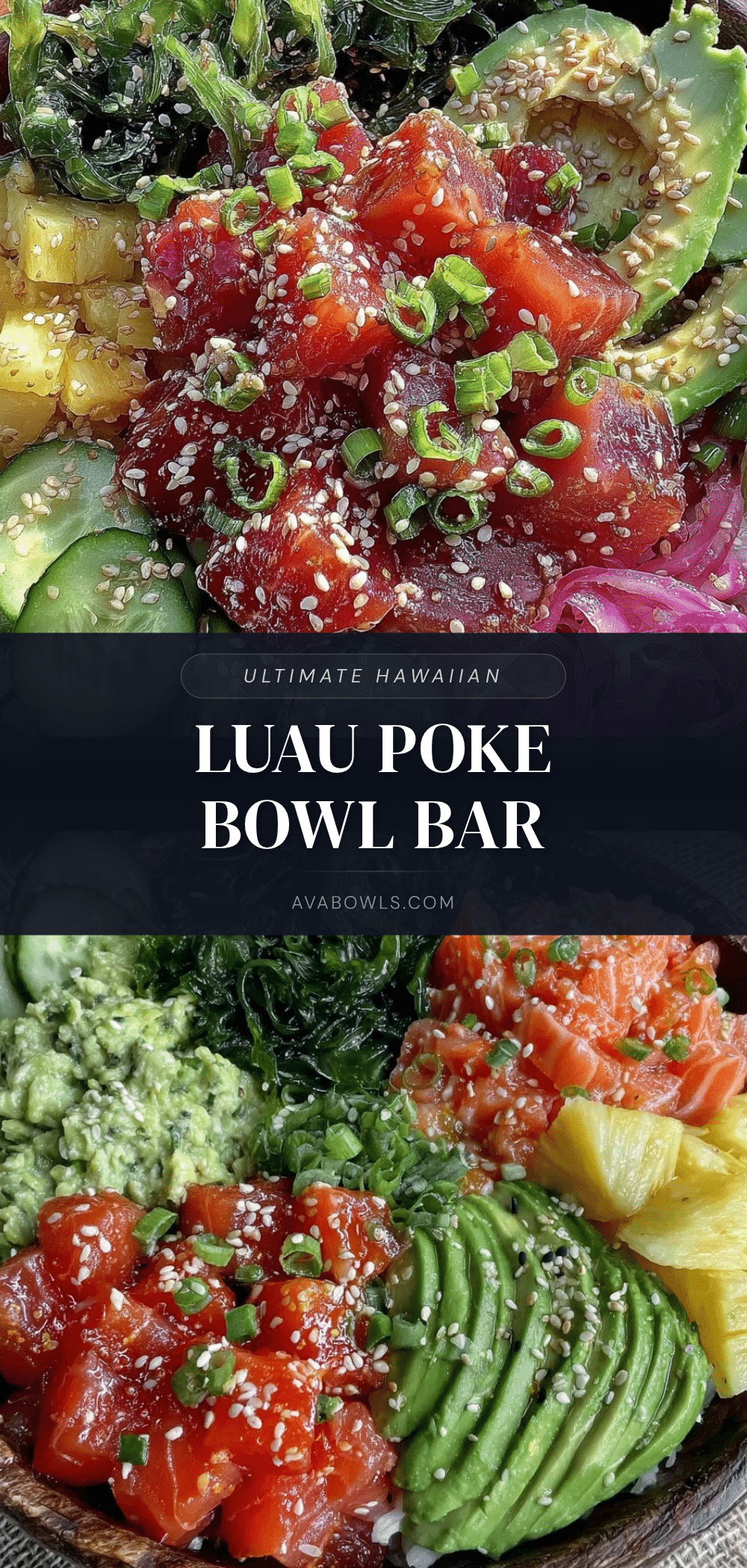
Fresh Hawaiian Luau Poke Bowl Bar Recipe Easy Colorful Toppings Guide
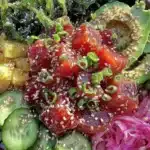
A vibrant and customizable poke bowl bar featuring marinated sashimi-grade ahi tuna, colorful fresh toppings, and simple sauces. Perfect for casual entertaining and quick, fresh meals.
- Prep Time: 15 minutes
- Cook Time: 15 minutes
- Total Time: 30 minutes
- Yield: 4 servings 1x
- Category: Main Course
- Cuisine: Hawaiian
Ingredients
- 1 pound sashimi-grade ahi tuna, cut into ½-inch cubes
- ¼ cup soy sauce (use tamari for gluten-free)
- 1 tablespoon toasted sesame oil
- 1 tablespoon rice vinegar
- 1 teaspoon honey or brown sugar
- 1 teaspoon grated fresh ginger
- 1 clove garlic, minced
- 1 tablespoon thinly sliced green onions
- Red pepper flakes or togarashi, optional
- 2 cups short-grain sushi rice, cooked and slightly cooled (or substitute with mixed greens or cauliflower rice)
- Cucumber, thinly sliced or diced
- Avocado, diced or sliced
- Shredded carrots
- Edamame, shelled and cooked
- Pickled ginger
- Seaweed salad
- Radish slices
- Toasted sesame seeds
- Crispy fried onions or garlic chips
- Fresh cilantro or microgreens
- Spicy mayo (mayo mixed with sriracha to taste), optional
- Unagi sauce (sweet soy glaze), optional
- Wasabi or wasabi mayo, optional
- Fresh lime wedges
Instructions
- Rinse 2 cups of short-grain sushi rice under cold water until water runs clear to remove excess starch.
- Cook rice in a rice cooker or on the stove with 2 ¼ cups water. Once cooked, fluff gently with a fork and let cool slightly for about 15 minutes.
- In a medium bowl, whisk together ¼ cup soy sauce, 1 tablespoon toasted sesame oil, 1 tablespoon rice vinegar, 1 teaspoon honey or brown sugar, 1 teaspoon grated fresh ginger, and 1 minced garlic clove.
- Stir in 1 tablespoon thinly sliced green onions and red pepper flakes to taste if using.
- Add cubed sashimi-grade ahi tuna to the marinade. Toss gently to coat every piece, cover, and refrigerate for 10–15 minutes. Do not marinate longer than 20 minutes.
- While the fish marinates, prepare toppings: slice cucumber, dice avocado just before serving, shred carrots, cook edamame, slice radishes, and drain seaweed salad.
- Toast sesame seeds in a dry skillet over medium heat for 2 minutes until fragrant, stirring constantly.
- Set out cooked rice or greens in a large bowl or platter. Place marinated fish in a shallow dish.
- Arrange each topping in small bowls or platters with serving spoons or tongs for easy access.
- Include sauces like spicy mayo and unagi sauce in squeeze bottles or small bowls for guests to drizzle.
- Invite everyone to build their own bowls, mixing textures and colors.
- Suggest sprinkling toasted sesame seeds and a squeeze of fresh lime for finishing touch.
Notes
Do not marinate fish longer than 20 minutes to avoid changing texture. Keep avocado separate until serving to prevent browning. Toast sesame seeds carefully to avoid burning. If rice cools and becomes firm, sprinkle a few drops of water and fluff gently to restore softness. Use sashimi-grade fish for best texture and safety. Substitute salmon or cooked shrimp for fish alternatives. For gluten-free, use tamari instead of soy sauce.
Nutrition
- Serving Size: 1 bowl (approximatel
- Calories: 450
- Sugar: 5
- Sodium: 900
- Fat: 18
- Saturated Fat: 2.5
- Carbohydrates: 40
- Fiber: 5
- Protein: 30
Keywords: poke bowl, ahi tuna, Hawaiian recipe, fresh fish, sushi rice, colorful toppings, easy entertaining, gluten-free option, healthy meal