The last bite of the bowl disappeared before I could even grab my fork.
My sister-in-law, who usually claims she “just needs a light snack,” came back for seconds while I was still tying my apron strings.
She didn’t even ask for the recipe right away.
She just stared at the empty ceramic bowl like it held some kind of culinary secret.
Then she looked at me, mouth slightly open, and asked if I’d made the dressing from scratch.
I nodded, feeling a quiet surge of pride that had nothing to do with my cooking skills and everything to do with their genuine surprise.
It’s funny how a salad can become the centerpiece of a dinner party when you least expect it.
I didn’t plan for this to be the star of the evening.
I just wanted something warm to balance out the crisp autumn air outside.
The kitchen smelled like roasted nuts and maple syrup, a scent that clings to your sweater and stays with you all evening.
People usually associate salads with raw, crunchy, and cold things.
But honestly, there is something deeply comforting about warm, roasted vegetables on a bed of massaged greens.
It feels like a hug on a plate, especially when the weather turns chilly.
I’ve made this creamy roasted butternut squash and kale salad more times than I can count.
Some nights it’s a quick weeknight fix.
Other times, it’s the dish that saves the dinner when guests arrive unexpectedly.
The key isn’t just the squash.
It’s the way the kale holds up against the heat without turning into mush.
It’s the tang of the dressing cutting through the sweetness of the roasted root vegetable.
I remember the first time I tried this combination, I was skeptical.
Would the kale get soggy?
Would the squash fall apart?
Neither happened.
Instead, I got a texture contrast that keeps you coming back for more.
Now, whenever I see a butternut squash at the market, I know exactly what I’m making.
It’s become my go-to way to use up any leftover greens in the fridge.
There’s a specific satisfaction in watching the kale wilt just enough to become tender, yet still retain a bit of bite.
It’s not about perfection.
It’s about flavor and warmth.
And judging by the empty bowls on the table, it seems I’m not the only one who thinks so.
This recipe has stuck with me because it works.
It works for hungry teenagers.
It works for picky eaters who claim they hate vegetables.
It works for anyone looking for a meal that feels nourishing but doesn’t weigh them down.
I love that it bridges the gap between a heavy comfort food and a light, healthy option.
You get the richness of a cream sauce without the heaviness of pasta.
I’ve paired this with everything from creamy roasted tomato basil soup for a full-course meal to simpler sides for quick lunches.
But mostly, I love that it brings people together around the table.
It’s the kind of dish that invites conversation and slows everyone down.
I hope it does the same for you.
Why You’ll Love This Recipe
There are a million ways to prepare butternut squash, but this version stands out for reasons that go beyond just taste.
I’ve tested dozens of variations over the years, from roasting it in cubes to mashing it into a puree.
This specific method strikes a balance that feels almost accidental, yet it’s been refined through trial and error.
Here is why this creamy roasted butternut squash and kale salad has earned a permanent spot in my weekly rotation.
-
Quick & Easy : The entire process comes together in under 45 minutes.
You spend about 30 minutes roasting the squash while you prep the greens, which means active time is minimal.
It is perfect for busy weeknights when you want something homemade but don’t have hours to spend in the kitchen.
I often throw it together after work while I’m still in my work clothes, and it feels like a victory. -
Simple Ingredients : You likely already have most of these items in your pantry or fridge.
The dressing relies on staples like olive oil, lemon juice, and a touch of maple syrup.
No fancy grocery trips needed, and no obscure spices you’ll use once a year.
It’s accessible cooking at its finest. -
Perfect for Fall Entertaining : This salad is great for potlucks, holiday gatherings, or cozy dinners.
It travels well and can be served warm or at room temperature, which makes it incredibly versatile.
I’ve brought it to family dinners where it always disappears first, beating out the heavier main courses. -
Crowd-Pleaser : It always gets rave reviews from kids and adults alike.
The sweetness of the squash masks the bitterness of the kale for those who are hesitant about greens.
The creamy dressing ties everything together, making it feel indulgent rather than restrictive.
Even my most skeptical friends usually ask for the recipe within minutes of tasting it. -
Unbelievably Delicious : The texture and flavor combo is next-level comfort food.
Roasting the squash caramelizes the natural sugars, creating a depth of flavor that raw vegetables simply can’t match.
The kale, when massaged properly, becomes tender and rich.
It’s not just good—it is the kind that makes you close your eyes after the first bite.
It’s comfort food reimagined—healthier, faster, but with the same soul-soothing satisfaction.
Perfect for impressing guests without stress, or turning a simple meal into something memorable.
If you enjoy the warmth of this dish, you might also appreciate the robust flavors in my hearty tuscan white bean soup with kale.
Both dishes celebrate the versatility of winter greens and root vegetables.
What Ingredients You Will Need
This recipe uses simple, wholesome ingredients to deliver bold flavor and satisfying texture without the fuss.
The magic here lies in the quality of the produce and the balance of the dressing.
You don’t need expensive imports to make this work.
In fact, the simpler the ingredients, the more they shine.
Here is what you will need to pull this off.
For the Roasted Squash
-
Butternut squash : One large squash, peeled, seeded, and cut into 1-inch cubes.
Look for squash that feels heavy for its size, as this indicates moisture and sweetness.
I prefer varieties from local farmers’ markets, but store-bought works fine too. -
Extra virgin olive oil : 2 tablespoons.
Use a good quality oil here, as it will coat the squash directly.
A fruity, robust oil adds a nice background note to the sweet squash. -
Maple syrup : 1 tablespoon.
Pure maple syrup is essential for that authentic fall flavor.
Avoid corn syrup blends, as they lack the complexity needed for this dish.
It helps caramelize the edges of the squash during roasting. -
Dried thyme : 1 teaspoon.
Thyme pairs beautifully with squash.
It adds an earthy, slightly floral note that complements the sweetness.
Fresh thyme works too, but use twice the amount. -
Salt and black pepper : To taste.
Season generously, as the squash needs time to absorb the flavors.
I use kosher salt for even distribution.
For the Kale Base
-
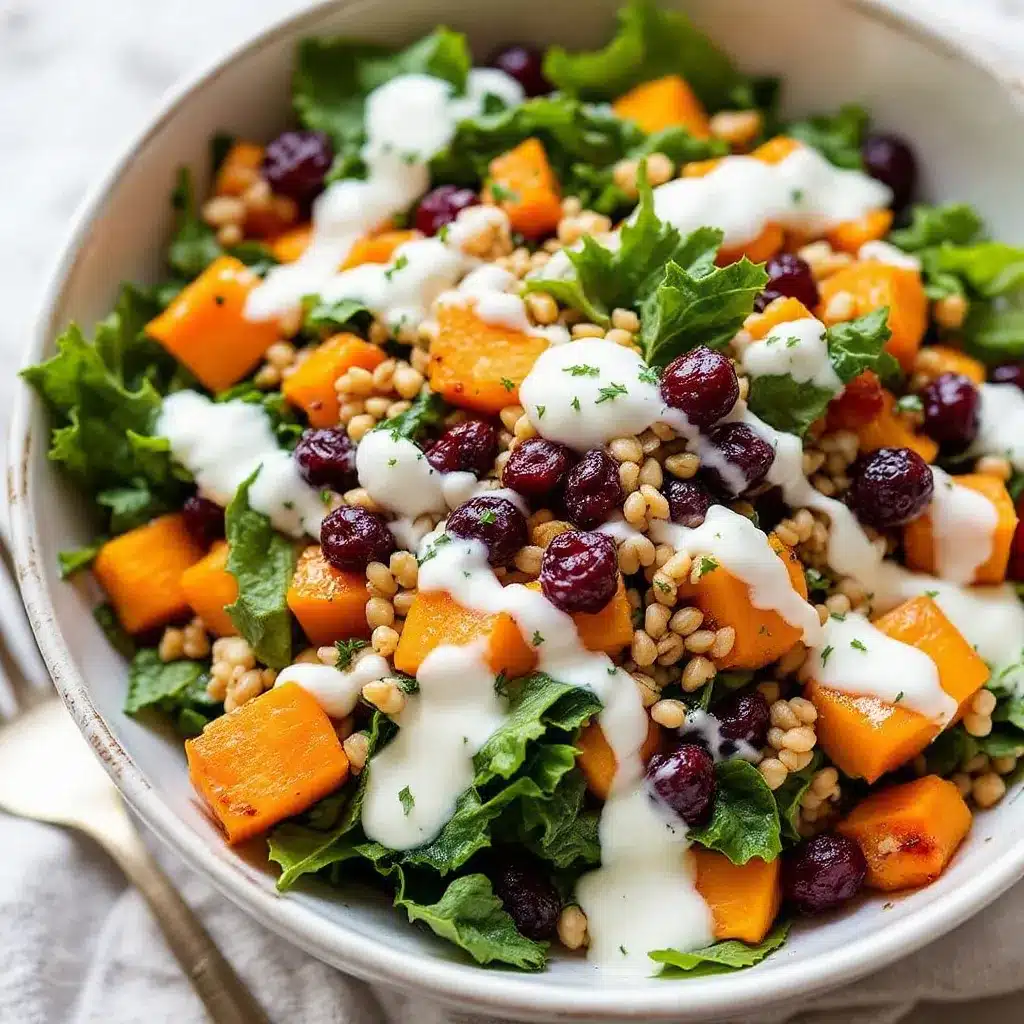
Lacinato kale (Dinosaur kale) : One large bunch, stems removed and leaves torn into bite-sized pieces.
Lacinato kale is tougher and holds up better to heat than curly kale.
It has a deeper green color and a more robust flavor.
If you can only find curly kale, remove the tough center ribs before chopping. -
Garlic : 2 cloves, minced.
Fresh garlic is non-negotiable for this recipe.
It infuses the oil and adds a pungent kick that balances the sweetness.
I mince it finely so it distributes evenly throughout the salad.
For the Creamy Dressing
-
Greek yogurt : ½ cup, plain and full-fat.
I recommend Fage or Chobani for best texture.
The fat content adds creaminess without needing heavy cream.
It provides a tangy counterpoint to the sweet squash.
For a dairy-free option, use a high-quality unsweetened coconut yogurt. -
Lemon juice : 1 tablespoon, freshly squeezed.
Bottled lemon juice lacks the brightness needed here.
The acid cuts through the richness of the yogurt and the earthiness of the kale. -
Apple cider vinegar : 1 teaspoon.
This adds a subtle sharpness that enhances the overall flavor profile.
It’s a secret weapon in many salad dressings. -
Honey or maple syrup : 1 teaspoon.
Just a touch to round out the acidity.
Adjust based on how tart your lemon is. -
Dijon mustard : 1 teaspoon.
This acts as an emulsifier, helping the oil and yogurt blend smoothly.
It also adds a mild heat and complexity.
I prefer whole grain Dijon for a bit of texture, but smooth works too.
For the Toppings
-
Walnuts or pecans : ½ cup, toasted.
Nuts add essential crunch.
Toasting them in a dry pan for 3-5 minutes brings out their natural oils.
Pecans add a buttery sweetness, while walnuts offer a bitter edge.
Both are excellent choices. -
Feta cheese : ¼ cup, crumbled.
The salty, tangy cheese contrasts with the sweet squash.
You can substitute with goat cheese for a milder flavor.
For a vegan version, use a plant-based crumble. -
Seeds : 2 tablespoons, pumpkin or sunflower.
These add extra crunch and nutritional value.
They are a great way to stretch the recipe and add visual appeal.
Equipment Needed
You don’t need a fancy kitchen to make this salad.
Basic tools will do the job perfectly.
Here is what you’ll need to get started.
-
Large baking sheet : A standard 18×13 inch sheet pan is ideal.
Make sure it has a rim to catch any drips from the squash.
I use a heavy-gauge aluminum sheet because it heats evenly.
Avoid thin, flimsy pans as they can cause uneven roasting. -
Parchment paper : Lining your baking sheet is a game-changer.
It prevents sticking and makes cleanup a breeze.
I never roast squash without it, as the sugar content can burn onto the pan otherwise.
It’s a small step that saves you from scrubbing later. -
Large mixing bowl : You need a bowl big enough to toss the kale and dressing.
A stainless steel or glass bowl works best.
Avoid plastic if you are using hot oil, as it can warp.
I prefer a wide bowl so the kale has room to move and wilt evenly. -
Whisk : A simple balloon whisk is perfect for emulsifying the dressing.
It breaks up the yogurt and blends it with the oil and acid.
No electric mixer needed here.
Just a few vigorous strokes will create a smooth, creamy consistency. -
Chef’s knife and cutting board : A sharp knife makes peeling and cubing the squash much safer and easier.
A large, sturdy cutting board is essential for stability.
I keep a dedicated board for vegetables to avoid cross-contamination. -
Small skillet : Needed for toasting the nuts.
A cast iron skillet is great for even heating, but any heavy pan works.
Keep an eye on them, as nuts can go from toasted to burnt in seconds.
Shake the pan frequently to ensure even toasting.
Preparation Method
Getting this salad right is all about timing and technique.
Here is how to put it all together step-by-step.
-
Preheat the oven to 400°F (200°C).
This temperature is high enough to caramelize the squash without drying it out.
Allow the oven to fully preheat before you put the squash in.
An underheated oven will steam the squash instead of roasting it.
This step takes about 10-15 minutes. -
Prepare the squash by peeling, seeding, and cubing it.
Use a sturdy vegetable peeler to remove the tough skin.
Cut the squash in half lengthwise, scoop out the seeds, and then slice into 1-inch cubes.
Try to keep the cubes uniform so they cook evenly.
Smaller pieces will cook faster, but larger pieces retain more moisture.
This process takes about 10 minutes. -
Toss the squash with olive oil, maple syrup, thyme, salt, and pepper.
Place the cubes in a large bowl and drizzle with the oil and syrup.
Toss gently to coat every piece.
Make sure no pools of oil form at the bottom.
Uneven coating leads to some pieces being dry and others soggy.
This step takes about 2 minutes. -
Spread on the baking sheet in a single layer.
Do not crowd the pan.
If the pieces are touching, they will steam instead of roast.
Use two sheets if necessary.
Crowding is the most common mistake people make with roasted vegetables.
This step takes about 2 minutes. -
Roast the squash for 25-30 minutes.
Flip the pieces halfway through the cooking time.
You want them tender and slightly browned on the edges.
A fork should easily pierce through the largest cube.
If they are not tender after 30 minutes, give them another 5 minutes.
This step takes 30 minutes. -
Make the dressing while the squash roasts.
In a small bowl, whisk together the Greek yogurt, lemon juice, apple cider vinegar, honey, Dijon mustard, salt, and pepper.
Whisk until smooth and creamy.
Taste and adjust seasoning as needed.
It should be tangy and slightly sweet.
This step takes about 5 minutes. -
Prepare the kale by removing the stems and tearing the leaves.
Place the kale in a large bowl.
Drizzle with a little olive oil and massage it with your hands for 2-3 minutes.
This breaks down the tough fibers and makes the kale tender.
It also helps it absorb the dressing better.
Add the minced garlic and a pinch of salt.
Massage again until the kale darkens in color and shrinks slightly.
This step takes about 5 minutes. -
Toast the nuts in a dry skillet over medium heat.
Stir frequently for 3-5 minutes until fragrant and lightly browned.
Watch them closely, as they burn easily.
Remove from heat immediately and let them cool.
This step takes about 5 minutes. -
Combine everything in a large serving bowl.
Add the warm roasted squash to the massaged kale.
Pour the dressing over the top.
Toss gently to combine, ensuring all ingredients are coated.
The warmth of the squash will slightly wilt the kale, creating a beautiful texture.
This step takes about 3 minutes. -
Top and serve immediately.
Sprinkle with crumbled feta cheese, toasted nuts, and seeds.
Add a final crack of black pepper for presentation.
Serve while the squash is still warm.
This step takes about 2 minutes.
Cooking Tips & Techniques
There are a few tricks I’ve learned along the way that make this recipe foolproof.
Here are some professional techniques to help you succeed.
-
Don’t skip the massage : Massaging the kale is crucial.
It transforms the leaf from tough and chewy to tender and silky.
If you skip this step, the salad will feel fibrous and unpleasant.
Take your time with this step; it’s worth it. -
Roast on high heat : A hot oven ensures caramelization.
Low heat results in soft, pale squash that lacks flavor.
I always preheat my oven fully to avoid temperature drops.
This small detail makes a huge difference in the final taste. -
Balance the flavors : Taste your dressing before adding it.
If the squash is very sweet, add more lemon or vinegar.
If the kale is bitter, add a touch more honey.
Cooking is about adjustment, so trust your palate.
I often adjust the seasoning right before serving. -
Toast nuts separately : Never add raw nuts to the salad.
Toasting brings out their flavor and adds crunch.
I toast them in a dry pan to avoid adding extra oil.
This simple step elevates the texture significantly. -
Serve warm : This salad is best served while the squash is still warm.
The heat helps the dressing cling to the ingredients.
If you serve it cold, the flavors will be muted.
I usually let the squash cool for 5 minutes before tossing it with the kale.
This prevents the kale from wilting too quickly. -
Watch the garlic : Adding garlic to the hot squash can cause it to burn.
It’s better to add the garlic to the kale base.
The residual heat from the squash will cook it gently.
This method preserves the garlic’s flavor without making it bitter.
Variations & Adaptations
This recipe is highly adaptable.
Here are some ways to customize it to your liking.
-
Dietary Variations : For a vegan version, swap the Greek yogurt for coconut yogurt or cashew cream.
Replace the feta with nutritional yeast or a vegan cheese alternative.
This keeps the creamy texture without any dairy.
I’ve tried both, and they work surprisingly well. -
Seasonal Swaps : In spring, swap the kale for spinach or arugula.
In summer, add roasted zucchini or bell peppers.
In winter, add roasted Brussels sprouts or carrots.
The base recipe remains the same, but the flavors change with the seasons.
This makes it a versatile template for year-round cooking. -
Protein Boost : Add grilled chicken breast or roasted chickpeas for extra protein.
I often add chickpeas for a plant-based option.
Toss them with the squash before roasting for added flavor.
This turns the salad into a complete meal. -
Flavor Twists : Add a pinch of red pepper flakes for heat.
Or swap the thyme for rosemary for a piney flavor.
I sometimes add dried cranberries for a tart contrast.
Experiment with different herbs and spices to find your favorite combination. -
Personal Variation : I often add a drizzle of balsamic glaze at the end.
The sweetness and acidity complement the squash perfectly.
It’s a small addition that makes the dish feel more elegant.
I serve this at dinner parties when I want to impress without much effort.
Serving & Storage Suggestions
Serving this salad right can make all the difference.
Here are some tips for presentation and storage.
-
Serving temperature : Serve the salad warm.
The warmth of the squash enhances the flavors of the kale and dressing.
It creates a comforting, hearty meal experience.
I usually serve it in shallow bowls to showcase the colors. -
Complementary dishes : Pair this salad with a simple protein like grilled salmon or roast chicken.
It also goes well with crusty bread or rolls.
I often serve it alongside a light soup for a full meal.
The combination of textures and temperatures is satisfying. -
Storage instructions : Store leftovers in an airtight container in the refrigerator for up to 3 days.
The squash will soften slightly, but the flavors will meld nicely.
I find it tastes even better the next day as the dressing absorbs.
Keep the toppings separate if possible to maintain crunch. -
Reheating methods : Reheat in the microwave for 1-2 minutes.
Or warm it in a skillet over low heat.
Avoid high heat, as it can make the kale mushy.
I usually reheat only the squash and kale, adding fresh toppings after. -
Flavor development : The flavors develop over time.
The maple syrup and lemon juice blend with the yogurt to create a complex dressing.
I often make this salad ahead of time for parties.
It holds up well and is ready to serve when needed.
Nutritional Information & Benefits
This salad is not only delicious but also nutritious.
Here is a breakdown of its health benefits.
-
Nutritional values : Each serving contains approximately 350 calories.
It is rich in fiber, vitamins A and C, and potassium.
The healthy fats from the olive oil and nuts support heart health.
The protein from the yogurt and nuts helps with satiety. -
Health benefits : Butternut squash is high in antioxidants.
Kale is a superfood known for its detoxifying properties.
Nuts provide omega-3 fatty acids.
This combination supports immune function and digestion. -
Dietary considerations : This recipe can be made gluten-free and dairy-free.
It is also suitable for vegetarian diets.
For low-carb options, reduce the maple syrup and nuts.
The base ingredients are naturally low in carbs. -
Allergens : Contains dairy (yogurt, feta) and nuts (walnuts/pecans).
Substitute as needed for allergies.
Always check labels for hidden allergens in processed ingredients.
I always ask guests about allergies before hosting. -
Wellness perspective : I love this recipe because it makes me feel energized.
It’s a meal that nourishes both body and soul.
I try to include colorful vegetables in every meal for this reason.
It’s a simple habit that has a big impact on how I feel.
Conclusion
This creamy roasted butternut squash and kale salad is a testament to the power of simple ingredients.
It proves that you don’t need complex techniques to make something extraordinary.
I hope you try this recipe and enjoy it as much as I do.
Feel free to customize it with your favorite toppings and flavors.
Cooking should be fun and flexible.
Don’t be afraid to experiment and make it your own.
I love this recipe because it brings warmth and comfort to my table.
It’s a dish that I return to again and again.
If you make this, I’d love to hear how it turns out.
Leave a comment below with your thoughts or variations.
Share your photos on social media and tag me.
I love seeing how others interpret my recipes.
Thank you for cooking with me.
Happy eating!
I look forward to hearing from you.
FAQs
Can I use sweet potatoes instead of butternut squash?
Yes, sweet potatoes are a great substitute.
They have a similar sweetness and texture.
Just adjust the roasting time slightly, as sweet potatoes may cook faster.
The flavors will be slightly different but still delicious.
How do I prevent the kale from getting soggy?
The key is to massage the kale and toss it with the warm squash just before serving.
Avoid letting it sit in the dressing for too long.
If storing leftovers, keep the dressing separate until ready to eat.
This maintains the texture and freshness.
Can I make this salad ahead of time?
Yes, you can prepare the components ahead of time.
Roast the squash and make the dressing up to 2 days in advance.
Massage the kale and store it separately.
Combine everything just before serving for the best results.
This makes it perfect for meal prep.
What can I use instead of Greek yogurt?
You can use sour cream, crème fraîche, or a dairy-free alternative like coconut yogurt.
Cashew cream is also a great option for a rich, creamy texture.
The flavor will vary slightly, but the dish will still be delicious.
Choose based on your dietary preferences.
Is this salad suitable for vegans?
Yes, with a few modifications.
Use plant-based yogurt and cheese alternatives.
Ensure the maple syrup is vegan (most are).
The rest of the ingredients are naturally vegan.
This makes it an inclusive dish for all dietary needs.
Pin This Recipe!
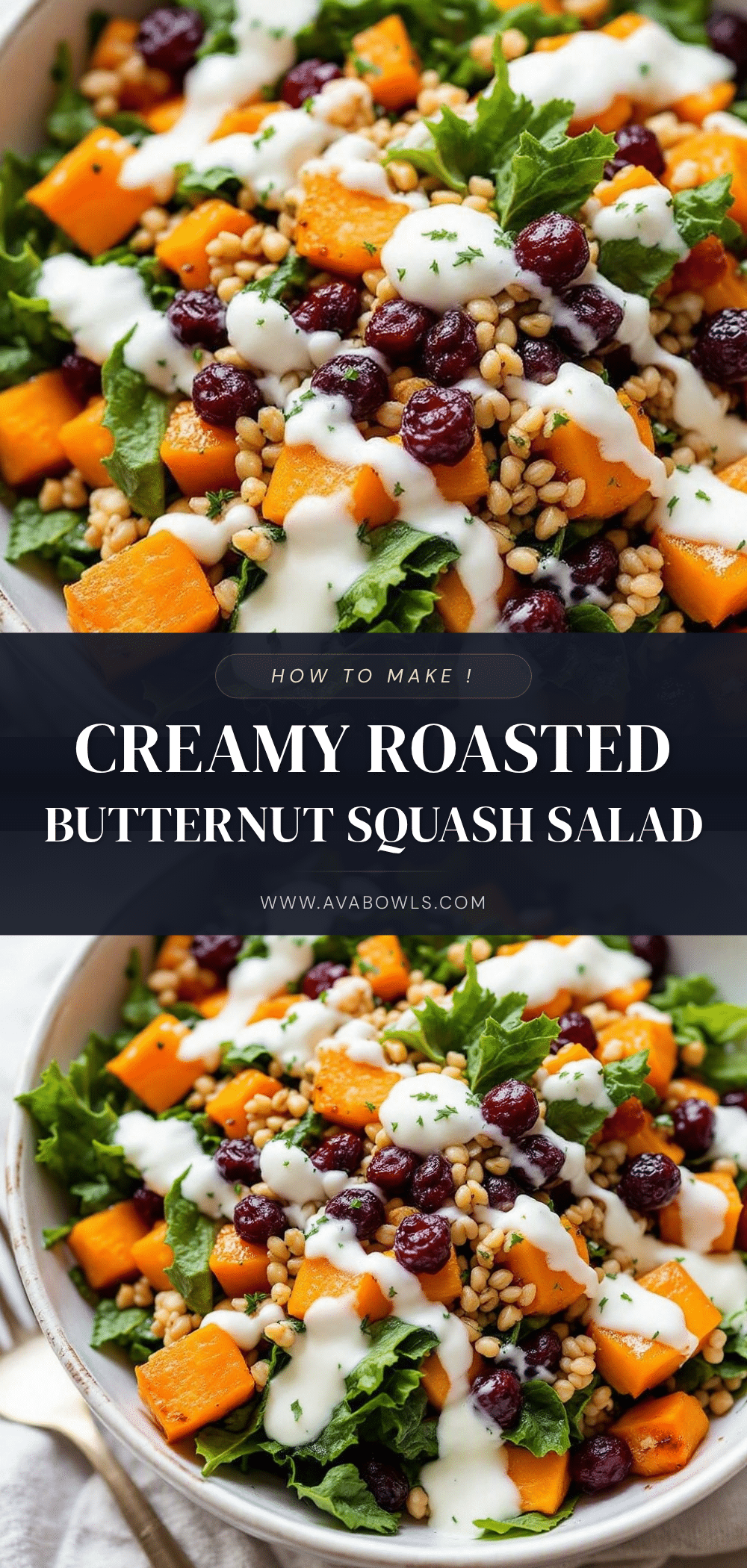
Creamy Roasted Butternut Squash and Kale Salad
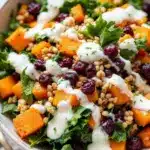
A comforting warm salad featuring roasted butternut squash cubes tossed with massaged Lacinato kale and a tangy, creamy Greek yogurt dressing, topped with toasted nuts and feta cheese.
- Prep Time: 20 minutes
- Cook Time: 30 minutes
- Total Time: 50 minutes
- Yield: 4 servings 1x
- Category: Salad
- Cuisine: American
Ingredients
- 1 large butternut squash, peeled, seeded, and cut into 1-inch cubes
- 2 tablespoons extra virgin olive oil
- 1 tablespoon pure maple syrup
- 1 teaspoon dried thyme
- Salt and black pepper to taste
- 1 large bunch Lacinato kale, stems removed and leaves torn into bite-sized pieces
- 2 cloves garlic, minced
- 1/2 cup plain full-fat Greek yogurt
- 1 tablespoon freshly squeezed lemon juice
- 1 teaspoon apple cider vinegar
- 1 teaspoon honey or maple syrup
- 1 teaspoon Dijon mustard
- 1/2 cup walnuts or pecans, toasted
- 1/4 cup crumbled feta cheese
- 2 tablespoons pumpkin or sunflower seeds
Instructions
- Preheat the oven to 400°F (200°C).
- Peel, seed, and cube the butternut squash into 1-inch pieces.
- In a large bowl, toss the squash cubes with olive oil, maple syrup, thyme, salt, and pepper until evenly coated.
- Spread the squash in a single layer on a parchment-lined baking sheet. Avoid crowding the pan.
- Roast for 25-30 minutes, flipping halfway through, until tender and slightly browned.
- While the squash roasts, whisk together Greek yogurt, lemon juice, apple cider vinegar, honey, Dijon mustard, salt, and pepper in a small bowl to make the dressing.
- Place the torn kale in a large bowl. Drizzle with a little olive oil and massage with hands for 2-3 minutes until tender. Add minced garlic and a pinch of salt, and massage again.
- Toast nuts in a dry skillet over medium heat for 3-5 minutes until fragrant. Let cool.
- In a large serving bowl, combine the warm roasted squash and massaged kale. Pour the dressing over and toss gently.
- Top with crumbled feta cheese, toasted nuts, and seeds. Serve immediately while warm.
Notes
Massage the kale thoroughly to break down fibers and improve texture. Roast squash on high heat for caramelization. Serve warm for best flavor. For a vegan version, substitute Greek yogurt with coconut yogurt and feta with nutritional yeast or vegan cheese.
Nutrition
- Serving Size: 1 bowl
- Calories: 350
- Sugar: 15
- Sodium: 450
- Fat: 18
- Saturated Fat: 5
- Carbohydrates: 40
- Fiber: 8
- Protein: 12
Keywords: butternut squash, kale salad, roasted vegetables, fall recipes, healthy dinner, creamy dressing, vegetarian, gluten-free option