It was a Tuesday afternoon in late October, the kind where the sky goes gray by three o’clock and the only light in the kitchen comes from the oven window. I had a half-gallon of fresh apple cider in the fridge that I bought on a whim at the farmers’ market, and honestly? I had no real plan for it. Drinking it felt too simple, and I wasn’t in the mood for another stovetop mulled cider situation. I wanted something that would fill the house with that specific, heavy warmth—the smell of cinnamon and apples and something almost caramel-like. That’s when I started pulling out my bundt pan.
I’ve made a lot of apple cakes over the years. Some were too dense, some fell apart, and some just tasted like spice without any real apple personality. But this one? This one is different. It uses reduced apple cider, which is a fancy way of saying you boil it down until it’s syrupy and concentrated. That little extra step changes everything. It gives the cake a deep, almost tangy apple flavor that you just can’t get from juice or even applesauce. The crumb is tender but sturdy enough to hold up to a heavy glaze, and the top gets this beautiful crackled crust that makes it look like it came from a bakery.
I’ve been making this cake every fall since that first Tuesday, and it’s become my quiet signal that the season has truly settled in. It’s not a showy dessert. It’s the kind you slice slowly, with a cup of black coffee, while the wind rattles the windows. I think that’s why it stuck.
Why You’ll Love This Recipe
This isn’t just another apple cake. I’ve tested this recipe about six times over two seasons, tweaking the flour ratio and the amount of reduced cider until it felt just right. Here is why I keep coming back to it, and why I think you will too:
- Deep, Real Apple Flavor : Most apple cakes rely on chopped fruit or extract, but reducing the cider concentrates the flavor without adding extra liquid. It tastes like a whole orchard in every bite.
- Simple Pantry Ingredients : You probably have butter, sugar, flour, and eggs already. The only special trip might be for fresh apple cider, which is everywhere in the fall.
- Perfect for Cozy Gatherings : This cake is sturdy enough to travel to a Friendsgiving, but elegant enough to serve at a quiet dinner party. It fits both moods.
- That Crackly Glaze : The cider glaze seeps into the warm cake just enough to create a thin, crunchy shell on top. It’s my favorite part, and I always lick the spoon.
- No Fussy Frosting : This is a bundt cake, so there is no layering, no crumb coating, no stress. Just one beautiful pan and a simple drizzle.
I remember the first time I brought this to a family gathering. My aunt, who is notoriously picky about desserts, took a slice, ate it quietly, and then asked for the recipe before she finished chewing. That’s when I knew it was a keeper. It’s the kind of cake that makes people close their eyes after the first bite, and honestly, that’s the highest compliment a baker can get.
What Ingredients You Will Need
This recipe uses simple, wholesome ingredients to deliver a bold, spiced apple flavor without any fuss. Most of these are pantry staples, but a few key players make all the difference.
- Fresh Apple Cider (2 cups) : Do not use apple juice here. Cider has a tangier, more complex flavor that stands up to reduction. I like to use local unfiltered cider when I can find it.
- Unsalted Butter (1 cup, softened) : Butter gives this cake its rich flavor and tender crumb. I always use unsalted so I can control the salt level myself. Let it sit out for at least an hour before you start.
- Granulated Sugar (1 ½ cups) : Standard white sugar keeps the cake light and sweet without overpowering the apple flavor. Do not substitute brown sugar here; it will change the texture.
- Large Eggs (3, room temperature) : Room temperature eggs emulsify into the batter much better than cold ones. If you forgot to set them out, place them in a bowl of warm water for five minutes.
- All-Purpose Flour (3 cups) : I use unbleached all-purpose flour for the best structure. Spoon and level it into your measuring cup; don’t scoop directly or you might end up with a dry cake.
- Baking Powder (1 ½ teaspoons) : Make sure your baking powder is fresh. If it doesn’t fizz when you drop it in water, toss it and buy a new can.
- Baking Soda (½ teaspoon) : This helps the cake rise just enough and balances the acidity of the reduced cider.
- Salt (1 teaspoon) : Salt is not optional in baking. It enhances every other flavor and keeps the cake from tasting flat.
- Ground Cinnamon (2 teaspoons) : The backbone of the spice blend. I use Vietnamese cinnamon for its stronger, sweeter kick.
- Ground Nutmeg (½ teaspoon) : Freshly grated nutmeg is a game-changer here. It adds a warm, slightly floral note that pre-ground nutmeg just can’t match.
- Ground Cloves (¼ teaspoon) : A little goes a long way. Cloves add that deep, almost smoky warmth that makes this cake taste like fall.
- Vanilla Extract (2 teaspoons) : Pure vanilla extract, not imitation. It rounds out the spices and adds a subtle sweetness.
- Buttermilk (1 cup, room temperature) : Buttermilk makes the cake incredibly tender and helps activate the baking soda. If you don’t have it, add 1 tablespoon of lemon juice to regular milk and let it sit for five minutes.
For the Cider Glaze
- Powdered Sugar (1 ½ cups) : Sift it if it looks lumpy. Nobody wants a lumpy glaze.
- Reduced Apple Cider (3 tablespoons) : Use the same reduced cider you made for the cake. It ties the whole flavor together.
- Vanilla Extract (½ teaspoon) : Just a touch to deepen the flavor.
Equipment Needed
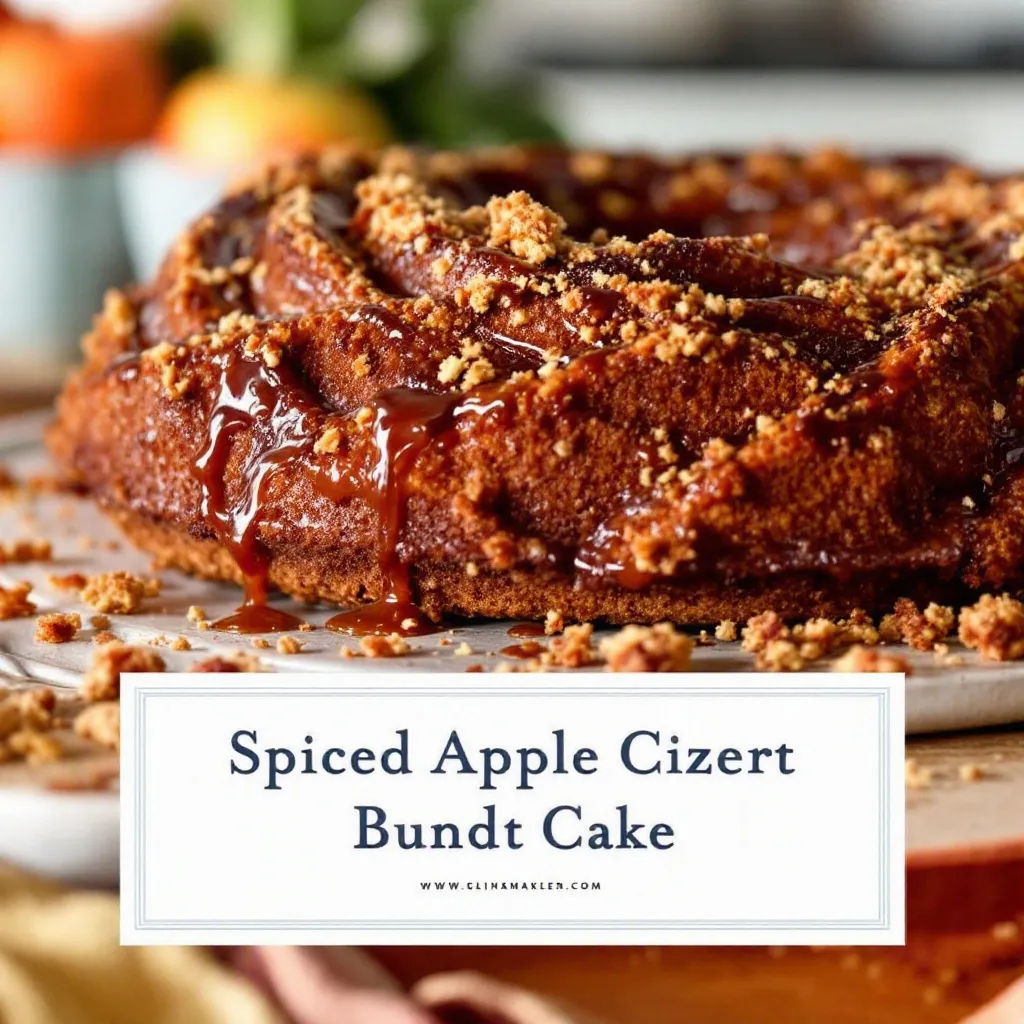
You don’t need a ton of fancy tools for this recipe, but a few specific items make the process smoother. Here is what I use every time:
- 10 to 15-cup Bundt Pan : I use a classic fluted tube pan. Make sure it’s non-stick and well-seasoned. If yours is older, give it a generous coating of butter and flour, not just non-stick spray.
- Medium Saucepan : For reducing the apple cider. Use one with a heavy bottom so the cider doesn’t scorch.
- Stand Mixer or Hand Mixer : A stand mixer with the paddle attachment is ideal, but a hand mixer works perfectly too. A wooden spoon works in a pinch, but your arm will get tired.
- Large Mixing Bowls : One for dry ingredients, one for wet ingredients. Glass or stainless steel works best.
- Whisk : For combining the dry ingredients and smoothing out the glaze.
- Rubber Spatula : For scraping the bowl thoroughly. Do not skip this step; you want every bit of batter in the pan.
- Cooling Rack : A wire rack is essential for even cooling. If you let the cake cool in the pan, the bottom will get soggy.
- Small Offset Spatula or Spoon : For drizzling the glaze. A spoon works perfectly fine, but an offset spatula gives you more control.
I remember the first time I made this cake, I used a cheap non-stick pan that was past its prime. Half the cake stuck to the bottom, and I ended up with a pile of crumbles instead of a beautiful ring. Lesson learned. Invest in a good quality bundt pan—it makes all the difference.
Preparation Method
Take your time with this one. The steps are straightforward, but each one builds on the last. Here is how I do it.
Step 1: Reduce the Apple Cider
Pour 2 cups of fresh apple cider into a medium saucepan. Bring it to a boil over medium-high heat, then reduce the heat to a steady simmer. Let it cook for about 20 to 25 minutes, stirring occasionally, until it reduces to about ½ cup. It should be syrupy and dark amber in color. Watch it carefully toward the end—it can go from perfect to burnt very quickly. Pour it into a small bowl and let it cool completely. You will use about ¼ cup in the cake batter and 3 tablespoons in the glaze.
Step 2: Prep Your Pan and Oven
Preheat your oven to 350°F (175°C). Grease your bundt pan thoroughly with softened butter, making sure to get into every crevice. Dust it with a light coating of flour, tap out the excess, and set it aside. This extra step guarantees your cake will release cleanly.
Step 3: Mix the Dry Ingredients
In a large bowl, whisk together the flour, baking powder, baking soda, salt, cinnamon, nutmeg, and cloves. Set this aside while you work on the wet ingredients. Whisking aerates the flour and distributes the spices evenly.
Step 4: Cream the Butter and Sugar
In the bowl of a stand mixer fitted with the paddle attachment, beat the softened butter and granulated sugar together on medium speed for about 3 to 4 minutes. You want it light, fluffy, and pale in color. Scrape down the sides and bottom of the bowl at least once. This step creates the air pockets that give the cake its tender crumb.
Step 5: Add the Eggs and Vanilla
Add the eggs one at a time, beating well after each addition. Scrape the bowl again. Then add the vanilla extract and the cooled reduced cider (¼ cup). Mix on low speed until just combined. The batter might look a little curdled at this point, but that is perfectly normal—don’t panic.
Step 6: Alternate the Dry Ingredients and Buttermilk
With the mixer on low speed, add about one-third of the dry ingredients. Then add half of the buttermilk. Repeat with another third of the dry ingredients, the remaining buttermilk, and finally the last of the dry ingredients. Mix just until the flour disappears. Overmixing will make the cake tough. Use a rubber spatula to give the batter a final fold from the bottom up, just to make sure everything is incorporated.
Step 7: Bake the Cake
Pour the batter into the prepared bundt pan and spread it evenly. Tap the pan gently on the counter a few times to release any air bubbles. Bake for 45 to 55 minutes, or until a wooden skewer inserted into the thickest part comes out clean or with just a few moist crumbs. The top should be deep golden brown and spring back when you touch it.
Step 8: Cool and Glaze
Let the cake cool in the pan on a wire rack for exactly 15 minutes. Then invert it onto the rack and let it cool completely, about 1 hour. While it cools, whisk together the powdered sugar, 3 tablespoons of reduced cider, and vanilla extract until smooth. Once the cake is fully cool, drizzle the glaze over the top. Let it set for about 10 minutes before slicing.
Cooking Tips & Techniques
I have made this cake enough times to know exactly where things can go wrong. Here are my best tips to help you avoid my early mistakes.
- Do not rush the cider reduction. I once tried to speed it up by cranking the heat, and I ended up with a burnt, bitter mess. Keep it at a gentle simmer and stir every few minutes. The patience pays off.
- Room temperature ingredients matter. Cold butter doesn’t cream properly, and cold eggs can seize the batter. I set everything out on the counter about an hour before I start. If I forget, I place the eggs in a bowl of warm water for five minutes and microwave the buttermilk for about 15 seconds.
- Grease the pan like you mean it. Use a pastry brush or your fingers to get butter into every ridge and swirl. Then dust with flour and tap out the excess. I have lost too many beautiful bundt cakes to sticky pans, and it is heartbreaking every single time.
- Use a kitchen scale for accuracy. If you have one, weigh your flour. It is the most reliable way to avoid a dry cake. One cup of all-purpose flour weighs about 120 grams.
- Let the cake cool in the pan for exactly 15 minutes. Too short, and it will crumble when you try to flip it. Too long, and it will steam and stick. Set a timer.
- Glaze while the cake is completely cool. If the cake is even slightly warm, the glaze will melt into a puddle instead of forming that beautiful crackly shell. I learned this the hard way.
Variations & Adaptations
This recipe is flexible, and I love playing around with different versions depending on the season or what I have on hand. Here are a few of my favorites.
- Gluten-Free Version : Substitute the all-purpose flour with a high-quality 1:1 gluten-free baking flour blend. I have had good results with the one from King Arthur. Add an extra tablespoon of buttermilk to compensate for the drier flour.
- Dairy-Free Adaptation : Use vegan butter and swap the buttermilk for a mixture of 1 cup of unsweetened almond milk plus 1 tablespoon of lemon juice. The texture is slightly less tender, but the flavor is still fantastic.
- Maple Walnut Twist : Add 1 cup of toasted, chopped walnuts and replace ½ cup of the granulated sugar with ⅓ cup of pure maple syrup. Reduce the buttermilk by 2 tablespoons to balance the extra liquid. The maple and apple combination is incredible.
- Caramel Apple Version : After the cake cools, drizzle it with a homemade salted caramel sauce before adding the cider glaze. It is extra decadent and perfect for a holiday table.
- Spiced Apple Muffins : Divide the batter into a greased muffin tin and bake for 18 to 22 minutes. Skip the glaze or drizzle it lightly. These are perfect for breakfast or a lunchbox treat.
I once made a version with fresh grated ginger and a pinch of cardamom for a holiday brunch, and it was a huge hit. Don’t be afraid to experiment—this cake is forgiving.
Serving & Storage Suggestions
This cake is at its absolute best on the day it is made, when the outside is slightly crisp and the inside is tender. Serve it at room temperature with a hot cup of coffee, a scoop of vanilla ice cream, or a dollop of lightly sweetened whipped cream. It also pairs beautifully with a warm mug of mulled cider or a creamy matcha latte for a cozy afternoon treat.
To store leftovers, wrap the cake tightly in plastic wrap or place it in an airtight container. It will keep at room temperature for up to 3 days. Do not refrigerate it, as the cold air will dry out the crumb. If you need to keep it longer, you can freeze the unglazed cake for up to 3 months. Wrap it in a double layer of plastic wrap and then a layer of foil. When you are ready to serve it, thaw it overnight in the refrigerator, bring it to room temperature, and then add the glaze.
The flavors actually deepen after the first day, so day-old cake is still delicious. I often make this cake a day ahead of time for gatherings, then glaze it just before serving. It saves me a lot of stress on the day of the event.
Nutritional Information & Benefits
This cake is a treat, but it does have a few redeeming qualities. The apple cider provides a small amount of vitamin C and antioxidants, and the cinnamon and nutmeg offer anti-inflammatory properties. That said, this is a dessert meant for enjoyment, not a health food. Here are the approximate nutritional values per slice (based on 12 servings):
| Nutrient | Amount per Slice |
|---|---|
| Calories | 385 |
| Total Fat | 18g |
| Saturated Fat | 10g |
| Cholesterol | 85mg |
| Sodium | 310mg |
| Total Carbohydrates | 53g |
| Dietary Fiber | 1g |
| Sugars | 34g |
| Protein | 5g |
If you are looking for a lighter option, this cake is not it. But if you want a soul-warming, beautifully spiced dessert that fills your kitchen with the scent of autumn, this is exactly what you need. Enjoy it without guilt, and savor every single bite.
Conclusion
This spiced apple cider bundt cake is the kind of recipe that becomes a tradition. It is simple enough for a weekday baking project, but impressive enough to take center stage at a holiday gathering. The reduced cider gives it a depth of flavor that you just cannot get from any other method, and the warm spices make it taste like fall in cake form.
I hope you give this recipe a try and make it your own. Maybe you will add a handful of pecans, or swap the glaze for a cream cheese drizzle, or serve it warm with a scoop of ice cream. Whatever you do, I would love to hear about it. Leave a comment below and let me know how your cake turned out, or tag me in your photos if you share them online. Happy baking, and here is to many cozy afternoons with a slice of something wonderful.
Frequently Asked Questions
Can I use apple juice instead of apple cider?
Technically yes, but the flavor will be much milder and sweeter. Apple cider has a tangy, complex taste that stands up to the spices and reduction process. Apple juice is thinner and less flavorful, so your cake might taste flat. Stick with cider if you can.
Why did my cake stick to the pan?
This usually happens when the pan is not greased thoroughly enough. Use softened butter and a pastry brush to get into every nook and cranny, then dust with flour. Also, make sure you let the cake cool in the pan for exactly 15 minutes before inverting it. Too long and the steam will make it stick.
Can I make this cake ahead of time?
Absolutely. Bake the cake a day ahead, let it cool completely, and wrap it tightly in plastic wrap. Store it at room temperature. Add the glaze just before serving to keep it looking fresh and beautiful.
Can I freeze this cake?
Yes, but freeze it without the glaze. Wrap the cooled cake in a double layer of plastic wrap and then a layer of aluminum foil. It will keep for up to 3 months. Thaw it overnight in the refrigerator, bring it to room temperature, and then glaze it.
How do I know when the cider is reduced enough?
It should be syrupy and dark amber, and it should coat the back of a spoon. You are looking for about ½ cup of liquid from the original 2 cups. Watch it carefully in the last five minutes, as it can burn quickly.
Pin This Recipe!
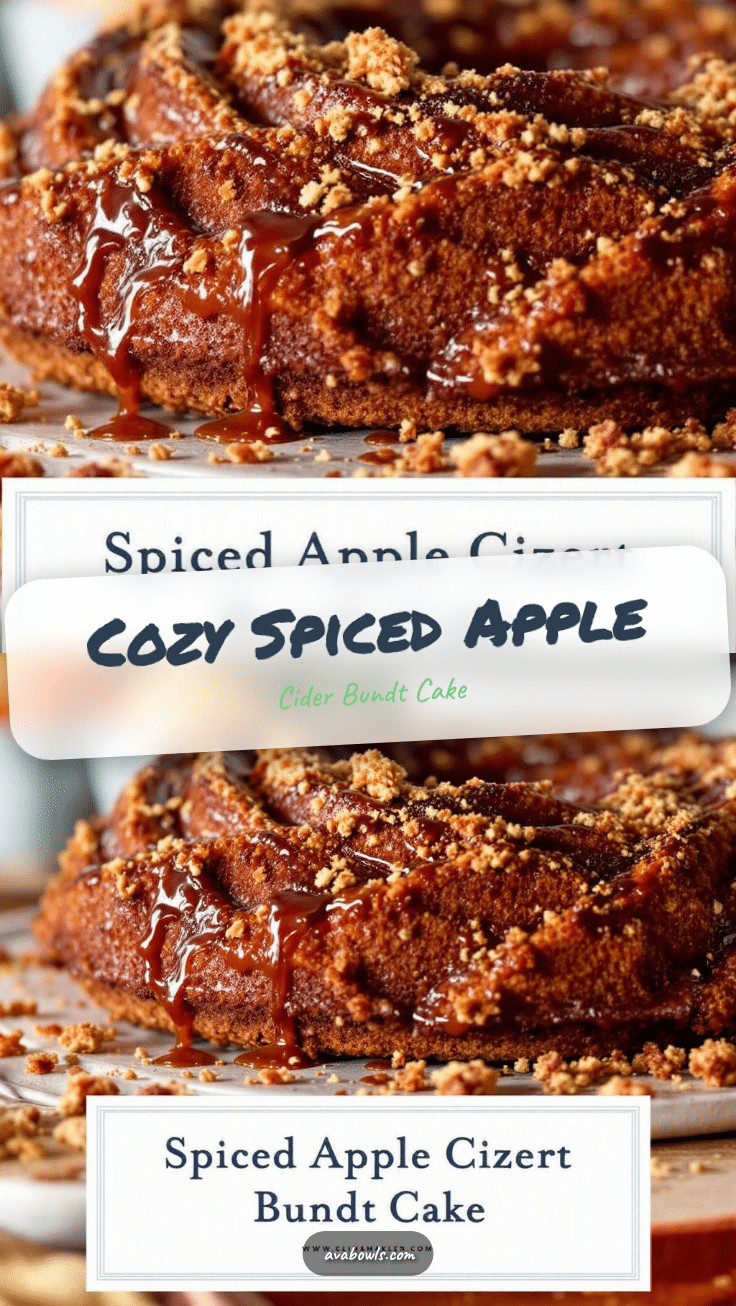
Best Homemade Spiced Apple Cider Bundt Cake Recipe

This spiced apple cider bundt cake uses reduced apple cider for a deep, tangy apple flavor, with a tender crumb and a crackly cider glaze. It’s the perfect cozy dessert for fall gatherings or a quiet afternoon with coffee.
- Prep Time: 20 minutes
- Cook Time: 50 minutes
- Total Time: 1 hour 10 minutes
- Yield: 12 servings 1x
- Category: Dessert
- Cuisine: American
Ingredients
- 2 cups fresh apple cider
- 1 cup unsalted butter, softened
- 1 ½ cups granulated sugar
- 3 large eggs, room temperature
- 3 cups all-purpose flour
- 1 ½ teaspoons baking powder
- ½ teaspoon baking soda
- 1 teaspoon salt
- 2 teaspoons ground cinnamon
- ½ teaspoon ground nutmeg
- ¼ teaspoon ground cloves
- 2 teaspoons vanilla extract
- 1 cup buttermilk, room temperature
- 1 ½ cups powdered sugar
- 3 tablespoons reduced apple cider
- ½ teaspoon vanilla extract
Instructions
- Reduce the apple cider: Pour 2 cups of fresh apple cider into a medium saucepan. Bring to a boil over medium-high heat, then reduce to a steady simmer. Cook for 20-25 minutes, stirring occasionally, until reduced to about ½ cup and syrupy. Pour into a small bowl and let cool completely. You will use about ¼ cup in the cake batter and 3 tablespoons in the glaze.
- Preheat oven to 350°F (175°C). Grease a 10 to 15-cup bundt pan thoroughly with softened butter, then dust with flour and tap out excess.
- In a large bowl, whisk together flour, baking powder, baking soda, salt, cinnamon, nutmeg, and cloves. Set aside.
- In a stand mixer fitted with the paddle attachment, beat softened butter and granulated sugar on medium speed for 3-4 minutes until light and fluffy. Scrape down the bowl.
- Add eggs one at a time, beating well after each addition. Scrape the bowl again. Add vanilla extract and ¼ cup of the cooled reduced cider. Mix on low until just combined (batter may look curdled).
- With mixer on low, add one-third of the dry ingredients, then half of the buttermilk. Repeat with another third of dry ingredients, remaining buttermilk, and final third of dry ingredients. Mix just until flour disappears. Fold batter once with a rubber spatula.
- Pour batter into prepared bundt pan and spread evenly. Tap pan gently on counter to release air bubbles. Bake for 45-55 minutes, until a wooden skewer inserted into the thickest part comes out clean or with a few moist crumbs. Top should be deep golden brown and spring back when touched.
- Let cake cool in pan on a wire rack for exactly 15 minutes. Invert onto rack and let cool completely, about 1 hour.
- While cake cools, whisk together powdered sugar, 3 tablespoons reduced cider, and ½ teaspoon vanilla extract until smooth.
- Once cake is completely cool, drizzle glaze over the top. Let set for about 10 minutes before slicing.
Notes
Do not rush the cider reduction; keep at a gentle simmer. Room temperature ingredients are crucial for proper creaming. Grease the pan thoroughly to prevent sticking. Let cake cool in pan for exactly 15 minutes before inverting. Glaze only when cake is completely cool to achieve a crackly shell. Store at room temperature for up to 3 days; do not refrigerate. Freeze unglazed cake for up to 3 months.
Nutrition
- Serving Size: 1 slice
- Calories: 385
- Sugar: 34
- Sodium: 310
- Fat: 18
- Saturated Fat: 10
- Carbohydrates: 53
- Fiber: 1
- Protein: 5
Keywords: apple cider bundt cake, spiced apple cake, fall dessert, bundt cake, apple cider recipe