The smell hit me before I even opened the oven door—warm, a little sweet, with a hint of earthiness from those tiny caraway seeds. Honestly, I wasn’t expecting much the first time I tried making this cozy Irish soda bread with raisins and caraway seeds. I had a loaf of bread flour sitting around, some baking soda, and a bag of raisins that were threatening to dry up. I thought, “Why not?” The process was so straightforward, and I soon found myself pleasantly surprised by the rustic, slightly crumbly texture combined with bursts of sweet, plump raisins and the subtle, anise-like flavor of caraway.
That first loaf turned into many more, becoming my go-to when I needed something quick, comforting, and a little nostalgic without the fuss of yeast and long rising times. It’s funny how something so simple can feel like a warm hug on a chilly day, especially paired with a pat of butter or a smear of sharp cheddar. This recipe stuck with me because it’s not just about the bread—it’s about that moment of calm and satisfaction when you break into a slice fresh from the oven, the crumb tender but firm enough to hold up to whatever you pile on it.
This Irish soda bread with raisins and caraway seeds isn’t just another loaf; it’s the kind of recipe that invites you to slow down, savor the smells, and enjoy the quiet pleasure of homemade bread without the hassle. Plus, it’s a little reminder that sometimes, the best things come from simple ingredients and a straightforward method. After all, who says cozy can’t be easy?
Why You’ll Love This Recipe
Having baked this Irish soda bread countless times, I can say with confidence it’s a recipe that delivers on comfort and ease. Whether you’re new to bread-making or just want a quick fix, this loaf ticks all the boxes.
- Quick & Easy: Ready in under an hour from start to finish—perfect for busy afternoons or when you unexpectedly crave fresh bread.
- Simple Ingredients: No need for fancy flours or yeast; you likely have all these pantry staples including baking soda and buttermilk.
- Perfect for Cozy Occasions: Ideal alongside a bowl of hearty soup like a Tuscan white bean soup with kale or a comforting stew on cold evenings.
- Crowd-Pleaser: The sweet raisins and subtle caraway seeds give it a unique flavor that both kids and adults tend to love—trust me, it’s a hit at casual get-togethers.
- Unbelievably Delicious: The texture is perfectly tender with a slight crusty exterior, and that mix of sweet and savory notes makes every bite satisfying.
What sets this recipe apart is that it blends tradition with a little twist—the raisins add a pleasant surprise inside, while the caraway seeds bring a mild complexity that’s not overwhelming but adds character. It’s not just any soda bread; it’s one that I keep tweaking just enough to feel like my own, without losing that authentic Irish vibe.
Honestly, this recipe has become my quiet comfort, the kind of bread you want to pull from the oven on a lazy weekend morning or bring along to a brunch. It’s straightforward, forgiving, and somehow feels special every time.
What Ingredients You Will Need
This Irish soda bread uses simple, wholesome ingredients to deliver a bold flavor and satisfying texture without fuss. Most of these are pantry staples, and the additions like raisins and caraway seeds give that lovely twist.
- All-purpose flour (4 cups / 480g) – The base of the bread; you can swap half with whole wheat for a nuttier flavor.
- Baking soda (1 teaspoon) – The leavening agent that makes this bread rise quickly without yeast.
- Salt (1 teaspoon) – Enhances the flavors and balances sweetness.
- Granulated sugar (2 tablespoons) – Adds a hint of sweetness to complement the raisins.
- Caraway seeds (2 teaspoons) – Gives that classic Irish flavor with a subtle licorice note; I recommend fresh seeds from the spice aisle for best aroma.
- Raisins (3/4 cup / 110g) – Plump and sweet, they add pockets of juicy sweetness. In summer, you could swap for dried currants or chopped dried apricots.
- Buttermilk (1 3/4 cups / 420ml) – Provides tang and moisture; you can make your own by adding 1 tablespoon lemon juice or white vinegar to milk and letting it sit for 5 minutes.
- Unsalted butter (2 tablespoons, melted) – Adds richness and keeps the bread tender.
If you’re after a gluten-free version, try swapping the all-purpose flour with a 1:1 gluten-free baking flour blend, but be mindful the texture will vary slightly. For a dairy-free option, use coconut or almond milk with lemon juice as a buttermilk substitute.
Whenever possible, I pick organic raisins and high-quality buttermilk like Organic Valley for that depth of flavor. The caraway seeds are a small but mighty ingredient here, so fresh seeds really make a difference—don’t just use pre-ground, if you can help it.
Equipment Needed
- Large mixing bowl: To combine dry and wet ingredients comfortably.
- Wooden spoon or silicone spatula: For gentle mixing without overworking the dough.
- Baking sheet or cast-iron skillet: A well-seasoned cast-iron skillet works wonders for even heat distribution and a crisp crust, but a baking sheet lined with parchment paper is perfectly fine too.
- Measuring cups and spoons: Precision matters here to keep the texture just right.
- Sharp knife or bread lame: For scoring the dough before baking, which helps the bread expand properly.
Personally, I love using my cast-iron skillet because it gives the bread a rustic, crunchy exterior, but when I’m pressed for time, a baking sheet is my go-to. If you don’t have a bread lame, a serrated knife works just fine—just score the dough deeply enough.
Maintenance tip: Keep your cast iron well-seasoned, and avoid soaking it in water to prolong its life. For budget-friendly options, a regular oven-safe pan or baking tray lined with parchment paper will do the job without fuss.
Preparation Method
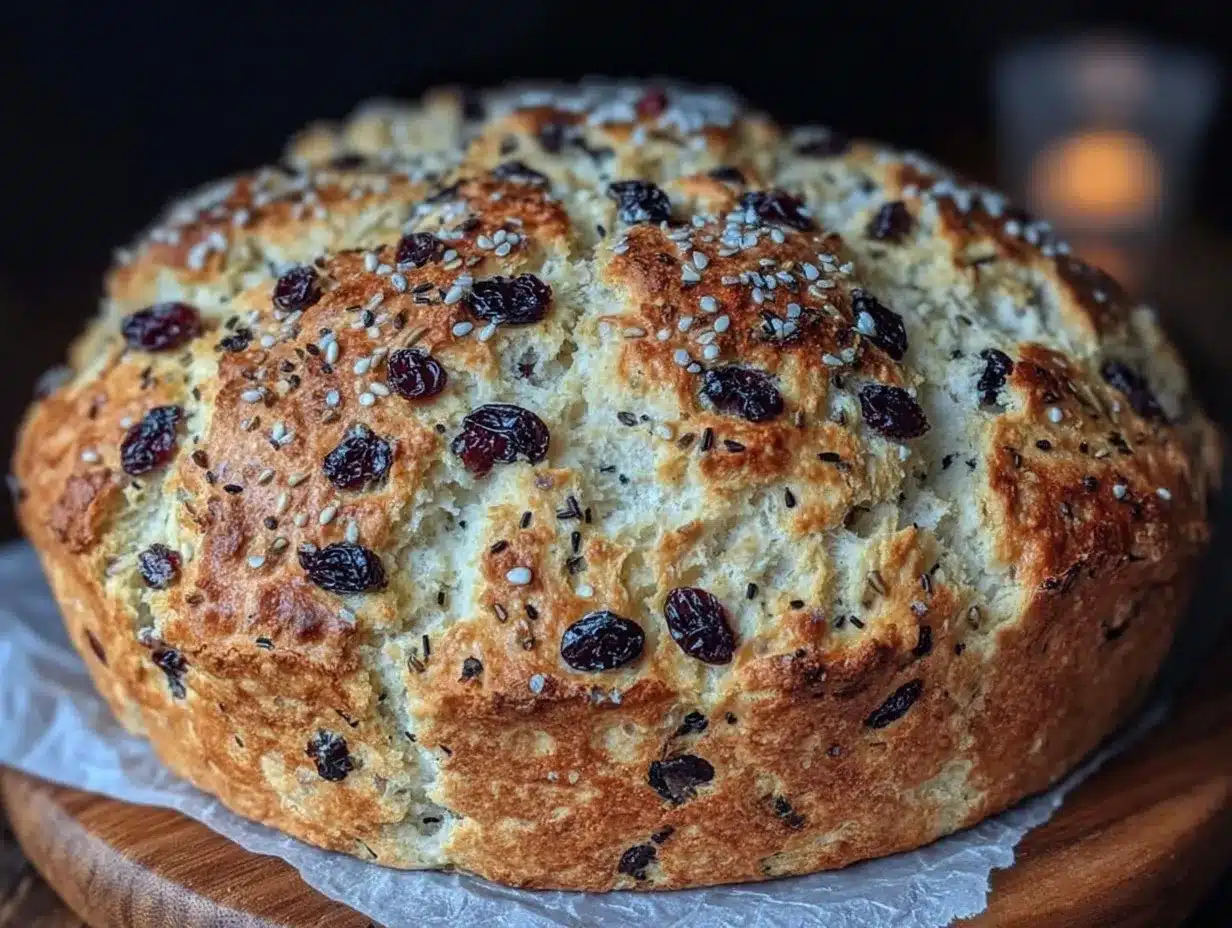
- Preheat the oven to 425°F (220°C) and position a rack in the middle. If using a cast-iron skillet, place it in the oven to heat slightly.
- In a large bowl, whisk together the dry ingredients: all-purpose flour, baking soda, salt, sugar, and caraway seeds. Make sure everything is evenly distributed to avoid pockets of baking soda.
- Stir in the raisins: Toss them with the dry mixture so they don’t clump or sink to the bottom.
- Make a well in the center: Pour in the buttermilk and melted butter. Using a wooden spoon or your hands, gently mix until just combined. The dough will be sticky and shaggy—don’t overmix, or the bread will become tough.
- Turn the dough onto a floured surface: Lightly knead it just 3-4 times to bring it together, keeping it rustic and loose.
- Shape the dough into a round loaf: About 8 inches (20 cm) in diameter and place it on a parchment-lined baking sheet or the preheated cast-iron skillet.
- Score the top: Using a sharp knife, cut a deep cross about 1/2 inch (1.3 cm) deep. This helps the bread bake evenly and creates that charming traditional look.
- Bake for 35-40 minutes: The crust should be golden brown and firm to the touch. A good test is tapping the bottom of the loaf—it should sound hollow.
- Cool on a wire rack for at least 20 minutes: This step is key so the crumb sets properly and slicing is easier.
If your bread is browning too fast, loosely tent it with foil halfway through baking. Also, if your raisins look dry before baking, soak them in warm water or tea for 10 minutes to keep them plump and juicy inside the bread.
Cooking Tips & Techniques
When it comes to Irish soda bread, timing and technique make all the difference. The beauty of soda bread is in its simplicity, but a few things can turn “meh” into marvelous.
- Don’t overmix: This is classic advice for quick breads. Overworking the dough develops gluten, which you don’t want here; it should feel loose and a bit sticky.
- Use fresh baking soda: Old baking soda loses potency, and your bread won’t rise properly. A quick test is to drop a bit in vinegar—if it fizzes, you’re good to go.
- Score deeply and sharply: This not only creates a pretty loaf but helps the bread expand, avoiding cracks in random places.
- Buttermilk is non-negotiable: It reacts with baking soda to release carbon dioxide bubbles that give the bread its lift. If you don’t have buttermilk, the milk and acid substitute works well but don’t skip it.
- Use a hot oven and preheated skillet: This jump-starts the baking process and forms a beautiful crust.
- Don’t skip cooling: Letting the bread rest before slicing avoids a gummy texture.
Once, I rushed slicing right out of the oven and ended up with a crumbly mess. Lesson learned! Also, mixing the raisins in at the very end can make them clump, so toss them evenly through the dry ingredients first to get a better distribution.
Pro tip: Multitask by preparing a creamy dip like a beer cheese pretzel dip while the bread bakes—it pairs beautifully with warm soda bread and makes for a fun snack or appetizer.
Variations & Adaptations
This cozy Irish soda bread is versatile and lends itself well to tweaks, so feel free to make it your own.
- Sweet version: Increase sugar to 1/4 cup (50g) and add a teaspoon of cinnamon or nutmeg for a more dessert-like bread.
- Savory twist: Omit the raisins and add chopped fresh herbs like rosemary or thyme with cracked black pepper for an herby loaf.
- Gluten-free option: Use a gluten-free baking blend (about 4 cups / 480g) and add an extra teaspoon of baking powder to help with rise. Expect a denser texture but still delicious.
- Dairy-free alternative: Substitute buttermilk with coconut or almond milk plus 1 tablespoon apple cider vinegar, and use vegan butter or coconut oil.
- Seed swap: Try fennel or anise seeds instead of caraway for a slightly different licorice flavor.
One variation I love is adding chopped dried apricots and a splash of orange zest for a fruity, bright twist. It’s especially nice when paired with a soft cheese spread.
Serving & Storage Suggestions
Serve this Irish soda bread warm or at room temperature, ideally within a day or two of baking. It’s fantastic with butter, sharp cheddar, or a drizzle of honey for breakfast or an afternoon snack.
For a cozy meal, slice thickly and serve alongside a bowl of roasted tomato basil soup or hearty stews—this bread soaks up the broth beautifully and adds a rustic feel to the meal.
Store leftover bread wrapped tightly in plastic or in an airtight container at room temperature for up to 2 days. For longer storage, slice and freeze in a zip-top bag for up to 3 months.
To reheat, toast slices directly or warm in a 350°F (175°C) oven for 10 minutes. You’ll find the crust crisps back up nicely, and the crumb softens again.
Interestingly, letting the bread rest overnight wrapped in a clean kitchen towel makes the crumb moister and the flavors meld better, so it’s worth trying if you want to prepare ahead.
Nutritional Information & Benefits
Per slice (assuming 12 slices per loaf), this Irish soda bread provides roughly:
| Calories | 160 |
|---|---|
| Carbohydrates | 32g |
| Protein | 4g |
| Fat | 3g |
| Fiber | 2g |
The raisins contribute natural sweetness along with iron and antioxidants, while caraway seeds add small amounts of vitamins and minerals plus digestive benefits traditionally linked to them.
This bread is naturally free of yeast and uses baking soda, making it suitable for those who prefer or need to avoid yeast products. You can easily make it gluten-free or dairy-free by following the substitutions suggested earlier.
From a health-conscious perspective, soda bread is a nice option when you want homemade bread without the heaviness of yeasted loaves. Plus, it pairs well with nutrient-dense dishes, making it a balanced addition to meals.
Conclusion
This cozy Irish soda bread with raisins and caraway seeds is proof that simple ingredients can make something truly comforting and special. It’s a recipe that invites you to slow down, enjoy the process, and savor the moment when that first slice breaks apart with a tender crumb and a hint of sweetness.
Whether you stick with the classic or try one of the variations, this bread is a lovely companion to many meals or just on its own with a little butter. I love this recipe because it’s forgiving, quick, and always feels like a small celebration of home baking.
If you try it, I’d love to hear how you customize it or what you pair it with—sharing those little twists makes the experience even richer. Here’s to cozy kitchens and warm loaves that bring us back to what matters most.
FAQs
Can I use regular milk instead of buttermilk?
You can make a quick buttermilk substitute by adding 1 tablespoon of lemon juice or white vinegar to 1 3/4 cups (420ml) of milk and letting it sit for 5 minutes before using. This acidic mix reacts with baking soda to give the bread its rise.
Why does soda bread need to be scored on top?
Scoring the dough with a cross allows steam to escape and the bread to expand properly while baking. It also creates the traditional rustic look that soda bread is known for.
Can I add other dried fruits instead of raisins?
Absolutely! Dried currants, chopped apricots, or dried cranberries all work well. Just make sure to toss them in the flour mixture first to prevent sinking.
How do I know when the bread is fully baked?
The crust should be golden brown and firm. Tap the bottom of the loaf—it should sound hollow. If it sounds dense, bake for 5-10 more minutes and check again.
Is Irish soda bread gluten-free?
Traditional Irish soda bread uses wheat flour, so it’s not gluten-free. However, you can substitute with a gluten-free baking flour blend (about 4 cups / 480g) and add an extra teaspoon of baking powder to help the rise. The texture will be a bit different but still tasty.
Pin This Recipe!
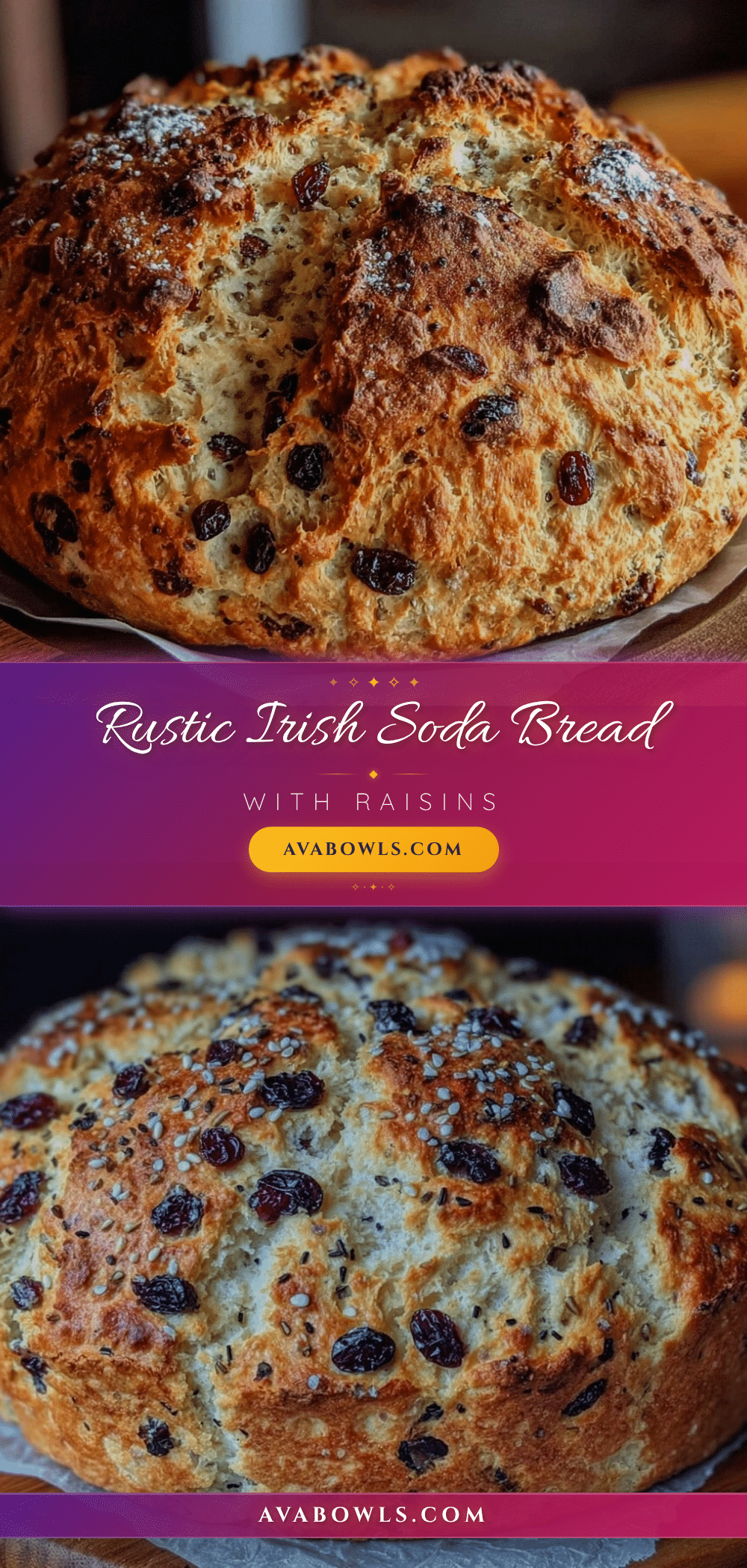
Cozy Irish Soda Bread Recipe with Raisins and Caraway Seeds

A quick and easy Irish soda bread with sweet raisins and subtle caraway seeds, perfect for cozy occasions and comforting meals.
- Prep Time: 15 minutes
- Cook Time: 40 minutes
- Total Time: 55 minutes
- Yield: 12 servings 1x
- Category: Bread
- Cuisine: Irish
Ingredients
- 4 cups (480g) all-purpose flour
- 1 teaspoon baking soda
- 1 teaspoon salt
- 2 tablespoons granulated sugar
- 2 teaspoons caraway seeds
- 3/4 cup (110g) raisins
- 1 3/4 cups (420ml) buttermilk
- 2 tablespoons unsalted butter, melted
Instructions
- Preheat the oven to 425°F (220°C) and position a rack in the middle. If using a cast-iron skillet, place it in the oven to heat slightly.
- In a large bowl, whisk together the dry ingredients: all-purpose flour, baking soda, salt, sugar, and caraway seeds. Make sure everything is evenly distributed.
- Stir in the raisins, tossing them with the dry mixture to prevent clumping or sinking.
- Make a well in the center and pour in the buttermilk and melted butter. Gently mix with a wooden spoon or hands until just combined; the dough will be sticky and shaggy.
- Turn the dough onto a floured surface and lightly knead 3-4 times to bring it together, keeping it rustic and loose.
- Shape the dough into an 8-inch (20 cm) round loaf and place it on a parchment-lined baking sheet or the preheated cast-iron skillet.
- Score the top with a sharp knife, cutting a deep cross about 1/2 inch (1.3 cm) deep.
- Bake for 35-40 minutes until the crust is golden brown and firm. Tap the bottom of the loaf; it should sound hollow.
- Cool on a wire rack for at least 20 minutes before slicing.
Notes
Do not overmix the dough to avoid toughness. Use fresh baking soda for proper rise. Score the dough deeply to help it expand evenly. Let the bread cool completely before slicing to avoid a gummy texture. Soak raisins in warm water or tea for 10 minutes if they look dry before baking. For gluten-free or dairy-free versions, follow substitutions suggested in the recipe.
Nutrition
- Serving Size: 1 slice (1/12th of l
- Calories: 160
- Fat: 3
- Carbohydrates: 32
- Fiber: 2
- Protein: 4
Keywords: Irish soda bread, soda bread with raisins, caraway seeds bread, quick bread, easy bread recipe, no yeast bread, cozy bread