“You’re not going to believe this, but I almost didn’t make it,” I said, stirring the risotto in my small kitchen while the evening light faded. The lobster had been a last-minute find at the market, and honestly, I wasn’t sure if I had the patience for risotto that night—too much going on, too little time. But somehow, that creamy lobster risotto with white wine pulled me right back to calm. It’s funny how a single dish can quiet the chaos, isn’t it?
I remember the moment the aroma of garlic and shallots mingling with the sharp, fruity notes of white wine hit the air—the kind of smell that makes you stop, just for a second, and breathe. That’s when I realized this recipe wasn’t just about fancy ingredients; it was about rewarding patience and savoring the process. Lobster, with its delicate sweetness, paired with the luxurious creaminess of the risotto, felt like a little celebration in a bowl.
At first, I was skeptical about cooking lobster myself. I’d always thought it was too intimidating or too restaurant-only. But this recipe changed everything. It’s rich, yes, but not in a way that weighs you down. It’s elegant, sure, but surprisingly approachable. After making it a few times, it became my go-to for impressing friends without the fuss. And honestly, it’s a dish that invites you to slow down and enjoy each bite—something we all need more of.
It stuck with me because it’s just that kind of recipe. The kind that makes you want to pull up a chair, pour a glass of white wine, and enjoy dinner without distractions. So, if you’re wondering whether creamy lobster risotto with white wine really lives up to the hype, trust me—it does. And here’s the recipe that’s become my quiet little secret for turning any evening into something a bit more special.
Why You’ll Love This Recipe
This creamy lobster risotto recipe is the real deal—tested multiple times in my kitchen, tweaked here and there to get the texture just right, and loved by everyone who’s tasted it. It’s got that rich, elegant flavor without the stress you might expect. Here’s why it’s become a favorite:
- Quick & Easy: It comes together in about 45 minutes, which is surprisingly fast for a dish that feels so indulgent. Perfect for those nights when you want something classy without spending hours.
- Simple Ingredients: No exotic stuff here—just quality lobster, Arborio rice, white wine, and basic aromatics you probably already have. I usually grab fresh lobster tail from the market, but cooked lobster meat works great too.
- Perfect for Special Occasions: Whether it’s a dinner party, anniversary, or a quiet night in, this risotto fits the bill. It’s fancy enough to impress but comfortable enough to enjoy any day.
- Crowd-Pleaser: I’ve seen even risotto skeptics come back for seconds. The creamy texture with that subtle seafood sweetness is just irresistible.
- Unbelievably Delicious: The white wine adds a bright acidity that balances the richness beautifully. Plus, stirring the risotto slowly really brings out the creaminess that makes this dish stand out.
What sets this apart? The lobster is gently folded in at the end to keep its tender texture, and the risotto is cooked to that perfect al dente bite. Plus, the wine isn’t just an afterthought; it’s a key player that lifts the whole dish. This isn’t just another seafood risotto—it’s the version I trust to turn an ordinary evening into something memorable.
What Ingredients You Will Need
This recipe uses straightforward, fresh ingredients that work in harmony to create a rich and satisfying lobster risotto with white wine. Each component plays a role in building layers of flavor and that signature creamy texture.
- For the Risotto Base:
- 1 ½ cups Arborio rice (I prefer Carolina brand for consistent creaminess)
- 4 cups seafood or chicken broth, kept warm (homemade or low-sodium store-bought)
- 2 tablespoons unsalted butter, divided (adds richness)
- 1 small onion, finely chopped (for subtle sweetness)
- 2 cloves garlic, minced (fresh is best!)
- ½ cup dry white wine (Sauvignon Blanc or Pinot Grigio works well)
- For the Lobster & Finishing Touches:
- 1 cup cooked lobster meat, chopped (fresh or thawed from frozen)
- ½ cup freshly grated Parmesan cheese (use Parmigiano-Reggiano if you want to splurge)
- 2 tablespoons heavy cream or crème fraîche (optional, for extra creaminess)
- Salt and freshly ground black pepper, to taste
- Chopped fresh parsley or chives, for garnish
If you can’t find fresh lobster, frozen cooked lobster meat is a solid alternative. Just be sure to thaw it gently to keep that tender texture. For a dairy-free version, swap butter with olive oil and omit the Parmesan or use a vegan alternative.
And if you want to add a bit of brightness, a squeeze of fresh lemon juice right before serving is a neat trick I picked up during a recent run of my creamy lemon ricotta pasta with fresh peas and mint. It wakes up the flavors nicely.
Equipment Needed
- A heavy-bottomed saucepan or a wide, deep skillet – this helps the rice cook evenly without scorching.
- Wooden spoon or silicone spatula – for stirring the risotto gently but consistently.
- Measuring cups and spoons – precise measurements matter here.
- Small ladle – for adding broth gradually.
- Sharp knife and cutting board – for prepping the lobster and aromatics.
If you don’t have a ladle, a small measuring cup or even a sturdy spoon works fine to add broth bit by bit. I once tried making risotto with a flimsy pan, and trust me, it was a disaster—the heat wasn’t even, and I ended up with unevenly cooked rice. So, investing in a good pan makes a difference.
Preparation Method
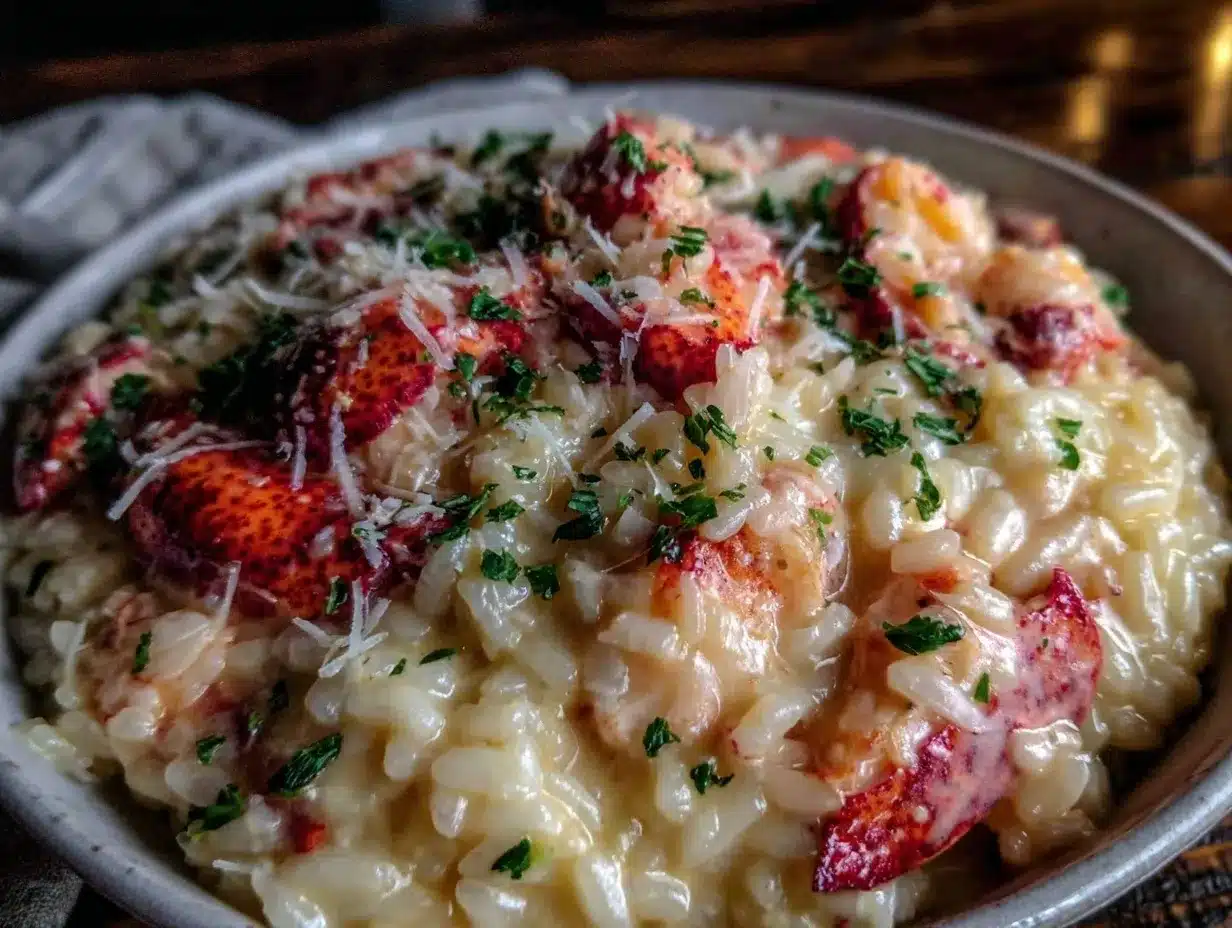
- Prep your broth: Keep 4 cups (960 ml) of seafood or chicken broth warm in a saucepan over low heat. This keeps the temperature steady when adding to the risotto, which helps the rice cook evenly and release its starch.
- Sauté aromatics: In a heavy-bottomed pan, melt 1 tablespoon (14 g) of butter over medium heat. Add the finely chopped onion and cook for about 4 minutes until translucent and soft. Toss in the minced garlic, stirring for another 30 seconds until fragrant but not browned.
- Toast the rice: Add the Arborio rice (1 ½ cups / 285 g) to the pan. Stir frequently for 2-3 minutes until the edges become translucent but the center remains opaque. This step coats the grains in butter and aromatics, building flavor.
- Deglaze with wine: Pour in ½ cup (120 ml) dry white wine. Stir constantly until the wine is mostly absorbed—this usually takes around 2-3 minutes. The alcohol cooks off, leaving a bright acidity that balances the richness.
- Cook the risotto: Begin adding warm broth one ladleful (about ½ cup / 120 ml) at a time. Stir gently but consistently, allowing the liquid to absorb before adding the next ladle. This process should take roughly 18-20 minutes. The rice should be creamy but with a slight bite (al dente).
- Add lobster and finish: When the rice is just about done, gently fold in 1 cup (150 g) chopped cooked lobster meat, the remaining 1 tablespoon (14 g) of butter, and ½ cup (50 g) grated Parmesan cheese. Stir to combine and melt everything together. If you want it extra creamy, add 2 tablespoons (30 ml) of heavy cream now.
- Season and rest: Taste and adjust seasoning with salt and freshly ground black pepper. Remove from heat and cover for 2 minutes to let the flavors meld. The texture should be luxuriously smooth and slightly loose.
- Serve: Spoon the risotto into warm bowls and garnish with chopped fresh parsley or chives. A final crack of black pepper over the top doesn’t hurt either.
Quick tip: If the risotto seems too thick as it rests, stir in a splash of warm broth or water to loosen it up a bit. Also, resist the urge to rush the broth additions—patience pays off in that creamy texture.
Cooking Tips & Techniques
Cooking risotto can feel intimidating, but it’s mostly about patience and attention. Here are some tips I’ve picked up that make the process smoother and the results better:
- Keep broth warm: Adding cold broth cools the rice and slows cooking. Warm broth keeps everything moving nicely.
- Stir gently but often: Stirring releases the starch from the rice, creating that creamy consistency. But too vigorous stirring can break the grains—gentle folds work best.
- Don’t rush the wine step: Letting the wine fully absorb before adding broth adds a subtle depth and acidity that balances the richness.
- Use quality lobster: Fresh is best, but frozen cooked lobster works well if thawed properly. Overcooking lobster can make it rubbery, so fold it in at the very end to keep it tender.
- Trust your texture: The perfect risotto is creamy and slightly loose, not dry or mushy. Taste frequently near the end to catch that al dente bite.
- Multitasking: Warm your plates while you finish cooking so the risotto stays hot when served.
I once forgot to keep the broth warm and ended up with unevenly cooked rice. Lesson learned the hard way! Also, if you want to experiment, try finishing with a little creamy spring vegetable fettuccine alfredo on the side to complement the richness.
Variations & Adaptations
This creamy lobster risotto recipe is wonderfully flexible, so you can make it your own depending on your mood or dietary needs.
- Seasonal swap: Replace lobster with fresh crab meat or shrimp for a different seafood flair. Just adjust cooking times to avoid overcooking.
- Vegetarian version: Skip the lobster and use a medley of mushrooms sautéed in garlic and butter. Adding a splash of white wine keeps the flavor bright.
- Gluten-free: Risotto is naturally gluten-free when made with pure Arborio rice and gluten-free broth. Just double-check your broth labels.
- Dairy-free: Substitute butter with olive oil and use nutritional yeast or a vegan cheese alternative instead of Parmesan. Heavy cream can be swapped for coconut cream if you like a subtle twist.
- Cooking method: If you’re short on time, try cooking the risotto in an Instant Pot using the sauté and pressure cook functions. Just be mindful of stirring in the lobster at the end to keep it tender.
Personally, I’ve played around with adding a touch of saffron for a golden hue and floral note—it’s a beautiful upgrade when you want to impress. And if you enjoy fresh herbs, stirring in some chopped tarragon or basil at the end adds a lovely freshness.
Serving & Storage Suggestions
This lobster risotto is best served hot and fresh, with its creamy texture and delicate flavors at their peak. I usually plate it in shallow bowls, garnished with chopped parsley and a sprinkle of Parmesan. A glass of crisp white wine alongside feels just right.
For sides, something light and fresh works well—think a simple green salad with lemon vinaigrette or roasted asparagus. If you’re curious about pairing, I once served it beside a creamy roasted tomato basil soup, similar to my creamy roasted tomato basil soup, which complemented the seafood richness beautifully.
Leftovers keep well in an airtight container in the refrigerator for up to 2 days. When reheating, add a splash of broth or water and warm gently on the stove while stirring to bring back that creamy texture. Avoid microwaving straight from the fridge, as it can dry out the risotto.
Interestingly, the flavors deepen after resting overnight, so if you don’t mind a thicker texture, it can be even more comforting the next day.
Nutritional Information & Benefits
This creamy lobster risotto offers a balance of protein, carbs, and fats, making it a satisfying meal. Lobster is a lean source of protein and rich in vitamins B12 and zinc, supporting energy and immune function. The Arborio rice provides complex carbohydrates for sustained energy.
With moderate use of butter and cheese, it’s indulgent but not overly heavy. For those watching sodium, using low-sodium broth helps control salt levels. The white wine adds flavor without extra calories.
Gluten-free and can be adapted for dairy-free diets, this recipe fits many dietary preferences. From a wellness standpoint, it’s a treat that feels fancy but keeps things honest without unnecessary additives.
Conclusion
Creamy lobster risotto with white wine is the kind of recipe that turns a meal into an experience. Rich but balanced, elegant yet approachable, it’s stuck with me through many dinners—both quiet and celebratory. I love how it invites you to slow down and savor, which is rare these days.
Feel free to make this recipe your own by adjusting herbs, swapping seafood, or pairing it with your favorite sides. Whether you’re cooking for one or hosting friends, it’s a dish that welcomes everyone to the table.
Give it a try, and let me know how it goes—sharing your twists or questions makes this culinary journey even better. Here’s to many cozy, creamy bowls ahead!
FAQs about Creamy Lobster Risotto with White Wine
Can I use frozen lobster meat for this risotto?
Absolutely! Just thaw the lobster gently in the refrigerator and fold it in at the end to keep it tender.
What type of rice is best for making risotto?
Arborio rice is preferred because of its high starch content, which creates that creamy texture. Carnaroli or Vialone Nano are also great alternatives.
How do I prevent the risotto from becoming mushy?
Cook it slowly, adding warm broth gradually and stirring gently. Stop cooking when the rice is al dente—tender but with a slight bite.
Can I prepare risotto ahead of time?
Risotto is best fresh, but you can make it a day ahead and reheat gently with extra broth. It thickens when stored, so loosening it up is key.
What wine should I serve with lobster risotto?
A crisp, dry white like Sauvignon Blanc or Pinot Grigio pairs beautifully, matching the wine used in cooking and complementing the seafood flavors.
Pin This Recipe!
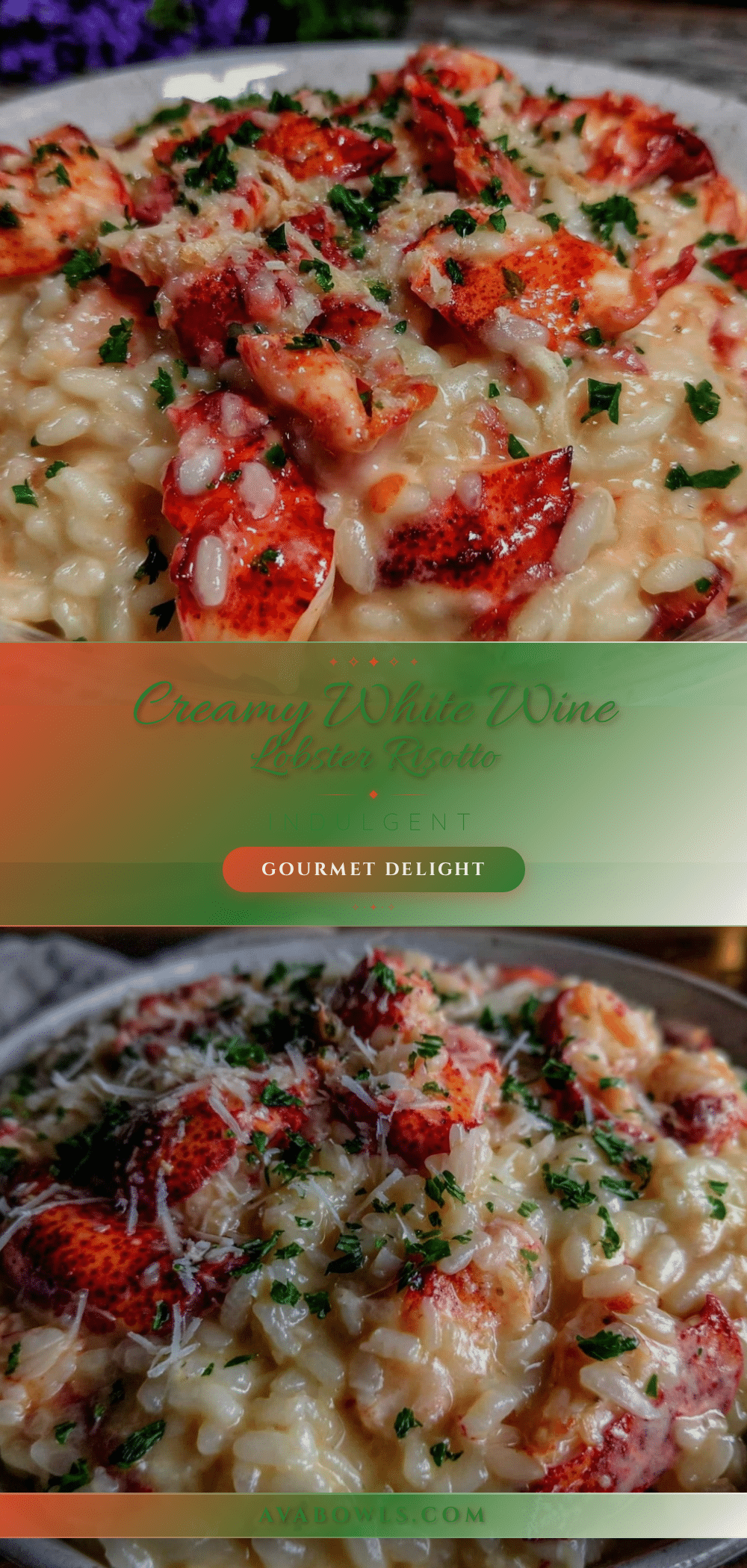
Creamy Lobster Risotto Recipe Easy Perfect Rich White Wine Flavor

A rich and elegant creamy lobster risotto with white wine that is surprisingly quick and easy to make, perfect for special occasions or a comforting dinner.
- Prep Time: 10 minutes
- Cook Time: 35 minutes
- Total Time: 45 minutes
- Yield: 4 servings 1x
- Category: Main Course
- Cuisine: Italian
Ingredients
- 1 ½ cups Arborio rice
- 4 cups seafood or chicken broth, kept warm
- 2 tablespoons unsalted butter, divided
- 1 small onion, finely chopped
- 2 cloves garlic, minced
- ½ cup dry white wine (Sauvignon Blanc or Pinot Grigio)
- 1 cup cooked lobster meat, chopped
- ½ cup freshly grated Parmesan cheese
- 2 tablespoons heavy cream or crème fraîche (optional)
- Salt and freshly ground black pepper, to taste
- Chopped fresh parsley or chives, for garnish
Instructions
- Keep 4 cups of seafood or chicken broth warm in a saucepan over low heat.
- In a heavy-bottomed pan, melt 1 tablespoon of butter over medium heat. Add the finely chopped onion and cook for about 4 minutes until translucent and soft. Add the minced garlic and stir for another 30 seconds until fragrant but not browned.
- Add the Arborio rice to the pan. Stir frequently for 2-3 minutes until the edges become translucent but the center remains opaque.
- Pour in ½ cup dry white wine. Stir constantly until the wine is mostly absorbed, about 2-3 minutes.
- Begin adding warm broth one ladleful (about ½ cup) at a time. Stir gently but consistently, allowing the liquid to absorb before adding the next ladle. Continue for 18-20 minutes until the rice is creamy but al dente.
- Gently fold in the chopped cooked lobster meat, remaining 1 tablespoon butter, and grated Parmesan cheese. Stir to combine and melt everything together. Add heavy cream if desired for extra creaminess.
- Taste and adjust seasoning with salt and freshly ground black pepper. Remove from heat and cover for 2 minutes to let flavors meld.
- Spoon the risotto into warm bowls and garnish with chopped fresh parsley or chives. Add a final crack of black pepper before serving.
Notes
Keep broth warm to ensure even cooking and creamy texture. Stir gently but often to release starch without breaking rice grains. Fold lobster in at the end to keep it tender. If risotto thickens too much while resting, stir in a splash of warm broth or water to loosen. For dairy-free, substitute butter with olive oil and Parmesan with vegan cheese or nutritional yeast.
Nutrition
- Serving Size: 1 cup risotto
- Calories: 450
- Sugar: 3
- Sodium: 600
- Fat: 18
- Saturated Fat: 10
- Carbohydrates: 45
- Fiber: 2
- Protein: 22
Keywords: lobster risotto, creamy risotto, seafood risotto, white wine risotto, easy lobster recipe, elegant dinner, Arborio rice, special occasion meal