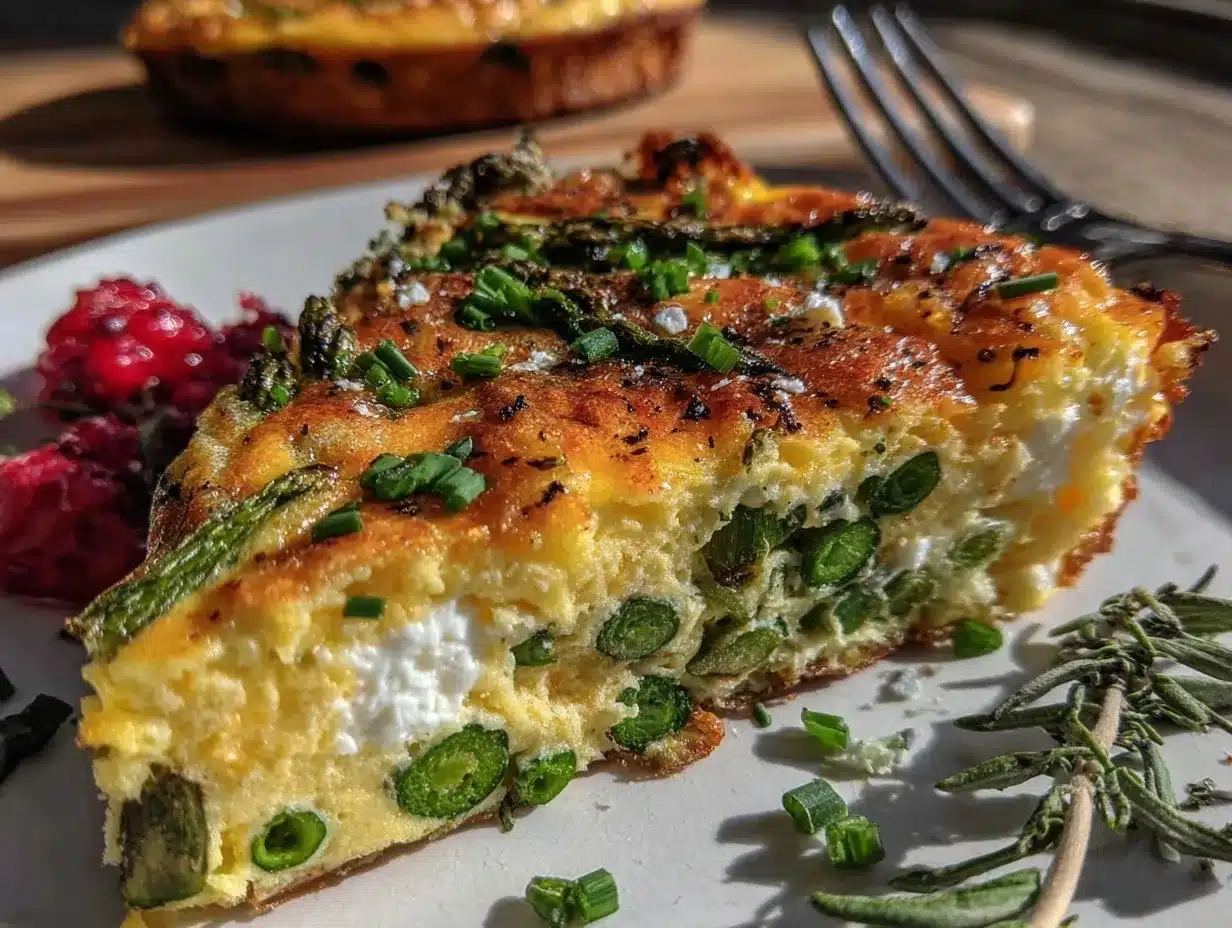
“You really should try this frittata—it’s like spring on a plate,” my neighbor said last weekend as she handed me a slice of her latest kitchen experiment. I was skeptical; I mean, how exciting could a simple egg dish be? But then I took that first bite, and honestly, it was a little revelation. The fresh spring vegetable frittata with creamy goat cheese wasn’t just tasty; it had this bright, vibrant feel that made the whole kitchen smell like a garden in bloom. The tangy creaminess of the goat cheese melted perfectly into the tender veggies, and suddenly, I found myself whipping it up again that very week.
It was one of those quiet moments in the kitchen, the kind where you’re half-focused on chopping and half-lost in the scent of sautéed asparagus and peas. The way the eggs puffed up golden and the vegetables kept their crisp snap—it reminded me why simple meals can be so comforting. This recipe stuck with me, not just because it’s easy or quick, but because it has that effortless charm that turns any morning or light lunch into something special without a fuss. There’s a calm satisfaction in folding fresh ingredients into eggs and knowing you’ve got a meal that feels both fresh and cozy, all at once.
So yeah, this fresh spring vegetable frittata with creamy goat cheese has quietly become a staple in my rotation. It’s the kind of dish that invites you to slow down, savor the season, and maybe even share a slice with a friend—because good food always tastes better when it’s shared.
Why You’ll Love This Recipe
This fresh spring vegetable frittata with creamy goat cheese hits the spot in so many ways, and I’m not just saying that because I’ve made it a bunch of times. Here’s why it’s a keeper:
- Quick & Easy: This recipe comes together in about 30 minutes, making it perfect for busy mornings or impromptu brunches.
- Simple Ingredients: No need for specialty items; most of these are pantry staples or fresh produce you can find at any local market.
- Perfect for Spring: The combination of fresh asparagus, peas, and herbs captures the season’s best flavors in one dish.
- Crowd-Pleaser: Whether you’re serving family or friends, this frittata seems to disappear faster than expected.
- Unbelievably Delicious: The creamy tang of goat cheese adds a luxurious texture and depth that makes every bite memorable.
What really sets this recipe apart is the way the goat cheese melts into the eggs and vegetables, creating a smooth, rich bite without overpowering the freshness of the spring veggies. I’ve tested a few variations, but nothing compares to this balance of flavors. Plus, the seasoning is just right—not too heavy, allowing the natural sweetness of asparagus and peas to shine through. It’s the kind of dish that feels fancy but requires zero fuss, which makes it a winner in my book.
And honestly, I love how versatile this frittata is. It’s great for a weekend brunch, a light dinner, or even packed cold for a picnic. It’s comfort food with a fresh, vibrant twist—and sometimes, that’s exactly what you need.
What Ingredients You Will Need
This recipe uses simple, wholesome ingredients to deliver bold flavor and satisfying texture without the fuss. Most of the items are easy to source and can be adjusted depending on what’s fresh or available in your pantry.
- Eggs – 8 large eggs (room temperature for best fluffiness)
- Goat cheese – 4 oz (about 115 grams), crumbled (I prefer the tangy, creamy variety from local dairies)
- Asparagus – 1 bunch (about 1/2 pound or 225 grams), trimmed and cut into 1-inch pieces
- Fresh peas – 1 cup (about 150 grams), shelled (or frozen peas if fresh aren’t available)
- Green onions – 3, thinly sliced (white and green parts)
- Fresh herbs – 2 tablespoons chopped (I like a mix of parsley and chives for brightness)
- Garlic – 1 clove, minced (adds a subtle depth)
- Olive oil – 2 tablespoons (use extra virgin for flavor)
- Milk – 1/4 cup (60 ml), whole or 2% for creaminess; you can swap with almond milk for dairy-free
- Salt & pepper – to taste (freshly ground black pepper works best)
- Optional: pinch of red pepper flakes for a little heat
If you’re feeling adventurous, swapping the asparagus with tender zucchini ribbons or adding some sautéed mushrooms can be fantastic. For dairy-free, try a plant-based cheese alternative, though the flavor will shift a bit. I’ve also found that the peas can be replaced with blanched green beans when peas aren’t in season, keeping that fresh snap intact.
Equipment Needed
- Oven-safe skillet: A 10-inch (25 cm) cast iron or non-stick skillet is ideal for even cooking and easy transfer from stovetop to oven.
- Mixing bowl: For whisking the eggs and milk together thoroughly.
- Whisk or fork: To beat the eggs to a light consistency.
- Chef’s knife and cutting board: For prepping the vegetables cleanly and safely.
- Spatula or wooden spoon: For stirring and folding ingredients gently.
- Measuring cups and spoons: For precise ingredient amounts, especially for the milk and herbs.
If you don’t have an oven-safe skillet, a regular skillet plus a baking dish can work—just transfer the mixture carefully before baking. Personally, I love using cast iron because it builds a nice crust on the frittata edges, adding a little extra texture. Just remember to season your cast iron skillet regularly to keep it non-stick and rust-free.
Preparation Method
- Preheat your oven to 375°F (190°C). This ensures a consistent temperature for cooking the frittata through without burning.
- Prepare the vegetables: Trim the asparagus and slice into 1-inch pieces. Shell the peas if fresh. Thinly slice the green onions, keeping whites and greens together. Mince the garlic finely to avoid large bites of raw flavor.
- Heat olive oil in your skillet over medium heat. Add the minced garlic and green onions first, cooking for about 1 minute until fragrant but not browned. Stir continuously to avoid burning.
- Add the asparagus and peas to the skillet. Sauté for 3 to 4 minutes until the vegetables soften slightly but remain crisp and bright green. You want them tender, not mushy. Season with a pinch of salt and pepper here to build layers of flavor.
- Meanwhile, whisk together the eggs, milk, salt, pepper, and chopped herbs in a mixing bowl until the mixture is smooth and slightly frothy. This aerates the eggs for a light texture.
- Pour the egg mixture over the sautéed vegetables in the skillet. Tilt the pan gently to spread the eggs evenly across the surface.
- Scatter the crumbled goat cheese across the top. The cheese will melt into pockets of creamy tang as the frittata bakes.
- Cook on the stove over medium-low heat for 3 to 4 minutes without stirring. This helps the edges start to set and gives a nice crust without overcooking the bottom.
- Transfer the skillet to the oven and bake for 12 to 15 minutes, until the eggs are fully set and the top lightly golden. To test doneness, gently shake the skillet; the center should be firm with no liquid egg.
- Remove from oven and let it rest for 5 minutes before slicing. This resting time helps the frittata finish cooking and makes slicing easier without crumbling.
One little trick I’ve learned is to avoid overbaking—which can dry out the eggs and toughen the goat cheese. The frittata should feel just firm but still soft and creamy inside. Also, if you want extra golden spots, a quick broil for 1-2 minutes at the end works wonders, but watch carefully to prevent burning.
Cooking Tips & Techniques
Getting a frittata just right is about a few key moves, trust me. First, don’t rush the vegetable sauté. You want them tender but still vibrant, which means medium heat and a watchful eye. I’ve burned garlic more times than I care to admit, so stirring constantly and adding it just before the veggies is my go-to to keep flavors balanced.
Whisking the eggs with milk is another subtle but important step. Adding milk makes the eggs lighter and creamier, but too much can cause a runny frittata. About 1/4 cup per 8 eggs hits the sweet spot every time.
When cooking on the stovetop before baking, you’re setting the base to avoid a raw bottom. If you skip this, the frittata can be unevenly cooked. Also, using an oven-safe pan is a must—don’t try to move it mid-bake or you’ll lose that lovely puffiness.
Lastly, I’ve learned not to overmix the eggs once they hit the pan. Gently pouring and spreading is enough. Overstirring can break the delicate curds forming and make the texture rubbery. Patience is key here—you want a tender, fluffy result, not a scrambled mess.
Variations & Adaptations
This frittata is a fantastic canvas for creativity or dietary tweaks. Here are a few ways I’ve played with it:
- Veggie swaps: Instead of asparagus and peas, try sautéed zucchini and cherry tomatoes for a summer twist.
- Cheese alternatives: Use feta or ricotta for a milder, creamier texture. For a dairy-free version, a soft tofu crumble or vegan cheese works surprisingly well.
- Herb variations: Basil and tarragon add a fresh, slightly sweet note if you want to shake it up.
- Protein boost: Add cooked, diced chicken or crispy bacon bits if you want to make it more filling.
- Spice it up: Toss in some red pepper flakes or a dash of smoked paprika for a little kick.
Personally, I once tried a version with sautéed ramps and goat cheese—it was a wild success that captured that fleeting spring flavor perfectly. If you enjoy pasta dishes, you might appreciate the fresh vegetable vibes in my creamy spring vegetable fettuccine alfredo which also celebrates the season’s bounty in a creamy way.
Serving & Storage Suggestions
This frittata is best served warm or at room temperature. I like to slice it into wedges and serve with a crisp green salad or lightly dressed arugula. It also pairs beautifully with a simple lemony yogurt sauce or a dollop of fresh herb pesto.
For brunch gatherings, it’s a crowd-pleaser alongside fresh fruit and crusty bread. It also reheats beautifully—just pop slices in a 350°F (175°C) oven for about 10 minutes or microwave for 1-2 minutes, though the oven method keeps the texture nicer.
Leftovers can be stored in an airtight container in the fridge for up to 3 days. The flavors actually mellow and deepen a little overnight, so sometimes I prefer it the next day cold, tucked into a sandwich or alongside a fresh salad.
For longer storage, wrap tightly and freeze for up to 2 months. Thaw overnight in the fridge before reheating gently. The goat cheese keeps its creamy charm even after freezing, which is a nice bonus.
Nutritional Information & Benefits
This fresh spring vegetable frittata with creamy goat cheese offers a balanced combination of protein, healthy fats, and fresh vegetables. Each serving (assuming 6 servings total) provides approximately:
| Nutrient | Amount per Serving |
|---|---|
| Calories | 220-250 kcal |
| Protein | 15 g |
| Fat | 16 g (mostly from eggs and goat cheese) |
| Carbohydrates | 6 g (mostly from vegetables) |
| Fiber | 2 g |
Eggs provide high-quality protein and essential vitamins, while asparagus and peas supply antioxidants and fiber. Goat cheese is lower in lactose than many other cheeses, making it easier to digest for some. This recipe is naturally gluten-free and can be adapted for dairy-free diets if needed. It’s a nutrient-rich option that feels indulgent without being heavy.
Conclusion
This fresh spring vegetable frittata with creamy goat cheese is one of those recipes that feels right no matter the occasion. It’s simple, quick, and packed with bright, seasonal flavors that remind you why fresh food feels so good. I love how it’s easy to customize and that it brings a little bit of garden sunshine to the table.
Whether you’re cooking for a hungry family or enjoying a quiet solo meal, this frittata is a dependable, satisfying choice. I hope you find as much joy making it as I do eating it—feel free to play around with the veggies and herbs to make it your own. And if you’re curious about other ways to bring creamy, fresh vegetable dishes to your table, you might enjoy the creamy lemon ricotta pasta with fresh peas and mint, which carries that same bright, springtime vibe.
Don’t hesitate to share your tweaks or stories in the comments—I’d love to hear how you make this recipe your own!
Frequently Asked Questions
Can I make this frittata ahead of time?
Absolutely! You can prepare it the night before and gently reheat it in the oven or microwave. It tastes great cold too, making it perfect for meal prep.
What can I substitute for goat cheese?
Feta or ricotta are great alternatives. For dairy-free options, try a vegan cheese or soft tofu crumble, but the flavor will be a bit different.
Can I add meat to this frittata?
Yes! Cooked bacon, sausage, or diced chicken can be added to the sautéed vegetables before adding the eggs for extra protein and flavor.
Is this recipe gluten-free?
Yes, this frittata is naturally gluten-free as it contains no flour or bread ingredients.
How do I know when the frittata is done baking?
It’s done when the eggs are set and no longer jiggly in the center. The edges should be lightly golden, and a gentle shake of the pan won’t show liquid movement.
Pin This Recipe!
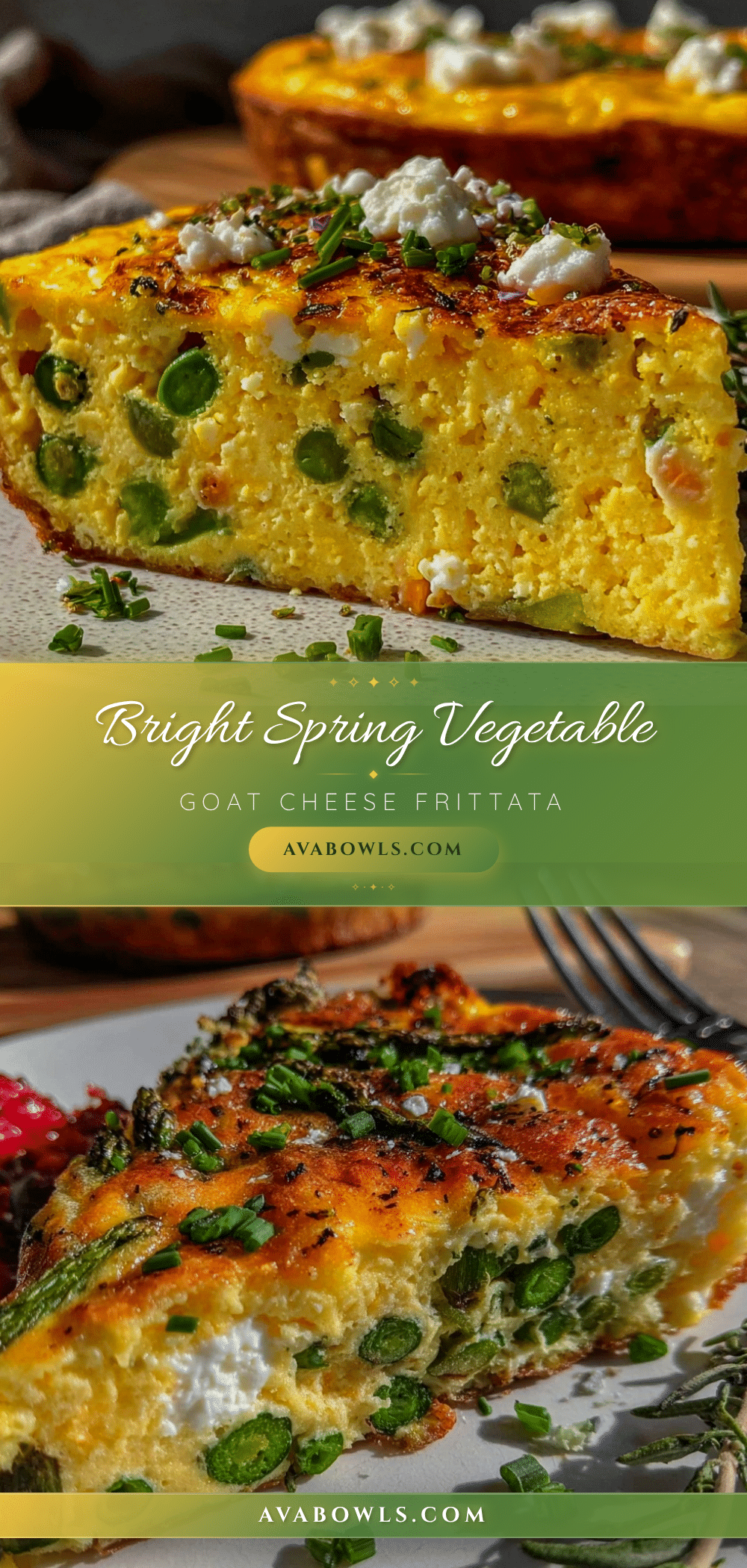
Fresh Spring Vegetable Frittata with Creamy Goat Cheese

A bright and vibrant frittata featuring fresh spring vegetables and creamy goat cheese, perfect for a quick and easy brunch or light meal.
- Prep Time: 10 minutes
- Cook Time: 20 minutes
- Total Time: 30 minutes
- Yield: 6 servings 1x
- Category: Main Course
- Cuisine: American
Ingredients
- 8 large eggs (room temperature)
- 4 oz (about 115 grams) goat cheese, crumbled
- 1 bunch asparagus (about 1/2 pound or 225 grams), trimmed and cut into 1-inch pieces
- 1 cup fresh peas (about 150 grams), shelled (or frozen peas)
- 3 green onions, thinly sliced (white and green parts)
- 2 tablespoons fresh herbs, chopped (parsley and chives recommended)
- 1 clove garlic, minced
- 2 tablespoons extra virgin olive oil
- 1/4 cup (60 ml) milk, whole or 2% (can substitute almond milk for dairy-free)
- Salt and freshly ground black pepper to taste
- Optional: pinch of red pepper flakes
Instructions
- Preheat your oven to 375°F (190°C).
- Trim the asparagus and slice into 1-inch pieces. Shell the peas if fresh. Thinly slice the green onions, keeping whites and greens together. Mince the garlic finely.
- Heat olive oil in your oven-safe skillet over medium heat. Add the minced garlic and green onions and cook for about 1 minute until fragrant, stirring continuously.
- Add the asparagus and peas to the skillet. Sauté for 3 to 4 minutes until vegetables soften slightly but remain crisp and bright green. Season with salt and pepper.
- Whisk together the eggs, milk, salt, pepper, and chopped herbs in a mixing bowl until smooth and slightly frothy.
- Pour the egg mixture over the sautéed vegetables in the skillet, tilting the pan to spread evenly.
- Scatter the crumbled goat cheese evenly over the top.
- Cook on the stove over medium-low heat for 3 to 4 minutes without stirring to set the edges and form a crust.
- Transfer the skillet to the oven and bake for 12 to 15 minutes until eggs are fully set and the top is lightly golden. Test doneness by gently shaking the skillet; the center should be firm with no liquid egg.
- Remove from oven and let rest for 5 minutes before slicing and serving.
Notes
Avoid overbaking to keep the eggs tender and the goat cheese creamy. A quick broil for 1-2 minutes at the end can add golden spots but watch carefully to prevent burning. Use an oven-safe skillet to maintain puffiness and ease of transfer. For dairy-free, substitute goat cheese with plant-based cheese or tofu crumble. Vegetables can be swapped seasonally.
Nutrition
- Serving Size: 1 slice (1/6 of the
- Calories: 235
- Sugar: 2
- Sodium: 220
- Fat: 16
- Saturated Fat: 6
- Carbohydrates: 6
- Fiber: 2
- Protein: 15
Keywords: frittata, spring vegetables, goat cheese, asparagus, peas, easy brunch, quick recipe, vegetarian, gluten-free