Let me tell you, the moment I cracked open a lobster tail and caught that sweet ocean aroma mingling with the sharp tang of miso glaze, I knew I was onto something extraordinary. The first time I whipped up this flavorful lobster tail nourish bowl with miso-glazed salmon and chimichurri, it was one of those rare kitchen moments where you pause, breathe deeply, and just smile because everything on your plate feels like pure magic. Honestly, it’s like the sea met the garden in the most delicious handshake you can imagine.
Years ago, when I was knee-high to a grasshopper, seafood was a special treat reserved for celebrations or those fancy dinners out. But this recipe? It feels like a discovery I wish I’d stumbled upon way earlier. What started as a rainy weekend experiment turned into a family favorite, with my loved ones sneaking spoonfuls of chimichurri off the side and fighting over the last lobster tail (and I can’t really blame them). This nourish bowl isn’t just a meal—it’s a bright, lively celebration of flavors and textures that you’re going to want to bookmark for your next special occasion or even a weekday treat that feels anything but ordinary.
Picture this: perfectly tender lobster tail chunks, flaky miso-glazed salmon, and that punchy, herbaceous chimichurri bringing it all together—fresh, vibrant, and downright addictive. Whether you’re feeding a crowd, impressing a date, or just treating yourself to something spectacular, this recipe has your back. Trust me, after testing this multiple times (in the name of research, of course), it’s become a staple for family dinners and gifting alike. It’s the kind of dish that feels like a warm hug on a plate and makes you want to share it with everyone you know.
Why You’ll Love This Recipe
Honestly, if you’re wondering why this flavorful lobster tail nourish bowl with miso-glazed salmon and chimichurri sauce stands out, let me break it down for you. It’s not just another seafood bowl—it’s a thoughtfully crafted, flavor-packed experience that hits all the right notes.
- Quick & Easy: Ready in under 40 minutes, this recipe fits perfectly into busy weeknights or those moments when you want something impressive but don’t want to fuss endlessly.
- Simple Ingredients: You don’t need to hunt down exotic items—mostly pantry staples with a few fresh ingredients that pack a punch.
- Perfect for Entertaining: Whether it’s brunch, a cozy dinner, or a festive gathering, this bowl brings vibrant color and bold flavors to your table.
- Crowd-Pleaser: Kids and adults alike rave about the combo of sweet lobster, savory miso salmon, and bright chimichurri—it’s a guaranteed hit.
- Unbelievably Delicious: The texture contrast—succulent lobster tail, tender salmon, crisp veggies, and zesty sauce—makes every bite exciting.
What really sets this recipe apart is the balance of flavors and the little twists that make it sing. The miso glaze on the salmon? It adds a subtle umami depth that perfectly complements the sweet lobster. The chimichurri sauce brings a fresh, herbaceous zing that cuts through the richness and ties the whole bowl together. It’s not just seafood with sides; it’s a thoughtfully layered dish that feels indulgent but still nourishing.
Plus, this isn’t just about taste—it’s about bringing a bit of joy and creativity to your kitchen without stressing over complicated techniques. It’s the kind of recipe that makes you close your eyes after the first bite and smile, knowing you just made something really special. So if you want to impress without the stress and savor every mouthful, this nourish bowl’s where it’s at.
What Ingredients You Will Need
This recipe uses simple, wholesome ingredients to deliver bold flavor and satisfying texture without the fuss. Most of these are pantry staples or easy to find fresh items that come together beautifully.
- For the Lobster Tail:
- 2 lobster tails (about 6-8 oz / 170-230 g each), thawed if frozen
- 1 tablespoon olive oil (for brushing)
- Salt and freshly ground black pepper (to taste)
- For the Miso-Glazed Salmon:
- 2 salmon fillets (about 6 oz / 170 g each), skin-on preferred
- 2 tablespoons white miso paste (I recommend Hikari brand for smoothness)
- 1 tablespoon mirin (Japanese sweet rice wine)
- 1 tablespoon soy sauce (or tamari for gluten-free)
- 1 teaspoon honey or maple syrup (adds perfect balance)
- For the Chimichurri Sauce:
- 1 cup fresh parsley leaves, packed
- 1/4 cup fresh cilantro leaves
- 3 cloves garlic, minced
- 1/4 cup red wine vinegar
- 1/2 cup olive oil
- 1 teaspoon crushed red pepper flakes (adjust to taste)
- Salt and pepper to taste
- Optional: 1 tablespoon fresh oregano leaves for extra herbal punch
- For the Nourish Bowl Base & Toppings:
- 2 cups cooked quinoa or brown rice (about 370 g cooked)
- 1 cup steamed or roasted asparagus, cut into bite-sized pieces
- 1 cup cherry tomatoes, halved
- 1 avocado, sliced (adds creamy texture)
- 1 small cucumber, thinly sliced
- Optional: sesame seeds or toasted pine nuts for garnish
Feel free to swap quinoa for cauliflower rice if you want a low-carb option. If you can’t find fresh lobster tails, high-quality frozen ones work just as well—just make sure to thaw gently overnight. For the miso paste, white miso is milder and sweeter, but red miso can be used if you want a deeper flavor. And the chimichurri? Fresh herbs are key here—don’t skimp, or the sauce loses its bright punch.
Equipment Needed
- Baking sheet: For roasting the lobster tails and salmon. If you don’t have one, a rimmed oven-safe dish works fine.
- Mixing bowls: For preparing the chimichurri sauce and marinating the salmon.
- Blender or food processor: To blitz up the chimichurri sauce quickly. A mortar and pestle is a great alternative if you want a chunkier texture.
- Sharp knife: Essential for prepping lobster tails, slicing avocado, and cutting vegetables cleanly.
- Measuring cups and spoons: For precise ingredient amounts, especially with the miso glaze and chimichurri.
- Medium saucepan or rice cooker: To cook the quinoa or rice perfectly every time.
- Optional: Fish spatula for gently turning salmon without breaking it apart.
Personally, I find that using a silicone baking mat on my sheet makes cleanup a breeze, especially with sticky miso glaze. If you’re on a budget, a sharp chef’s knife and a blender with pulse settings are enough to get the job done right. Keep your tools sharp and clean—they make a world of difference in prepping seafood and chopping herbs efficiently.
Preparation Method
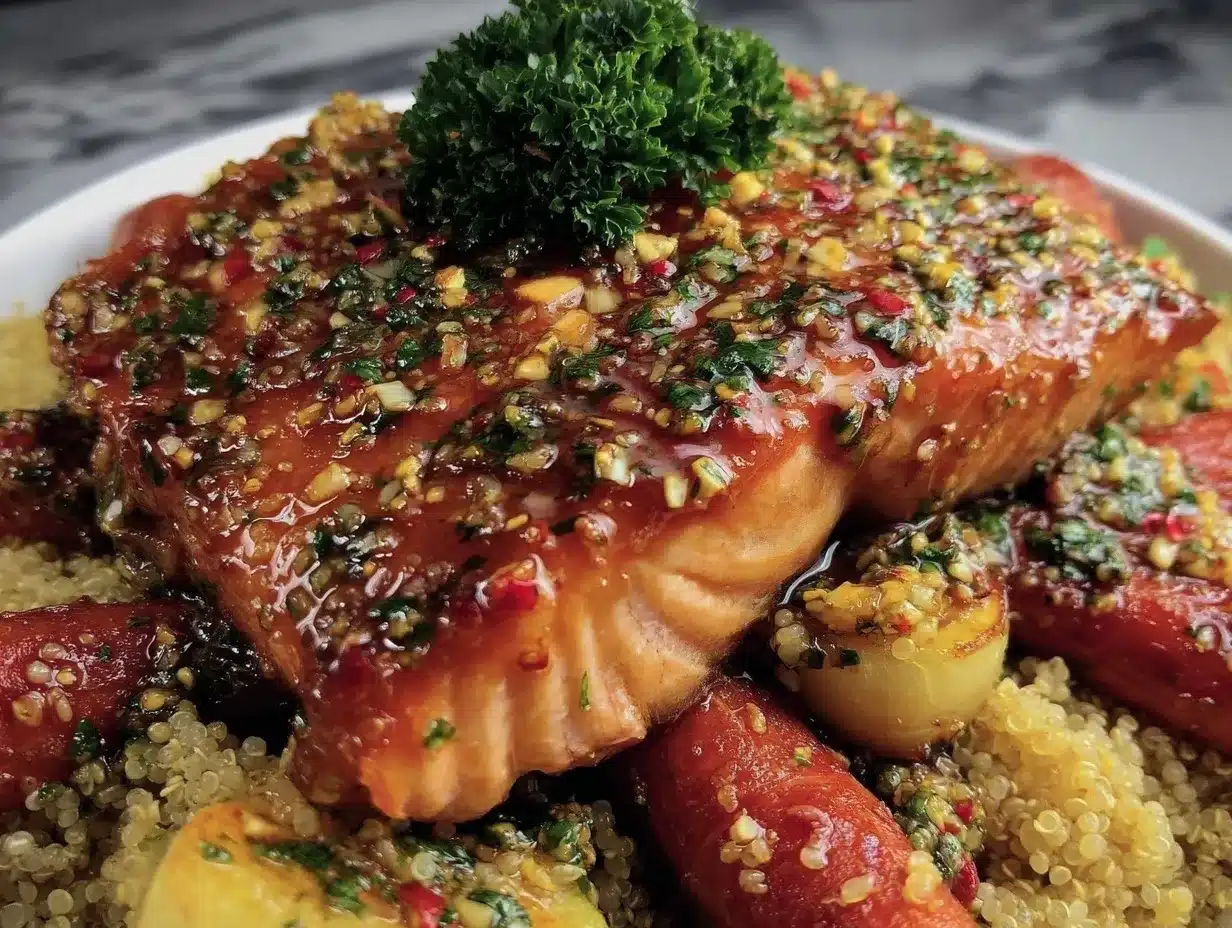
- Prepare the Lobster Tails: Preheat your oven to 425°F (220°C). Using kitchen shears, carefully cut down the top shell of each lobster tail lengthwise, stopping just before the tail fin. Gently pull the lobster meat out and rest it on top of the shell. Brush each tail with olive oil and season with salt and pepper. Set aside while you prepare the salmon and chimichurri. (About 10 minutes)
- Make the Miso Glaze: In a small bowl, whisk together white miso paste, mirin, soy sauce, and honey until smooth. Taste and adjust sweetness or saltiness as needed. Reserve half for glazing the salmon before baking, and keep the other half for basting later. (5 minutes)
- Glaze and Roast Salmon: Place salmon fillets skin-side down on a lined baking sheet. Brush generously with half the miso glaze. Roast in the preheated oven for 10-12 minutes until salmon flakes easily but is still moist inside. Timing depends on thickness; thicker fillets may need an extra 2-3 minutes. (10-12 minutes)
- Roast Lobster Tails: After salmon goes in, place the prepared lobster tails on the same oven rack. Roast for 8-10 minutes until lobster meat is opaque and firm but not rubbery. Baste once halfway through with reserved miso glaze for extra flavor and moisture. (8-10 minutes)
- Cook Quinoa or Rice: While seafood roasts, rinse 1 cup quinoa under cold water. Combine with 2 cups water in a saucepan, bring to a boil, then reduce to simmer and cover. Cook for 15 minutes or until water is absorbed. Fluff with a fork and keep warm. (15 minutes)
- Prepare Chimichurri Sauce: In a blender or food processor, combine parsley, cilantro, garlic, red wine vinegar, olive oil, red pepper flakes, oregano (if using), salt, and pepper. Pulse until herbs are finely chopped and sauce is well blended but still slightly chunky. Taste and adjust seasoning. (5 minutes)
- Steam or Roast Asparagus: Quickly steam asparagus for 3-4 minutes until tender-crisp or roast at 425°F (220°C) for 8-10 minutes with a drizzle of olive oil and salt. Let cool slightly. (3-10 minutes depending on method)
- Assemble the Nourish Bowl: Divide quinoa or rice into bowls. Arrange lobster tail meat, salmon fillet chunks, asparagus, cherry tomatoes, cucumber slices, and avocado artfully on top. Spoon generous amounts of chimichurri over everything. Garnish with sesame seeds or toasted pine nuts if desired. (5 minutes)
- Final Touches: Serve immediately to enjoy the mix of warm grains, tender seafood, and fresh herb sauce. The chimichurri can be drizzled extra on the side for dipping. (Ready to eat!)
Pro tip: Keep an eye on your oven timing because seafood can overcook quickly. Lobster tails should be firm but juicy, while salmon should flake gracefully without drying out. The miso glaze caramelizes lightly, giving that irresistible golden crust. If you want to prep ahead, make the chimichurri and quinoa in advance and assemble just before serving for the freshest taste.
Cooking Tips & Techniques
When cooking seafood like lobster tail and miso-glazed salmon, timing is everything. Overcooking can turn lobster rubbery and salmon dry, so keep a close eye and use your senses—lobster meat should be opaque and firm but still springy, while salmon should flake gently with a fork.
Brushing the miso glaze halfway through roasting helps build that rich, sticky layer that carries loads of umami. Don’t skip this step! Also, resting your salmon and lobster for a few minutes after roasting helps juices redistribute, keeping the texture tender.
For the chimichurri sauce, fresh herbs are your best friend. If you use dried herbs or pre-chopped parsley, the flavor won’t be nearly as vibrant. Pulse your sauce just enough to keep some texture; a puree isn’t what you want here.
Steaming asparagus preserves its bright color and snap, but roasting adds a nice depth and slight char that works beautifully with the rich seafood. I usually go with roasting when I want a bit more rustic texture.
One mistake I made early on was not seasoning the quinoa enough. A pinch of salt in the cooking water brings the grains to life and balances the bowl perfectly. And don’t forget a squeeze of fresh lemon juice on the finished dish to brighten everything up!
Variations & Adaptations
Want to switch things up? Here are a few of my favorite ways to customize this flavorful nourish bowl:
- Vegetarian/Vegan: Swap lobster and salmon for marinated grilled tofu or tempeh glazed with the same miso marinade. Use a plant-based yogurt sauce instead of chimichurri if you want a creamy finish.
- Seasonal Veggies: In fall or winter, swap asparagus and tomatoes for roasted Brussels sprouts and butternut squash. Fresh herbs like parsley can be replaced with kale or spinach in chimichurri for a heartier sauce.
- Spice Level: Add more crushed red pepper to the chimichurri or a dash of smoked paprika in the miso glaze to bring a smoky, spicy twist.
- Gluten-Free: Use tamari instead of soy sauce and serve over cauliflower rice for a grain-free version that’s just as satisfying.
- Personal Twist: I sometimes add a squeeze of fresh orange juice to the chimichurri for a citrusy pop that pairs surprisingly well with seafood.
Serving & Storage Suggestions
This nourish bowl is best served fresh and warm, straight from the oven to the table. The contrast of tender seafood, warm quinoa, and cool, crisp veggies with that punchy chimichurri is truly a delight. If you’re serving guests, arrange bowls individually or set up a build-your-own station with the components laid out—you’ll become the hostess with the mostest!
Leftovers can be stored in airtight containers in the refrigerator for up to 2 days. To reheat, gently warm the quinoa and seafood in a skillet over medium heat or in the oven at 300°F (150°C) to avoid drying out the fish. Add fresh chimichurri after reheating to keep the herbal flavors vibrant.
Flavor-wise, the chimichurri sauce will deepen and mellow a bit after a day, so it’s worth making a bit extra to enjoy on day two. Avocado slices are best added fresh, so store them separately and slice just before serving to prevent browning.
Nutritional Information & Benefits
This flavorful lobster tail nourish bowl provides a balanced, nutrient-rich meal packed with protein, healthy fats, and fiber. Lobster tail and salmon are excellent sources of lean protein and omega-3 fatty acids, which support heart and brain health. The miso glaze adds probiotics and a unique umami flavor without excess calories.
Fresh herbs in the chimichurri bring antioxidants and vitamins, while quinoa delivers complex carbs and essential minerals like magnesium and iron. This bowl is naturally gluten-free, low in sugar, and can be easily adapted for dairy-free or vegan diets.
From a wellness perspective, it hits the mark for nourishing body and soul—comfort food that feels hearty but leaves you energized and satisfied, not weighed down.
Conclusion
All in all, this flavorful lobster tail nourish bowl with miso-glazed salmon and chimichurri sauce is a recipe you’ll keep coming back to. It balances indulgence and nourishment beautifully, making it perfect for both special occasions and those nights when you want to treat yourself without fuss. You can customize it endlessly, but honestly, the classic version is already a winner in my book.
I love how this dish brings together the best of land and sea with fresh, vibrant herbs and wholesome grains. It feels like a little celebration every time I make it, and I hope you’ll feel the same. Give it a try, tweak it your way, and let me know how it turns out—I’m always excited to hear your takes!
Don’t forget to share this recipe with your friends and family, leave a comment below with your favorite adaptations, and bookmark it for when you want to impress without stress. Happy cooking!
FAQs
Can I use frozen lobster tails for this recipe?
Absolutely! Just be sure to thaw them gently overnight in the fridge for the best texture and flavor.
What can I substitute for miso paste if I don’t have any?
You can use a combination of soy sauce and a small amount of tahini or peanut butter for a similar umami depth, but the flavor won’t be quite the same.
Is it possible to make the chimichurri sauce ahead of time?
Yes! Chimichurri actually tastes better after sitting for a few hours, so feel free to make it a day in advance and store it in the fridge.
How do I know when the salmon is perfectly cooked?
It should flake easily with a fork but still feel moist inside. Overcooked salmon becomes dry and chalky, so watch closely near the end of cooking time.
Can I use brown rice instead of quinoa?
Definitely. Brown rice works well and adds a slightly different texture and nuttiness to the bowl.
Pin This Recipe!
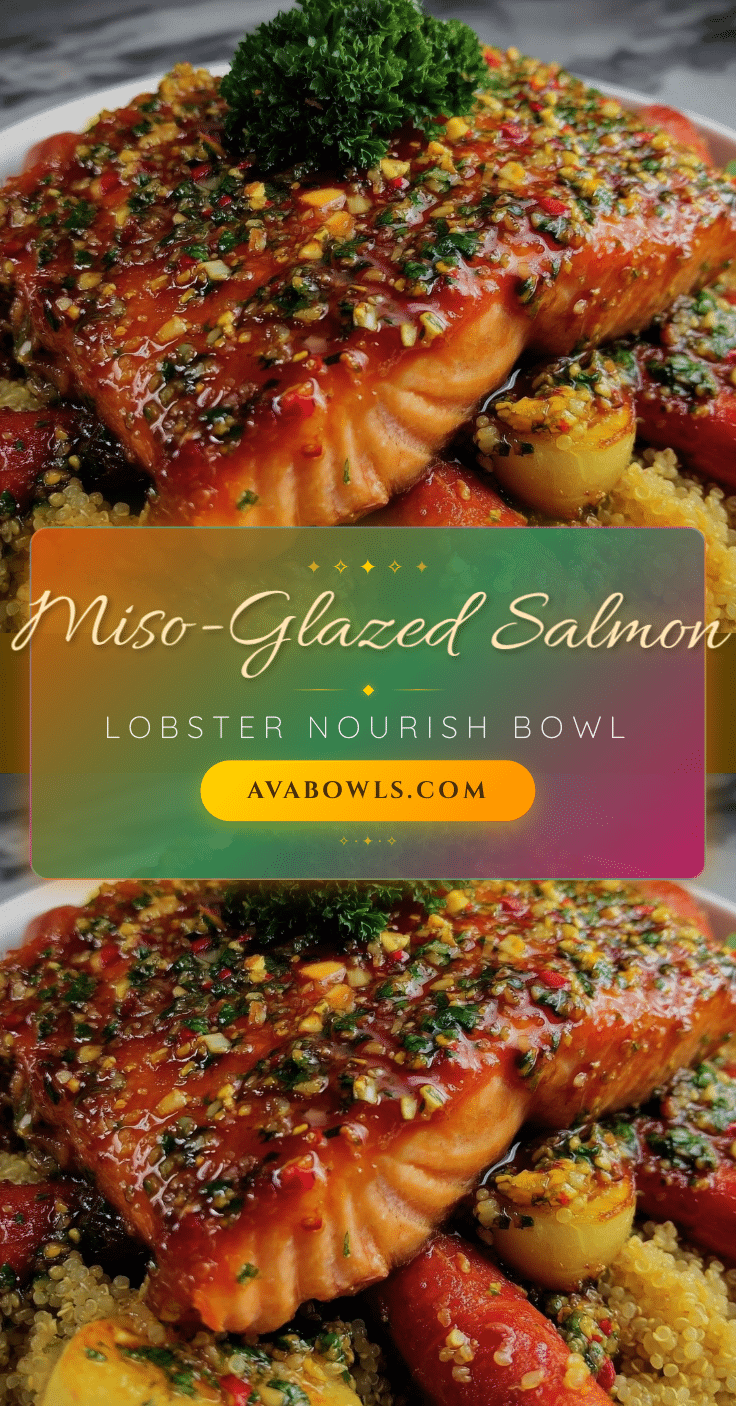
Flavorful Lobster Tail Nourish Bowl Recipe with Miso-Glazed Salmon and Chimichurri Sauce
A vibrant nourish bowl featuring tender lobster tail chunks, flaky miso-glazed salmon, and fresh chimichurri sauce, balanced with quinoa and crisp vegetables for a flavorful and nourishing meal.
- Prep Time: 15 minutes
- Cook Time: 25 minutes
- Total Time: 40 minutes
- Yield: 2 servings 1x
- Category: Main Course
- Cuisine: Fusion (Japanese and Latin American influences)
Ingredients
- 2 lobster tails (about 6–8 oz / 170–230 g each), thawed if frozen
- 1 tablespoon olive oil (for brushing)
- Salt and freshly ground black pepper (to taste)
- 2 salmon fillets (about 6 oz / 170 g each), skin-on preferred
- 2 tablespoons white miso paste
- 1 tablespoon mirin (Japanese sweet rice wine)
- 1 tablespoon soy sauce (or tamari for gluten-free)
- 1 teaspoon honey or maple syrup
- 1 cup fresh parsley leaves, packed
- 1/4 cup fresh cilantro leaves
- 3 cloves garlic, minced
- 1/4 cup red wine vinegar
- 1/2 cup olive oil
- 1 teaspoon crushed red pepper flakes (adjust to taste)
- Salt and pepper to taste
- Optional: 1 tablespoon fresh oregano leaves
- 2 cups cooked quinoa or brown rice (about 370 g cooked)
- 1 cup steamed or roasted asparagus, cut into bite-sized pieces
- 1 cup cherry tomatoes, halved
- 1 avocado, sliced
- 1 small cucumber, thinly sliced
- Optional: sesame seeds or toasted pine nuts for garnish
Instructions
- Preheat oven to 425°F (220°C). Using kitchen shears, cut down the top shell of each lobster tail lengthwise, stopping before the tail fin. Gently pull lobster meat out and rest on top of the shell. Brush with olive oil and season with salt and pepper. Set aside.
- In a small bowl, whisk together white miso paste, mirin, soy sauce, and honey until smooth. Reserve half for glazing salmon and half for basting lobster tails.
- Place salmon fillets skin-side down on a lined baking sheet. Brush with half the miso glaze. Roast for 10-12 minutes until salmon flakes easily but remains moist.
- Place lobster tails on the same oven rack after salmon goes in. Roast for 8-10 minutes until lobster meat is opaque and firm. Baste once halfway through with reserved miso glaze.
- While seafood roasts, rinse 1 cup quinoa under cold water. Combine with 2 cups water in a saucepan, bring to boil, reduce to simmer, cover, and cook for 15 minutes until water is absorbed. Fluff with fork and keep warm.
- In a blender or food processor, combine parsley, cilantro, garlic, red wine vinegar, olive oil, red pepper flakes, oregano (if using), salt, and pepper. Pulse until herbs are finely chopped but sauce remains slightly chunky. Adjust seasoning.
- Steam asparagus for 3-4 minutes until tender-crisp or roast at 425°F (220°C) for 8-10 minutes with olive oil and salt. Let cool slightly.
- Divide quinoa or rice into bowls. Arrange lobster tail meat, salmon chunks, asparagus, cherry tomatoes, cucumber slices, and avocado on top. Spoon chimichurri generously over everything. Garnish with sesame seeds or toasted pine nuts if desired.
- Serve immediately to enjoy warm grains, tender seafood, and fresh herb sauce. Extra chimichurri can be served on the side.
Notes
Keep a close eye on seafood cooking times to avoid overcooking. Baste lobster tails halfway through roasting for extra flavor. Fresh herbs are essential for vibrant chimichurri. Season quinoa cooking water with salt. Add a squeeze of fresh lemon juice before serving to brighten flavors. Chimichurri tastes better after resting for a few hours. Store avocado separately to prevent browning.
Nutrition
- Serving Size: 1 bowl (approximatel
- Calories: 650
- Sugar: 6
- Sodium: 700
- Fat: 35
- Saturated Fat: 5
- Carbohydrates: 40
- Fiber: 8
- Protein: 45
Keywords: lobster tail, miso-glazed salmon, chimichurri sauce, nourish bowl, seafood bowl, quinoa bowl, healthy dinner, quick seafood recipe