“You really have to try this chicken,” my coworker said, sliding a foil-wrapped container across my desk with a grin. I was skeptical—Korean food isn’t exactly my go-to, and I wasn’t sold on the idea of a spicy, sticky glaze. But the moment I took that first bite of those flavorful Korean gochujang glazed chicken thighs with sesame rice, all doubt melted away. The sweetness and heat mingled perfectly, and the rice had this subtle nutty aroma that tied everything together like a warm hug on a hectic day.
That lunch sparked a full-on obsession phase. I ended up making this recipe three times that week, tweaking the glaze just a bit each time, trying different brands of gochujang, and playing with the sesame oil ratio. Honestly, it became my secret weapon for easy weeknight dinners that feel special without demanding hours in the kitchen. And you know what? It’s one of those dishes that even my picky eater can’t get enough of.
What really sticks with me is how this recipe combines bold Korean flavors with the comforting simplicity of sesame rice, making it perfect for both solo dinners and casual get-togethers. It’s the kind of meal that sneaks up on you, leaving you wanting just one more bite—and that’s why I’m sharing it. It’s not just a dish; it’s the kind of reliable comfort food that feels like a small victory after a long day.
Why You’ll Love This Recipe
After countless trials in my kitchen, this flavorful Korean gochujang glazed chicken thighs with sesame rice recipe stands out for so many reasons:
- Quick & Easy: Ready in under 40 minutes—ideal for those busy evenings when you want something tasty but fast.
- Simple Ingredients: You probably have most of these staples in your pantry already, no fancy shopping trips needed.
- Perfect for Weeknight Dinners or Casual Gatherings: Whether it’s a solo meal or a small dinner party, this dish impresses without stress.
- Crowd-Pleaser: The sweet-spicy balance appeals to both spice lovers and those who prefer milder flavors.
- Unbelievably Delicious: The tender chicken thighs soak up the spicy-sweet gochujang glaze, while the sesame rice adds a comforting, nutty touch.
This isn’t just another gochujang chicken recipe. The secret lies in marinating the thighs just enough to infuse flavor without overwhelming, plus a perfectly balanced glaze that’s sticky but not cloying. And the sesame rice? It’s a humble side that pulls everything together with its subtle toasted sesame aroma and a hint of umami. I’ve tested this recipe alongside other Korean-inspired dishes, and this one wins for ease and flavor every time.
So, if you want a dish that’s both comforting and exciting, with a little kick but no fuss, this recipe is your go-to. It’s the kind of meal that makes you pause, savor, and maybe even close your eyes after the first bite. Comfort food, Korean style.
What Ingredients You Will Need
This recipe uses straightforward ingredients that pack serious flavor without complication. Most are pantry staples or easily found at your local grocery store or Asian market.
- Chicken Thighs: Bone-in, skin-on preferred for juiciness and crispy skin (about 4 thighs, 1.5 lbs / 680 g).
- Gochujang: Korean red chili paste, the star of the glaze (about 3 tablespoons). I tend to use Chung Jung One brand for its balanced heat and sweetness.
- Soy Sauce: Provides salty depth (2 tablespoons, low sodium recommended).
- Honey or Brown Sugar: Adds that signature sweet contrast (2 tablespoons).
- Garlic: Minced fresh cloves (3 cloves) for aromatic punch.
- Ginger: Freshly grated (1 tablespoon), which brightens the glaze.
- Rice Vinegar: Adds a subtle tang to balance flavors (1 tablespoon).
- Sesame Oil: Toasted, a little goes a long way for the rice and glaze (2 teaspoons for rice, 1 teaspoon for glaze).
- White or Brown Rice: 1 cup (uncooked), jasmine or short-grain works well.
- Sesame Seeds: Toasted, for garnish and texture (1 tablespoon).
- Green Onions: Thinly sliced, fresh garnish to brighten the dish (2 stalks).
- Optional: A sprinkle of crushed red pepper flakes if you like extra heat.
For substitutions, almond flour or cauliflower rice can replace traditional rice for a low-carb twist. If you need a dairy-free or vegan version, swap honey with maple syrup, and instead of chicken thighs, firm tofu marinated the same way works surprisingly well.
Equipment Needed
- Large Skillet or Cast Iron Pan: For searing and glazing the chicken. I prefer cast iron for that crispy skin, but any heavy-bottomed pan works.
- Medium Saucepan: For cooking the rice perfectly.
- Mixing Bowls: To prepare the glaze and marinade.
- Whisk or Spoon: For mixing sauces.
- Measuring Cups and Spoons: Precision matters here for balance.
- Tongs: Handy for flipping chicken without tearing the skin.
If you don’t have a cast iron pan, a non-stick skillet will do fine, just keep an eye on the heat to prevent sticking. Also, a rice cooker can simplify the rice preparation if you’re short on stovetop time. I’ve tried this recipe both ways and the results are equally tasty.
Preparation Method
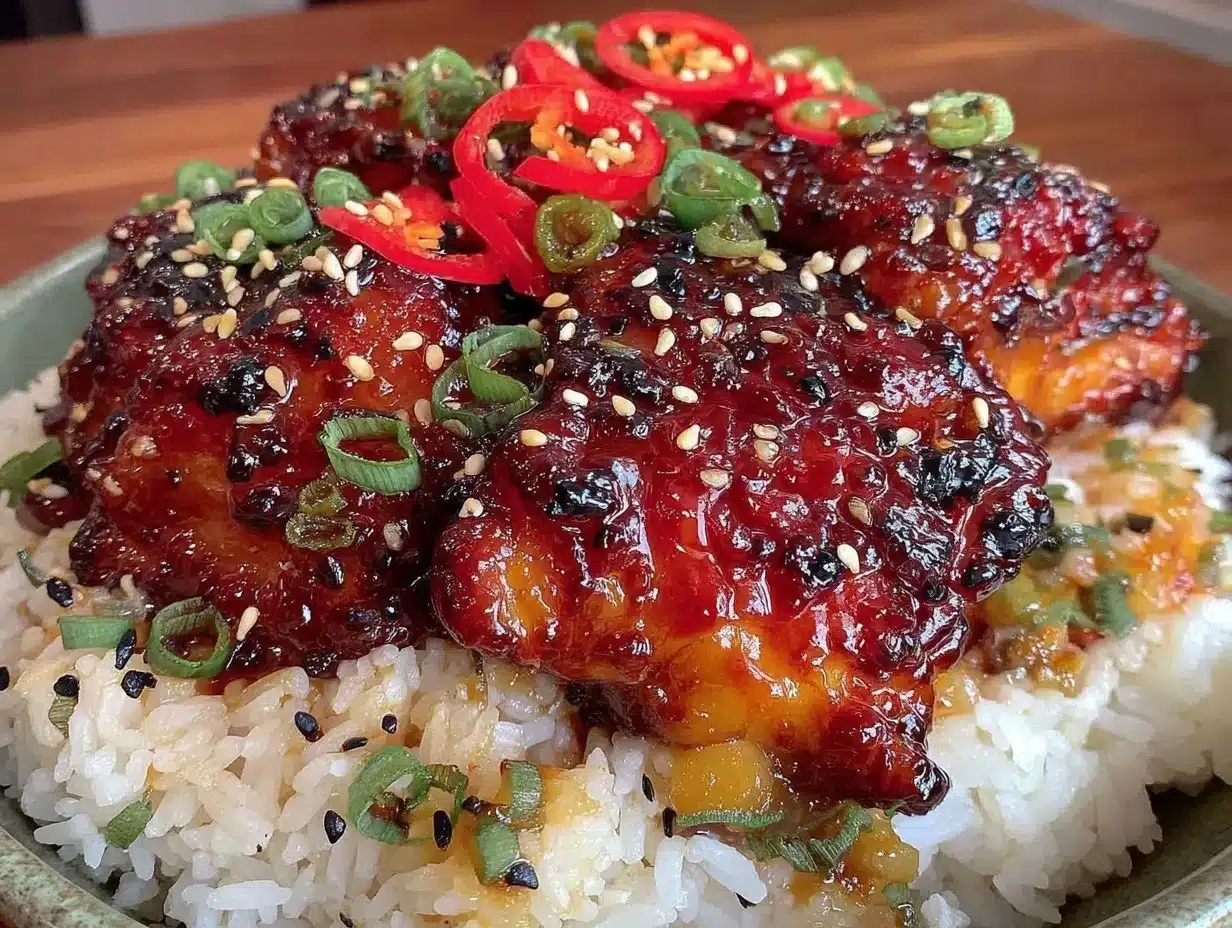
- Prepare the marinade and glaze: In a medium bowl, whisk together 3 tablespoons gochujang, 2 tablespoons soy sauce, 2 tablespoons honey (or brown sugar), 3 minced garlic cloves, 1 tablespoon grated ginger, and 1 tablespoon rice vinegar. Stir in 1 teaspoon toasted sesame oil. This mixture doubles as both marinade and glaze.
- Marinate the chicken: Pat dry 4 bone-in, skin-on chicken thighs (about 1.5 lbs / 680 g). Place them in a shallow dish and pour half of the marinade over. Turn to coat evenly. Let it sit for at least 20 minutes, or up to 2 hours in the fridge for deeper flavor.
- Cook the rice: Rinse 1 cup jasmine or short-grain rice under cold water until the water runs clear. Combine with 1 ¼ cups water in a medium saucepan. Bring to a boil, then reduce to low, cover, and simmer for 15 minutes (or follow your rice cooker instructions). Once cooked, fluff with a fork and stir in 2 teaspoons toasted sesame oil and a pinch of salt.
- Sear the chicken: Heat a large skillet or cast iron pan over medium-high heat. Add a small drizzle of neutral oil. Place chicken thighs skin-side down and cook for 6-7 minutes without moving, until the skin is golden and crisp. Flip and cook for another 5 minutes.
- Glaze and finish cooking: Reduce heat to medium-low. Pour the remaining marinade over the chicken. Spoon it over the thighs as it thickens, cooking for another 5-7 minutes or until internal temperature reaches 165°F (74°C). The glaze should be shiny and sticky, clinging to the crispy skin.
- Rest and garnish: Remove chicken to a plate and let rest for 5 minutes. Sprinkle toasted sesame seeds and sliced green onions over the chicken and rice before serving.
Pro tip: Keep the heat moderate when glazing or the sugars can burn. If the glaze thickens too fast, add a splash of water to loosen it. The chicken skin is the star here—crispy, spicy, and sticky—so resist the urge to poke or move it around too much.
Cooking Tips & Techniques
Getting that perfect balance between sticky glaze and crispy skin can be tricky, but here’s what I learned from trial and error:
- Dry the chicken thoroughly: Pat the skin dry before marinating. Moisture is the enemy of crispiness.
- Don’t crowd the pan: Give thighs space to sear properly. Overcrowding leads to steaming, which ruins the crisp texture.
- Medium-high heat for searing: This ensures the skin crisps without burning. Lower the heat when adding glaze to prevent it from scorching.
- Use bone-in, skin-on thighs: They stay juicier and have more flavor than boneless or skinless versions.
- Marinate but don’t overdo it: 20-30 minutes is enough. Longer marinating can overpower the chicken and make the skin soggy.
- Toasted sesame oil: Add this at the end or in the rice so its aroma doesn’t burn off during cooking.
- Multitask by cooking rice while chicken marinates: Saves time and makes the process smoother.
Variations & Adaptations
This recipe is surprisingly adaptable to different tastes and dietary needs:
- Spicy Level: Add more gochujang or a pinch of cayenne for a fiery kick, or reduce it for a milder glaze.
- Protein Swap: Try boneless chicken thighs or drumsticks for a quicker cook time, or go vegetarian with thick slices of grilled tofu glazed the same way.
- Rice Alternatives: Quinoa or cauliflower rice work well if you want a gluten-free or low-carb option.
- Sweetener Options: Maple syrup is excellent for a vegan version and adds a slightly different sweetness.
- Flavor Twists: Toss in some thinly sliced shiitake mushrooms to the pan while glazing the chicken for an earthy note.
I personally love adding a splash of lime juice just before serving to brighten the whole dish. You could also serve it with a side of quick kimchi or steamed greens for an authentic Korean dinner vibe. If you’re interested in more pasta options that pair well with homemade sauces, check out my creamy lemon ricotta pasta with fresh peas and mint for a fresh contrast.
Serving & Storage Suggestions
This dish shines best served hot, right off the pan. The contrast of crispy chicken skin and warm, nutty sesame rice is what makes it irresistible. I like to plate the chicken on a bed of rice, then sprinkle with green onions and sesame seeds for that final touch.
Pairing ideas include a simple cucumber salad for crunch or a side of steamed broccoli to balance the heat. For drinks, a light beer or a crisp white wine complements the spicy glaze beautifully.
Leftovers store well in an airtight container in the fridge for up to 3 days. Reheat gently in a skillet over low heat to keep the skin from getting rubbery—microwaves tend to make it soggy. If you want to freeze, separate chicken and rice and thaw overnight before reheating.
Flavors actually deepen after a day, so this recipe works great as prepared-ahead meal prep or for packed lunches. I often make a double batch and enjoy it throughout the week alongside other favorites like my crispy Nashville hot chicken tenders when I crave bold spice.
Nutritional Information & Benefits
Per serving (1 chicken thigh with ½ cup cooked rice): approximately 400 calories, 25g protein, 35g carbohydrates, 12g fat.
This dish offers a good balance of macronutrients, with protein-rich chicken thighs providing essential amino acids and healthy fats from sesame oil. Gochujang contains fermented chili paste, which may aid digestion and add probiotics. The rice contributes energy-sustaining carbs, and sesame seeds offer calcium and antioxidants.
Gluten-free soy sauce options make this recipe suitable for gluten-sensitive diets. It’s also free from dairy and nuts, making it allergy-friendly for most. Just be sure to adjust spice levels if cooking for kids or sensitive palates.
From a wellness perspective, the combination of spices and fermentation in the glaze delivers a flavorful punch without excess sodium or processed sugars, keeping it a wholesome weeknight meal option.
Conclusion
This flavorful Korean gochujang glazed chicken thighs with sesame rice recipe is a winner because it hits all the marks: fast, flavorful, and satisfying. Whether you’re craving a cozy solo dinner or feeding friends, it’s an easy recipe that doesn’t feel ordinary.
Feel free to tweak the spice level, swap ingredients, or add your favorite sides to make it your own. I love that it brings a bit of Korean flair to my kitchen without complicated steps or hard-to-find ingredients.
Give it a try and see how quickly it becomes a staple in your rotation. And hey, if you’re looking for other simple yet delicious recipes, my creamy spring vegetable fettuccine alfredo might be just the thing to make your dinners even more exciting.
Happy cooking!
FAQs
Can I use boneless chicken thighs instead of bone-in?
Absolutely! Boneless thighs cook faster (around 12-15 minutes total) and still absorb the glaze nicely, though the skin-on bone-in version tends to be juicier.
Is gochujang very spicy?
Gochujang has moderate heat with a sweet, fermented depth. It’s spicy but approachable. You can adjust the amount to suit your tolerance or add a pinch of sugar to tone down the heat.
How do I store leftovers to keep the chicken skin crispy?
Store leftovers in the fridge in an airtight container. To reheat, warm the chicken in a skillet over low heat until hot and crispy again. Avoid microwaving if you want to keep the skin crisp.
Can I make the sesame rice ahead of time?
Yes, cook the rice in advance and store it in the fridge. Reheat with a splash of water and a quick toss of sesame oil to refresh the flavor.
What can I serve with this dish for a complete meal?
Steamed or pickled vegetables, a fresh cucumber salad, or simple kimchi are great accompaniments. For drinks, light beers or crisp white wines complement the flavors well.
Pin This Recipe!
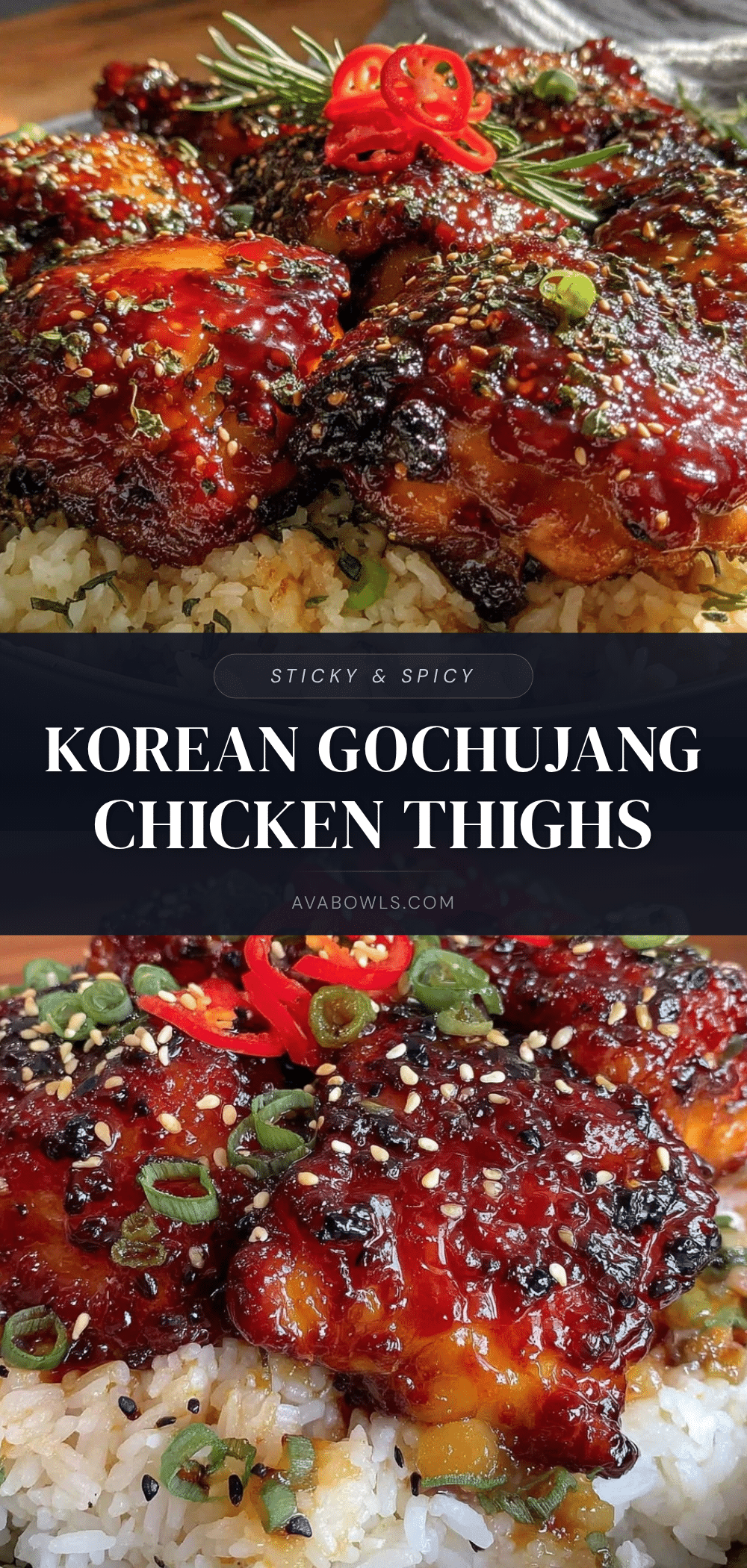
Flavorful Korean Gochujang Glazed Chicken Thighs with Sesame Rice

A quick and easy Korean-inspired dish featuring juicy bone-in, skin-on chicken thighs glazed with a sweet-spicy gochujang sauce, served with nutty toasted sesame rice. Perfect for weeknight dinners or casual gatherings.
- Prep Time: 10 minutes
- Cook Time: 30 minutes
- Total Time: 40 minutes
- Yield: 4 servings 1x
- Category: Main Course
- Cuisine: Korean
Ingredients
- 4 bone-in, skin-on chicken thighs (about 1.5 lbs / 680 g)
- 3 tablespoons gochujang (Korean red chili paste)
- 2 tablespoons low sodium soy sauce
- 2 tablespoons honey or brown sugar
- 3 cloves garlic, minced
- 1 tablespoon fresh grated ginger
- 1 tablespoon rice vinegar
- 1 teaspoon toasted sesame oil (for glaze)
- 1 cup jasmine or short-grain rice (uncooked)
- 1 1/4 cups water
- 2 teaspoons toasted sesame oil (for rice)
- 1 tablespoon toasted sesame seeds (for garnish)
- 2 stalks green onions, thinly sliced (for garnish)
- Optional: crushed red pepper flakes for extra heat
Instructions
- In a medium bowl, whisk together 3 tablespoons gochujang, 2 tablespoons soy sauce, 2 tablespoons honey or brown sugar, 3 minced garlic cloves, 1 tablespoon grated ginger, 1 tablespoon rice vinegar, and 1 teaspoon toasted sesame oil to make the marinade and glaze.
- Pat dry the chicken thighs. Place them in a shallow dish and pour half of the marinade over. Turn to coat evenly. Marinate for at least 20 minutes or up to 2 hours in the fridge.
- Rinse the rice under cold water until water runs clear. Combine rice and 1 1/4 cups water in a medium saucepan. Bring to a boil, reduce heat to low, cover, and simmer for 15 minutes or until water is absorbed. Fluff rice with a fork and stir in 2 teaspoons toasted sesame oil and a pinch of salt.
- Heat a large skillet or cast iron pan over medium-high heat with a small drizzle of neutral oil. Place chicken thighs skin-side down and cook for 6-7 minutes without moving until skin is golden and crisp. Flip and cook for another 5 minutes.
- Reduce heat to medium-low. Pour the remaining marinade over the chicken and spoon it over the thighs as it thickens. Cook for another 5-7 minutes or until internal temperature reaches 165°F (74°C) and glaze is shiny and sticky.
- Remove chicken to a plate and let rest for 5 minutes. Sprinkle toasted sesame seeds and sliced green onions over the chicken and rice before serving.
Notes
Keep heat moderate when glazing to prevent burning the sugars. If glaze thickens too fast, add a splash of water to loosen it. Pat chicken skin dry before marinating for crispiness. Avoid overcrowding the pan to ensure proper searing. Let chicken rest before serving to retain juices. Reheat leftovers gently in a skillet to keep skin crispy.
Nutrition
- Serving Size: 1 chicken thigh with
- Calories: 400
- Fat: 12
- Carbohydrates: 35
- Protein: 25
Keywords: Korean chicken, gochujang chicken, sesame rice, spicy chicken thighs, easy Korean recipe, weeknight dinner, Korean glaze, chicken thighs recipe