“You’ve got to try this,” my neighbor said over the fence one sunny afternoon, holding out a container of something green and mysterious. I was skeptical — asparagus and peas tossed with pasta, sure, but creamy and lemony? Honestly, I thought it sounded like one of those fancy dishes that I’d never get around to making. But that first bite? It changed the whole story.
That day, the kitchen filled with the bright scent of lemon zest and fresh mint, and the soft snap of asparagus reminded me why spring is the season I crave most in the kitchen. I found myself making this creamy lemon asparagus pasta with fresh peas and mint not once, but several times that week — each time tweaking it just a little until it felt like the perfect balance of fresh and indulgent.
It’s funny how a simple suggestion from a friend can turn into a quiet obsession, especially when the dish is as quick to put together as it is satisfying. No heavy sauces weighing you down, just a silky, citrus-kissed creaminess that hugs tender pasta and vibrant veggies. The fresh peas pop here and there, and mint adds that unexpected hint of brightness that keeps you coming back for more.
What stuck with me, beyond the flavors, was how effortlessly this pasta captures the essence of spring on a plate. It’s the kind of meal that feels like a light celebration, even if you’re just cooking for yourself on a weekday night. And honestly, once you taste it, you’ll understand why it’s become a quiet favorite that I keep returning to, season after season.
Why You’ll Love This Creamy Lemon Asparagus Pasta Recipe
- Quick & Easy: Ready in about 25 minutes — perfect for busy evenings when you want something fresh but fuss-free.
- Simple Ingredients: Uses pantry staples plus fresh spring veggies like asparagus, peas, and mint — no specialty store runs needed.
- Perfect for Spring & Early Summer: A light, fresh dish that celebrates seasonal produce beautifully.
- Crowd-Pleaser: Kids and adults alike love the creamy texture paired with zesty lemon and vibrant greens.
- Unbelievably Delicious: The creamy sauce is tangy but not heavy, with just the right hint of fresh herbs to make each bite pop.
- What Makes This Recipe Different: Instead of a traditional Alfredo, this pasta embraces bright lemon zest and fresh mint, creating a refreshing twist that feels both indulgent and light. The peas add a sweet burst, and the asparagus keeps it grounded in seasonal freshness.
- Emotional Connection: This recipe isn’t just food — it’s the smell of spring afternoons, the sound of birds outside the window, and the comfort of something homemade yet effortless.
What Ingredients You Will Need
This recipe relies on straightforward, fresh ingredients that come together to create depth and brightness without any fuss. Most of these are staples, with a few seasonal highlights that make all the difference.
- Pasta: 12 ounces (340 grams) of fettuccine or linguine — I prefer Barilla for consistent texture
- Asparagus: 1 bunch (about 1 pound/450 grams), trimmed and cut into 2-inch pieces — look for bright green stalks, firm and not woody
- Fresh peas: 1 cup (150 grams) shelled fresh peas — frozen works in a pinch, but fresh is best for sweetness
- Fresh mint: 1/4 cup chopped (about 10 grams) — adds a cool, refreshing lift
- Lemon: Zest and juice of 1 large lemon — use unwaxed if possible for zesting
- Heavy cream: 3/4 cup (180 ml) — for a silky, rich sauce; half-and-half can be substituted for a lighter version
- Parmesan cheese: 1/2 cup grated (about 50 grams) — Parmigiano-Reggiano preferred for flavor depth
- Butter: 2 tablespoons (30 grams), unsalted — adds richness and a smooth finish
- Garlic: 2 cloves, minced — for subtle warmth
- Olive oil: 1 tablespoon — for sautéing asparagus and garlic
- Salt and pepper: To taste — fresh cracked black pepper is best
If you want a gluten-free option, swap the pasta for your favorite gluten-free noodles. For a dairy-free version, use coconut cream and a vegan parmesan substitute — it’s surprisingly good!
Equipment Needed
- A large pot for boiling pasta — a wide stockpot works best to prevent sticking
- A large skillet or sauté pan — for cooking asparagus and making the sauce; a non-stick pan helps reduce butter sticking
- A fine grater or microplane — for zesting lemon and grating parmesan fresh
- A colander or pasta strainer — to drain noodles quickly
- Measuring cups and spoons — for accurate cream and butter measurements
- Wooden spoon or silicone spatula — for stirring the sauce gently without scratching your pan
If you don’t have a microplane, a small box grater works fine for zesting. I’ve also found that using tongs to toss pasta in the sauce gives better control and even coating.
Preparation Method
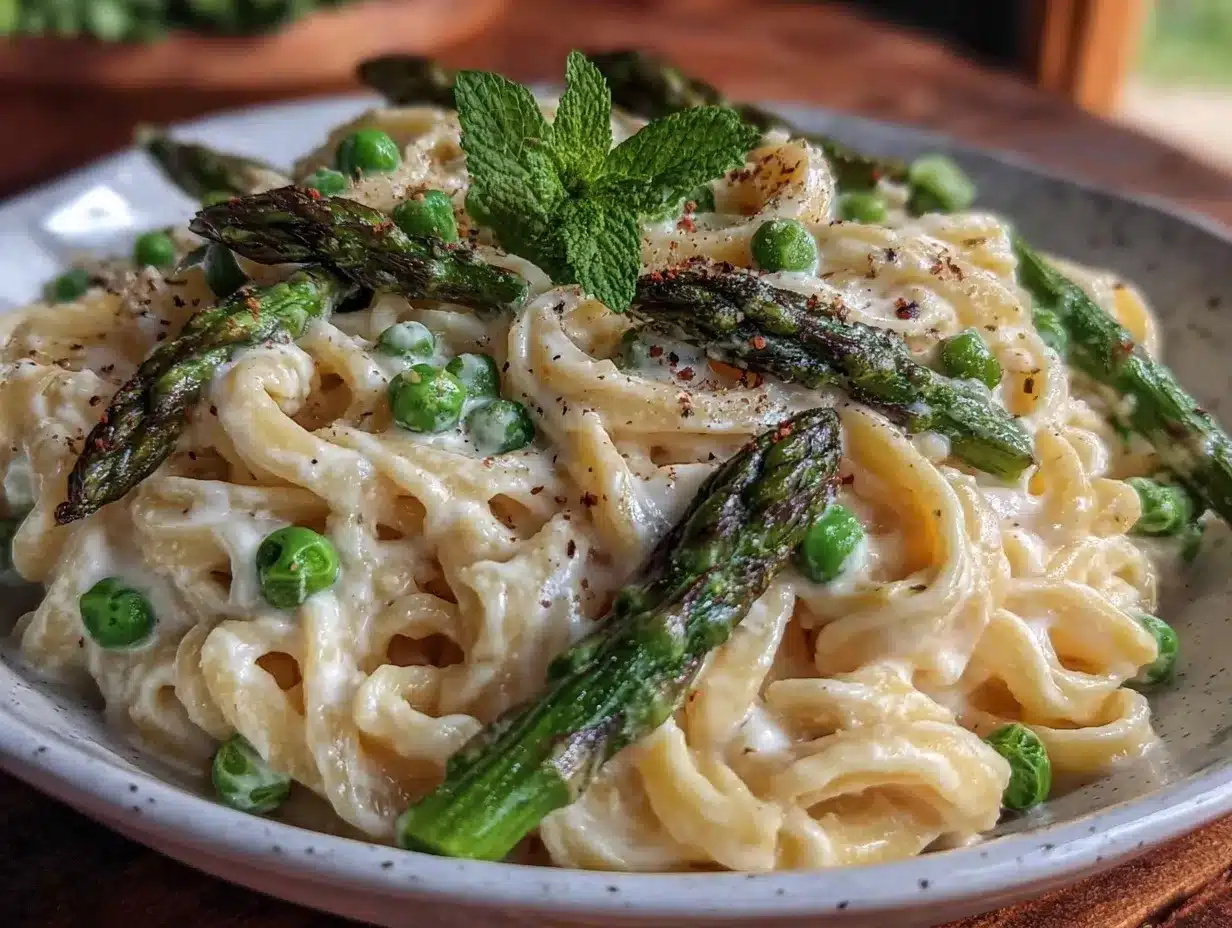
- Bring a large pot of salted water to a boil. Add the pasta and cook according to package instructions until al dente (usually 10-12 minutes). Reserve 1 cup (240 ml) of pasta water before draining. This starchy water will help loosen up the sauce if needed.
- While pasta cooks, prepare the asparagus. Heat olive oil and 1 tablespoon butter in a large skillet over medium heat. Add minced garlic and sauté for about 30 seconds until fragrant but not browned.
- Add the asparagus pieces to the skillet. Cook, stirring occasionally, for 4-5 minutes until tender-crisp and bright green. Season lightly with salt and pepper. Add the fresh peas in the last 2 minutes just to warm through.
- Lower the heat. Stir in the heavy cream and lemon zest. Let the mixture simmer gently for 2-3 minutes, stirring occasionally so it thickens slightly.
- Add the grated Parmesan cheese. Stir continuously until melted and smooth. If the sauce feels too thick, add reserved pasta water a few tablespoons at a time until you reach a creamy consistency that coats the back of a spoon.
- Drain the pasta and transfer it directly to the skillet. Toss gently with the sauce and vegetables to combine evenly. Stir in the fresh lemon juice and remaining butter for that glossy finish.
- Turn off the heat and fold in the chopped mint. Taste and adjust salt and pepper as needed.
- Serve immediately. Garnish with extra Parmesan or a sprinkle of mint leaves if you like.
Pro tip: Don’t overcook the asparagus; it should have a slight crunch to contrast the creamy sauce. Also, adding lemon juice last preserves that fresh zing without curdling the cream.
Cooking Tips & Techniques
One thing I learned the hard way is that timing is everything here. Cooking the pasta and veggies simultaneously means the dish comes together quickly and everything stays fresh. Use a timer or set reminders if you tend to get distracted.
For the creamiest sauce, always add the cheese off the heat or on very low heat. High heat can cause the sauce to separate or get grainy. If it does, a splash of reserved pasta water and gentle stirring usually brings it back to silky smoothness.
When zesting lemon, avoid the white pith underneath which can be bitter. A microplane grater works best to get just the bright, fragrant outer layer.
Fresh herbs like mint are delicate, so add them at the end to keep their flavor vibrant and not cooked away. If you want a stronger mint flavor, reserve a few leaves to garnish on top.
Last but not least, tossing the pasta and sauce quickly while it’s hot helps the noodles soak up the flavors without losing texture.
Variations & Adaptations
- Vegan Version: Swap heavy cream for full-fat coconut milk and use nutritional yeast or vegan Parmesan for cheesy flavor.
- Protein Boost: Add grilled chicken breast, sautéed shrimp, or chickpeas for a filling meal.
- Seasonal Twist: Substitute fresh peas with shelled edamame or add tender baby spinach for extra greens.
- Low-Carb Option: Use spiralized zucchini noodles or shirataki noodles instead of pasta.
- Herb Swap: Replace mint with fresh basil or tarragon for a different herbal note. I once tried this with basil, and it gave a lovely sweet peppery twist.
Serving & Storage Suggestions
This pasta is best served fresh and warm, ideally right out of the pan while the sauce still clings to every strand. A light drizzle of extra virgin olive oil and an extra sprinkle of Parmesan on top make for a nice finishing touch.
Pair it with a crisp white wine or a sparkling water with lemon slices for a refreshing balance.
If you have leftovers, store them in an airtight container in the fridge for up to 2 days. The sauce may thicken upon refrigeration; reheat gently on the stove with a splash of water or cream to loosen it back up. Avoid microwaving at high heat to prevent separation.
Flavors meld nicely overnight, so this pasta actually tastes quite good the next day if reheated carefully.
Nutritional Information & Benefits
This dish is not only tasty but offers a good dose of vitamins and minerals from fresh asparagus, peas, and mint. Asparagus contributes fiber, folate, and antioxidants, while peas add protein and vitamin C. The lemon provides a fresh hit of vitamin C and aids digestion.
Using heavy cream adds richness and calories, so you can lighten it by substituting with half-and-half or plant-based cream alternatives. Parmesan cheese adds calcium and protein but watch the salt content if you’re sensitive.
Overall, this pasta fits well into a balanced diet, especially when paired with a side of leafy greens or a light salad. Plus, it’s naturally gluten-free if you choose gluten-free pasta.
Conclusion
This creamy lemon asparagus pasta with fresh peas and mint is one of those recipes that feels fancy but is surprisingly easy. It’s fresh, comforting, and packed with the bright flavors of spring — a perfect antidote to the usual pasta routine.
Whether you’re cooking for a quick solo dinner or a casual gathering, this dish adapts to your needs and never disappoints. I love how it invites creativity in the kitchen while delivering consistent, delicious results.
Give it a try, play around with the herbs and veggies you have on hand, and see how this simple recipe turns into your own signature springtime pasta.
If you enjoy this, you might also appreciate the delicate flavors in my creamy lemon ricotta pasta with fresh peas and mint or the comforting feel of the creamy spring vegetable fettuccine Alfredo I posted earlier.
Frequently Asked Questions
Can I use frozen peas instead of fresh?
Yes, frozen peas work well if fresh aren’t available. Just thaw them slightly or add a minute or two earlier when cooking asparagus so they warm through without getting mushy.
What type of pasta is best for this recipe?
Fettuccine or linguine are great because their flat shapes hold the creamy sauce nicely. But feel free to use penne, farfalle, or whatever you have — just adjust cooking times accordingly.
How can I make this dish dairy-free?
Use coconut cream or cashew cream in place of heavy cream, and swap Parmesan for nutritional yeast or a vegan cheese alternative. The flavor will be different but still tasty!
Can I prepare the sauce ahead of time?
It’s best to make the sauce fresh to keep it creamy and prevent separation. However, you can prepare the veggies a day ahead and reheat gently when ready to serve.
What if I don’t have fresh mint?
Fresh mint adds a lovely brightness, but if you don’t have it on hand, fresh basil or even a pinch of dried mint can work in a pinch. Add sparingly to avoid overpowering the dish.
Pin This Recipe!
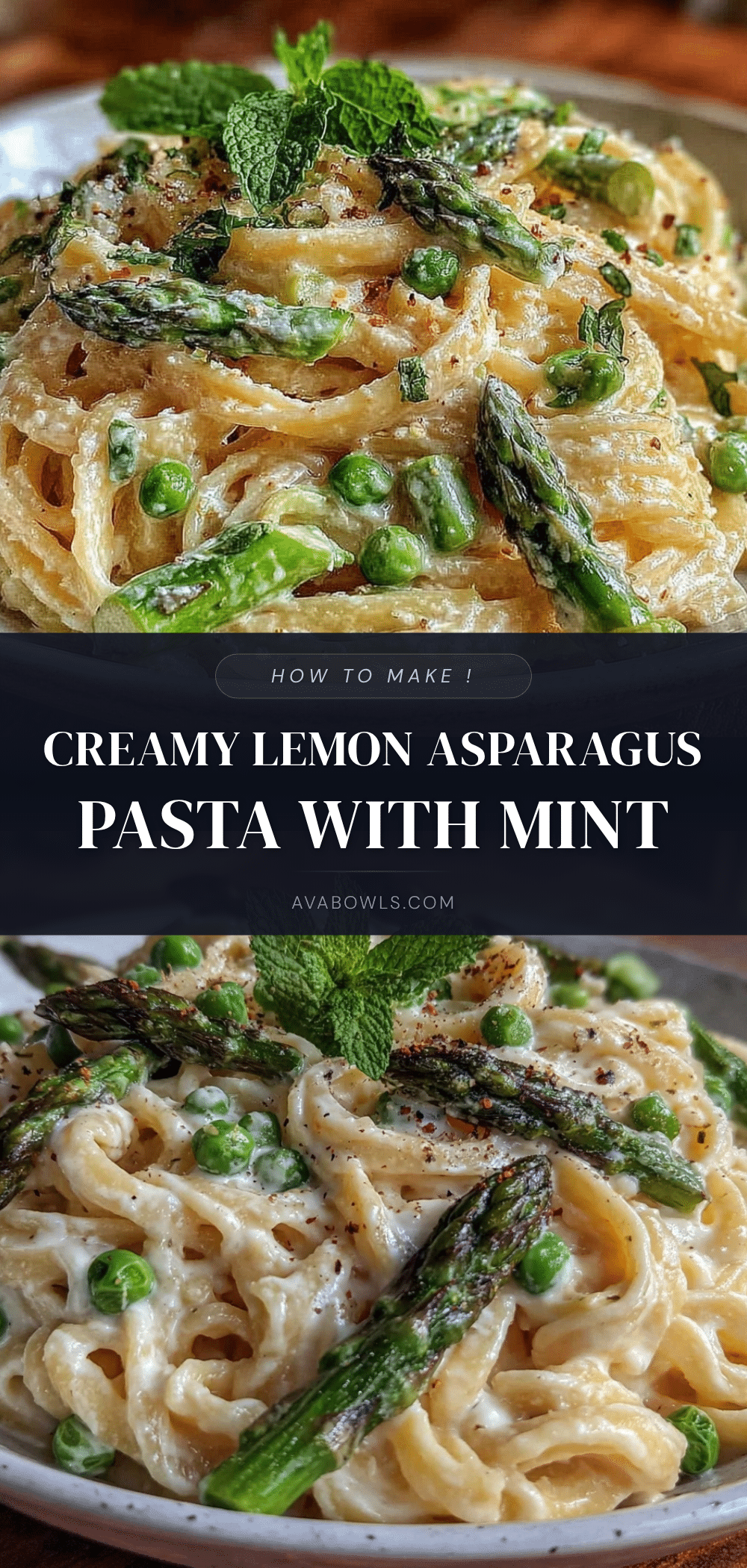
Creamy Lemon Asparagus Pasta with Fresh Peas and Mint
A quick and easy pasta dish featuring tender asparagus, sweet fresh peas, and bright mint in a silky, lemon-kissed cream sauce. Perfect for spring and early summer, this recipe balances fresh flavors with indulgent creaminess.
- Prep Time: 10 minutes
- Cook Time: 15 minutes
- Total Time: 25 minutes
- Yield: 4 servings 1x
- Category: Main Course
- Cuisine: Italian
Ingredients
- 12 ounces fettuccine or linguine pasta
- 1 bunch asparagus (about 1 pound), trimmed and cut into 2-inch pieces
- 1 cup shelled fresh peas (150 grams)
- 1/4 cup chopped fresh mint (about 10 grams)
- Zest and juice of 1 large lemon
- 3/4 cup heavy cream (180 ml)
- 1/2 cup grated Parmesan cheese (about 50 grams)
- 2 tablespoons unsalted butter (30 grams)
- 2 cloves garlic, minced
- 1 tablespoon olive oil
- Salt and freshly cracked black pepper, to taste
Instructions
- Bring a large pot of salted water to a boil. Add the pasta and cook according to package instructions until al dente (usually 10-12 minutes). Reserve 1 cup (240 ml) of pasta water before draining.
- While pasta cooks, heat olive oil and 1 tablespoon butter in a large skillet over medium heat. Add minced garlic and sauté for about 30 seconds until fragrant but not browned.
- Add the asparagus pieces to the skillet. Cook, stirring occasionally, for 4-5 minutes until tender-crisp and bright green. Season lightly with salt and pepper. Add the fresh peas in the last 2 minutes just to warm through.
- Lower the heat. Stir in the heavy cream and lemon zest. Let the mixture simmer gently for 2-3 minutes, stirring occasionally so it thickens slightly.
- Add the grated Parmesan cheese. Stir continuously until melted and smooth. If the sauce feels too thick, add reserved pasta water a few tablespoons at a time until you reach a creamy consistency that coats the back of a spoon.
- Drain the pasta and transfer it directly to the skillet. Toss gently with the sauce and vegetables to combine evenly. Stir in the fresh lemon juice and remaining butter for a glossy finish.
- Turn off the heat and fold in the chopped mint. Taste and adjust salt and pepper as needed.
- Serve immediately. Garnish with extra Parmesan or a sprinkle of mint leaves if desired.
Notes
Do not overcook the asparagus; it should remain slightly crunchy. Add lemon juice last to preserve its fresh flavor and prevent cream curdling. For a gluten-free option, substitute pasta with gluten-free noodles. For dairy-free, use coconut cream and vegan Parmesan. Toss pasta and sauce quickly while hot for best flavor absorption.
Nutrition
- Serving Size: 1 serving (about 1/4
- Calories: 450
- Sugar: 5
- Sodium: 450
- Fat: 22
- Saturated Fat: 12
- Carbohydrates: 45
- Fiber: 5
- Protein: 15
Keywords: creamy lemon asparagus pasta, fresh peas, mint pasta, spring pasta recipe, easy pasta dish, lemon cream sauce, vegetarian pasta