Let me tell you, the moment the scent of vanilla and fresh butter trickled out of my oven, I knew I was onto something truly special. The first time I baked this perfect butterfly cake with spring flowers, I was instantly hooked—the kind of moment where you pause, take a deep breath, and just smile because you know this cake isn’t just pretty; it’s pure, nostalgic comfort wrapped in a delicate, elegant package. Years ago, when I was knee-high to a grasshopper, my grandma used to make simple yellow cakes, but this butterfly cake recipe brings a fresh twist with delicate floral touches that brighten any celebration.
You know what’s funny? My family couldn’t stop sneaking pieces right off the cooling rack (and honestly, I can’t really blame them). This cake has since become a staple at our spring gatherings, birthday parties, and even those unexpected tea afternoons when you want to impress without stress. It’s dangerously easy to make but looks like you spent hours crafting an edible work of art. Perfect for potlucks, bridal showers, or simply brightening up your Pinterest cookie board, this butterfly cake with spring flowers will become your go-to for those elegant celebrations you want to remember.
Honestly, after testing this recipe multiple times (in the name of research, of course), it’s clear this isn’t just another vanilla cake. This one feels like a warm hug with each bite—you’re going to want to bookmark this one for every spring and summer occasion.
Why You’ll Love This Recipe
Having baked countless cakes over the years, this perfect butterfly cake recipe stands out for so many reasons. It’s not just delightful to look at—it delivers on flavor and ease. Here’s why you’re going to fall for it:
- Quick & Easy: This cake comes together in under an hour, making it perfect for busy weeknights or last-minute celebrations.
- Simple Ingredients: No fancy trips to specialty stores; most ingredients are pantry staples you probably have on hand.
- Perfect for Elegant Celebrations: Whether it’s a spring brunch, baby shower, or garden party, this cake adds that touch of class effortlessly.
- Crowd-Pleaser: Kids and adults alike rave about the soft, moist crumb and subtly sweet floral notes.
- Unbelievably Delicious: The balance of fluffy vanilla sponge with light buttercream and fresh spring flowers takes it beyond your average cake.
What makes this recipe different from the rest? Well, it’s the little creative twists—like a perfectly whipped buttercream that’s just sweet enough, and the delicate arrangement of edible spring flowers that make it look almost too pretty to eat. Plus, the cake’s texture is so tender it practically melts in your mouth. This isn’t just a recipe; it’s the kind you close your eyes after the first bite and savor the moment. It’s comfort food reimagined for those elegant celebrations where you want to impress without fuss.
What Ingredients You Will Need
This recipe uses simple, wholesome ingredients to deliver a bold flavor and satisfying texture without the fuss. Most are pantry staples, but the fresh spring flowers add that special seasonal charm.
- For the Cake Batter:
- All-purpose flour – 2 cups (240g), sifted for lightness
- Baking powder – 2 tsp (8g), to give the cake a gentle rise
- Salt – ¼ tsp (1.5g), balances sweetness
- Unsalted butter – ½ cup (115g), softened (I recommend Land O’ Lakes for best creaminess)
- Granulated sugar – 1 cup (200g), for just the right sweetness
- Large eggs – 3, room temperature (helps the batter emulsify better)
- Pure vanilla extract – 2 tsp (10ml), for that warm, classic flavor
- Whole milk – ½ cup (120ml), at room temperature (you can swap for almond milk if dairy-free)
- For the Buttercream Frosting:
- Unsalted butter – 1 cup (230g), softened
- Powdered sugar – 3 cups (360g), sifted for smoothness
- Pure vanilla extract – 1 tsp (5ml)
- Heavy cream – 2 tbsp (30ml), adjust for desired consistency
- For Decoration:
- Edible spring flowers (like pansies, violets, or nasturtiums) – washed and patted dry
- Fresh mint leaves – optional, for a pop of green
Pro tip: When selecting edible flowers, buy from trusted suppliers or grow your own to avoid pesticide risk. If you want a seasonal twist, swap flowers for fresh berries or candied citrus peel—both add a lovely fresh note. You can also use gluten-free flour blend in place of all-purpose to suit dietary needs without losing texture.
Equipment Needed
- Two 8-inch (20 cm) round cake pans – I prefer non-stick for easy release, but lightly greased and lined pans work just fine.
- Mixing bowls – medium and large size
- Electric mixer – handheld or stand mixer (handheld works just as well if you don’t have a stand)
- Measuring cups and spoons – for precise ingredient measurements
- Spatula – for folding batter and smoothing frosting
- Cooling racks – to let the cakes cool evenly (don’t skip this step!)
- Offset spatula – helps with smooth frosting application
- Knife or cake leveler – for trimming the cake layers if needed
If you don’t have fancy cake pans, you can use similar-sized oven-safe dishes, though the cake shape might vary slightly. I learned the hard way that investing in good-quality pans makes a world of difference in even cooking and easy cake release. Also, keep your mixer beaters clean and dry to avoid clumping in your frosting—something I only learned after a few sticky batches!
Preparation Method
- Preheat and Prep: Preheat your oven to 350°F (175°C). Grease the two 8-inch cake pans and line the bottoms with parchment paper. This prevents sticking and helps the cakes come out perfectly smooth. Set aside.
- Mix Dry Ingredients: In a medium bowl, whisk together 2 cups (240g) sifted all-purpose flour, 2 teaspoons (8g) baking powder, and ¼ teaspoon (1.5g) salt. Set aside. This ensures even distribution of the leavening agents for a consistent crumb.
- Cream Butter and Sugar: In a large bowl, beat ½ cup (115g) softened unsalted butter with 1 cup (200g) granulated sugar on medium speed until pale and fluffy—about 3-4 minutes. You want a light texture here, so don’t rush this step (trust me, it makes a difference!).
- Add Eggs and Vanilla: Beat in 3 large eggs one at a time, mixing well after each addition. Stir in 2 teaspoons (10ml) pure vanilla extract. The eggs add richness and help bind the batter; room temperature eggs mix better.
- Alternate Adding Dry Ingredients and Milk: Reduce mixer speed to low. Add the dry ingredients in three parts, alternating with ½ cup (120ml) room temperature whole milk, starting and ending with dry ingredients. Mix just until combined—overmixing can make the cake tough.
- Divide and Bake: Pour the batter evenly into the prepared pans. Smooth the tops with a spatula. Bake for 25-30 minutes or until a toothpick inserted in the center comes out clean. The cake should spring back slightly when touched.
- Cool Completely: Let the cakes cool in the pans for 10 minutes, then turn out onto wire racks to cool completely before frosting. Patience here is key to avoid frosting melting or sliding off.
- Prepare Buttercream Frosting: Beat 1 cup (230g) softened unsalted butter on medium speed until creamy (about 2 minutes). Gradually add 3 cups (360g) sifted powdered sugar, mixing on low speed until combined. Add 1 teaspoon (5ml) vanilla extract and 2 tablespoons (30ml) heavy cream. Beat on high for 3-5 minutes until fluffy and spreadable. If too thick, add a bit more cream; if too thin, add more powdered sugar.
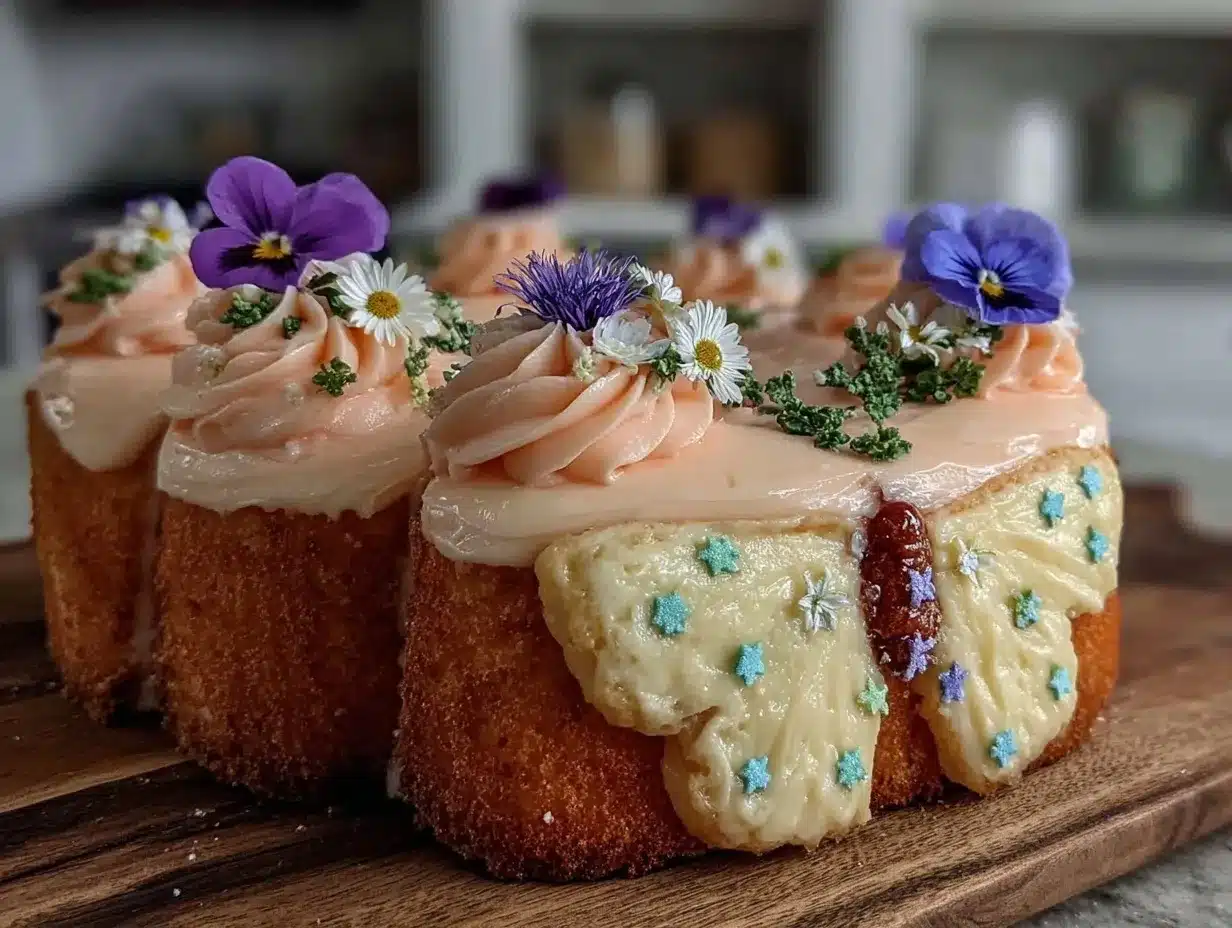
- Assemble the Butterfly Cake: Take one cooled cake layer and, using a knife or cake leveler, cut a circle about 2 inches (5cm) from the edge, then cut that ring in half to form the butterfly wings. Place the inner circle on the cake plate as the butterfly’s body. Spread a layer of buttercream over the base layer and arrange the wings on either side. Frost the wings and the body generously.
- Decorate with Spring Flowers: Gently press edible spring flowers and fresh mint leaves onto the frosting, creating a delicate and elegant floral pattern. Keep flowers away from the edges to prevent them from falling off. Chill briefly to set the frosting if needed.
Tip: If your cake layers dome in the center, level them with a serrated knife before assembling. Also, don’t rush to decorate while the cake is warm—trust me, frosting on a warm cake turns into a melty mess!
Cooking Tips & Techniques
When baking this perfect butterfly cake, a few tricks can save you from common pitfalls. First, always use room temperature ingredients; cold eggs or milk can cause the batter to curdle, leading to a dense cake. I’ve learned this the hard way after a few failed batches!
Next, don’t skip sifting your flour and powdered sugar. It may seem tedious, but it creates a lighter crumb and smoother frosting. Overmixing the batter is another classic mistake—mix just until the dry ingredients disappear to keep the cake tender.
For a silky-smooth buttercream, beat your butter until it’s fluffy before adding sugar, and add sugar gradually. Scrape down the bowl often to avoid lumps. When arranging the butterfly wings, be gentle—these delicate layers can crack if handled roughly. If cracks do happen, a little extra frosting hides them perfectly.
Timing-wise, bake cakes back-to-back if you’re making multiple layers, but let the first cake cool completely before frosting. Multitasking works here: prep frosting while cakes bake, and set aside flowers while cakes cool. This keeps your workflow smooth and stress-free.
Finally, if you want a sturdier cake for transport, chill the assembled cake for at least 30 minutes before moving. This helps the frosting firm up and keeps flowers in place.
Variations & Adaptations
Feel like switching things up? Here are some fun ways to customize your butterfly cake for different tastes and occasions:
- Dietary Adaptation: Use gluten-free flour blend in place of all-purpose flour to make this cake gluten-free without sacrificing texture. Swap dairy butter for vegan butter and almond milk for a dairy-free version that still tastes fabulous.
- Flavor Twist: Add a tablespoon of lemon zest to the batter for a fresh citrus note. You can also fold in ½ cup (75g) finely chopped strawberries or blueberries before baking for a fruity surprise inside.
- Decoration Variation: Instead of spring flowers, try decorating with candied rose petals, pastel-colored sprinkles, or even piped buttercream flowers for a more classic look. For a festive touch, dust the finished cake with edible gold dust or pearlized sugar.
- Cooking Method: If you don’t have cake pans, bake the batter in a 9×13-inch (23×33 cm) pan and cut out your butterfly shapes after baking. Alternatively, use cupcake liners and create mini butterfly cakes for individual servings.
Personally, I once swapped the buttercream for whipped cream frosting topped with fresh strawberries and violets—light, airy, and perfect for a summer garden party. The possibilities are endless, so don’t hesitate to personalize this recipe to suit your style and season.
Serving & Storage Suggestions
This perfect butterfly cake is best served at room temperature, which lets the buttercream soften slightly for that melt-in-your-mouth experience. Present it on a pretty cake stand or platter to showcase those delicate spring flowers—it makes an elegant centerpiece for any celebration.
Pair it with a light herbal tea, like chamomile or mint, or a crisp glass of sparkling lemonade for a refreshing contrast. It’s also lovely alongside fresh fruit salad or a scoop of vanilla bean ice cream if you want to get fancy.
To store, cover the cake loosely with a cake dome or plastic wrap and keep it in the refrigerator for up to 3 days. Before serving, let it sit at room temperature for about 30 minutes to bring back that soft texture. If you need to store longer, freeze the unfrosted cake layers wrapped tightly in plastic wrap and foil for up to 2 months. Thaw overnight in the fridge before assembling and frosting.
Reheating isn’t really needed here, but if you like a warm slice, pop it in a microwave for 10-15 seconds. Just be careful not to melt the flowers if they’re still on top!
One neat thing I’ve noticed is that the flavors in this cake actually deepen after a day—so if you can resist, a little patience rewards you with an even more luscious experience.
Nutritional Information & Benefits
This perfect butterfly cake is a treat, but it’s made with simple, wholesome ingredients. Each serving (about 1/12th of the cake) contains roughly 320 calories, 15 grams of fat, 40 grams of carbohydrates, and 3 grams of protein. The use of real butter and fresh eggs means you’re getting some essential fats and nutrients, not just empty calories.
The edible flowers add a subtle nutritional boost too—they contain antioxidants and vitamins, brightening the cake both visually and nutritionally. Using whole milk or almond milk can slightly affect calories but keeps it balanced.
If you’re watching gluten intake, swapping to gluten-free flour makes this recipe accessible without losing charm. It’s not a low-calorie dessert, but honestly, it’s worth every bite for those special occasions when you want pure joy on a plate.
Conclusion
All in all, this perfect butterfly cake with spring flowers is a recipe you’ll want to keep close for any elegant celebration. It’s simple enough to tackle even if you’re not a baking pro, yet stunning enough to impress friends and family alike. What I love most is how customizable it is—you can make it your own with different flowers, flavor tweaks, or dietary swaps.
Give it a try, and don’t be shy about experimenting. Your elegant celebrations deserve a cake that brings smiles and sweet memories. If you make this recipe, I’d love to hear how you decorated or personalized it—drop a comment below or share your photos! This butterfly cake is more than dessert; it’s a little piece of sunshine on your table.
Happy baking, and here’s to many beautiful celebrations ahead!
FAQs
Can I use other flowers besides pansies for decorating?
Absolutely! Edible flowers like violets, nasturtiums, or rose petals work beautifully. Just make sure they’re pesticide-free and safe to eat.
How do I store leftover cake?
Cover the cake with a cake dome or plastic wrap and refrigerate for up to 3 days. Let it come to room temperature before serving for best texture.
Can I make this cake dairy-free?
Yes! Use dairy-free butter and almond or oat milk instead of dairy milk. The cake will still be moist and delicious.
What’s the best way to level cake layers?
Use a serrated knife or a cake leveler to trim off any domed tops for even layers. This makes assembling and decorating easier.
Can I prepare this cake ahead of time?
You can bake the layers a day ahead and store them wrapped tightly in the fridge. Assemble and decorate on the day you plan to serve for freshest results.
Pin This Recipe!
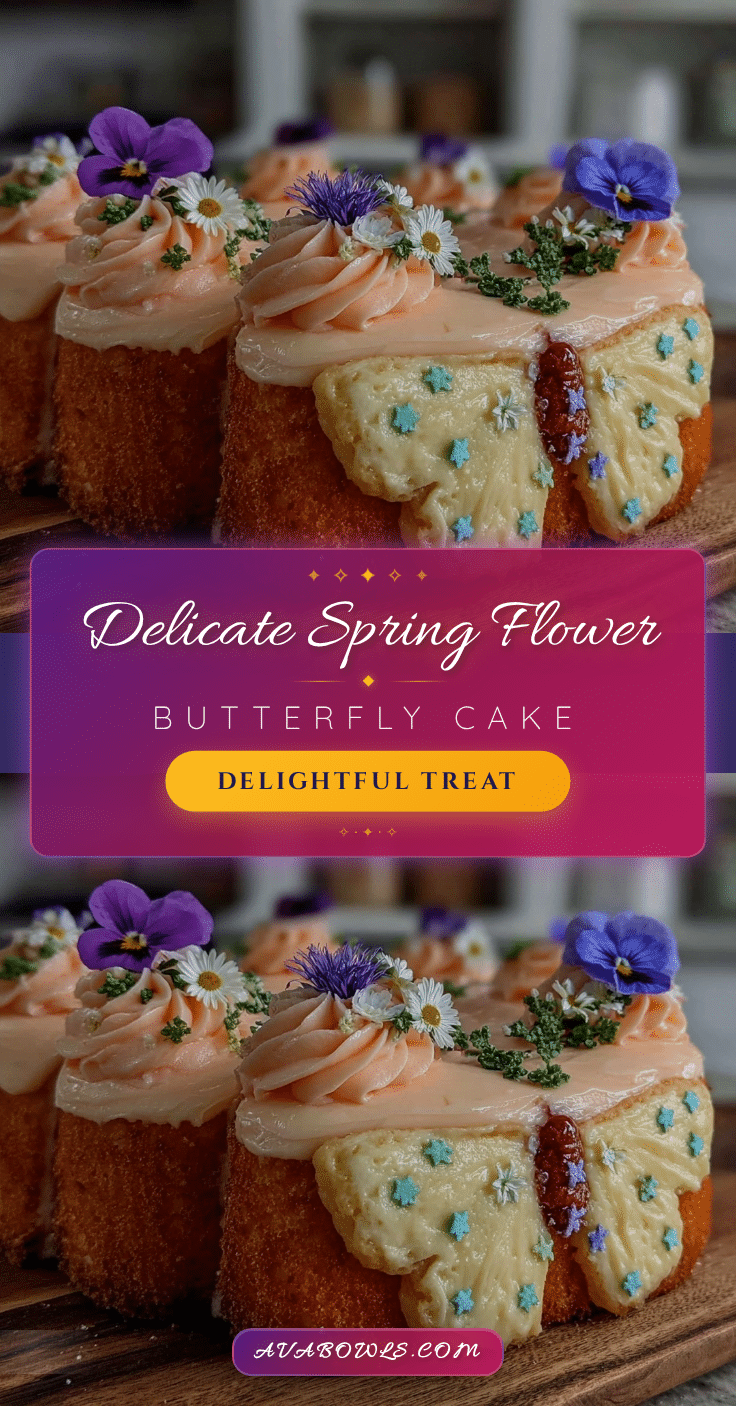
Perfect Butterfly Cake Recipe with Spring Flowers for Elegant Celebrations
A delicate and elegant vanilla butterfly cake adorned with edible spring flowers, perfect for spring gatherings, bridal showers, and special celebrations. This cake features a moist vanilla sponge with light buttercream frosting and a beautiful floral decoration.
- Prep Time: 20 minutes
- Cook Time: 30 minutes
- Total Time: 50 minutes
- Yield: 12 servings 1x
- Category: Dessert
- Cuisine: American
Ingredients
- 2 cups (240g) all-purpose flour, sifted
- 2 tsp (8g) baking powder
- 1/4 tsp (1.5g) salt
- 1/2 cup (115g) unsalted butter, softened
- 1 cup (200g) granulated sugar
- 3 large eggs, room temperature
- 2 tsp (10ml) pure vanilla extract
- 1/2 cup (120ml) whole milk, room temperature (can substitute almond milk for dairy-free)
- 1 cup (230g) unsalted butter, softened (for buttercream)
- 3 cups (360g) powdered sugar, sifted
- 1 tsp (5ml) pure vanilla extract (for buttercream)
- 2 tbsp (30ml) heavy cream (for buttercream)
- Edible spring flowers (pansies, violets, nasturtiums), washed and patted dry
- Fresh mint leaves (optional)
Instructions
- Preheat oven to 350°F (175°C). Grease two 8-inch round cake pans and line bottoms with parchment paper.
- In a medium bowl, whisk together sifted flour, baking powder, and salt. Set aside.
- In a large bowl, beat softened butter and granulated sugar on medium speed until pale and fluffy, about 3-4 minutes.
- Beat in eggs one at a time, mixing well after each addition. Stir in vanilla extract.
- Reduce mixer speed to low. Add dry ingredients in three parts, alternating with milk, starting and ending with dry ingredients. Mix just until combined.
- Divide batter evenly between prepared pans and smooth tops. Bake 25-30 minutes or until a toothpick inserted in center comes out clean.
- Cool cakes in pans for 10 minutes, then turn out onto wire racks to cool completely.
- For buttercream, beat softened butter on medium speed until creamy, about 2 minutes. Gradually add powdered sugar on low speed until combined.
- Add vanilla extract and heavy cream. Beat on high for 3-5 minutes until fluffy and spreadable. Adjust consistency with more cream or powdered sugar as needed.
- To assemble, cut a 2-inch circle from the edge of one cake layer, then cut that ring in half to form butterfly wings. Place inner circle on cake plate as body.
- Spread buttercream over base layer, arrange wings on either side, and frost wings and body generously.
- Decorate with edible spring flowers and fresh mint leaves, pressing gently onto frosting. Chill briefly if needed to set frosting.
Notes
Use room temperature ingredients for best results. Sift flour and powdered sugar to ensure light texture and smooth frosting. Avoid overmixing batter to keep cake tender. Chill assembled cake for at least 30 minutes before transport to set frosting and secure flowers. For gluten-free version, substitute all-purpose flour with gluten-free flour blend. Dairy-free options include vegan butter and almond milk.
Nutrition
- Serving Size: 1 slice (1/12th of c
- Calories: 320
- Fat: 15
- Carbohydrates: 40
- Protein: 3
Keywords: butterfly cake, spring flowers cake, vanilla cake, elegant cake, buttercream frosting, edible flowers, celebration cake, easy cake recipe