“What if we just stayed in tonight?” she asked, scrolling through another overpriced prix-fixe menu on her phone. And that was it. I had been planning some big, elaborate Valentine’s Day surprise—reservations at that new spot downtown, the one with the tasting menu and the tiny, artistic plates. But her question hung in the air, and honestly, it sounded so much better. Staying in. No reservations. No rush. Just us.
I started rummaging through the fridge, pulling out the leftover salami from last weekend’s party, a wedge of brie that was begging to be eaten, and a jar of those cornichons I’d impulse-bought at the market. I grabbed a wooden board my mom had given me years ago—the one that’s seen a thousand casual dinners—and just started arranging things. It wasn’t a plan. It was a feeling. This easy romantic charcuterie board for two wasn’t about fancy presentation or rare ingredients. It was about creating a moment without the stress.
The whole thing came together in about fifteen minutes, which is faster than it takes to get dressed for a dinner out. And as we sat there on the couch, picking at cheese and cured meats, talking about everything and nothing, I realized that this was the kind of romance that actually sticks. It’s not about the fuss. It’s about the quiet, shared experience. That night, the simple act of building a board together felt more intimate than any crowded restaurant could ever be.
Why You’ll Love This Recipe
This isn’t just another snack plate. This is a carefully curated experience designed for two people to share, designed to feel special without needing a culinary degree. I’ve tested this combination more times than I can count—for date nights, anniversaries, and even solo movie marathons where I pretended the second glass of wine was for a guest. Here is why this particular board works so well.
- Quick & Easy : From fridge to table in under 20 minutes. No cooking, no complicated steps, and zero cleanup that requires more than a quick rinse of the board.
- Simple Ingredients : You can find everything at a standard grocery store. There is no need for a specialty cheese shop or a trip to a fancy deli—though you can certainly upgrade if you want to.
- Perfect for Date Night : Whether it’s Valentine’s Day, an anniversary, or just a Tuesday that needs a little spark, this board sets the tone for a relaxed, connected evening. It pairs beautifully with a bottle of wine and some good conversation.
- Crowd-Pleaser : Even if you have different tastes, this board offers something for everyone. The combination of savory, sweet, salty, and tangy hits all the right notes.
- Unbelievably Romantic : There is something inherently intimate about sharing food from a single board. It encourages grazing, sharing, and the kind of slow, lingering meal that feels like a true luxury.
What makes this board different from the rest is the balance. I’ve learned that a great charcuterie board isn’t just about piling things on a plank. It’s about texture and flavor contrast. The creamy brie against the sharp cheddar, the salty prosciutto next to the sweet honey, the briny olives cutting through the rich salami. This isn’t just another version of a snack plate—it is my best version, honed through years of casual entertaining and quiet nights in. It’s the kind of meal that makes you close your eyes after the first bite, not because it’s fancy, but because it’s just right.
What Ingredients You Will Need
This recipe uses simple, high-quality ingredients to deliver a board that feels both luxurious and approachable. The beauty of a charcuterie board is its flexibility, but for this classic romantic version, I’ve chosen ingredients that complement each other perfectly. Most of these are pantry staples or easy to find at any supermarket.
- For the Meats (The Savory Base):
- 4 oz Prosciutto, thinly sliced (look for a brand like La Quercia or Boar’s Head for quality)
- 4 oz Genoa Salami, thinly sliced (I prefer the one from Columbus Craft Meats for its peppery finish)
- 4 oz Soppressata, thinly sliced (a spicy, rustic salami that adds a nice kick)
- For the Cheeses (The Creamy Heart):
- 4 oz Brie, at room temperature (a soft-ripened cheese that becomes wonderfully gooey)
- 4 oz Sharp White Cheddar, cubed (adds a firm, nutty contrast to the soft cheeses)
- 4 oz Manchego, sliced into thin wedges (a firm, buttery Spanish sheep’s milk cheese)
- For the Accompaniments (The Flavor Bridges):
- 1/4 cup Fig Jam or Apricot Preserves (adds a touch of sweetness that pairs beautifully with the salty meats)
- 1/4 cup Honey, for drizzling (use a local honey for a unique floral note)
- 1/4 cup Marcona Almonds (these are saltier and more buttery than regular almonds)
- 1/4 cup Castelvetrano Olives (mild, buttery green olives that are a crowd-pleaser)
- 1/4 cup Cornichons (small, tart pickles that cut through the richness of the meats and cheese)
- 1/4 cup Dried Apricots or Figs (adds a chewy, sweet element)
- For the Fresh Elements (The Finishing Touches):
- A small handful of Fresh Grapes (red or green, for a burst of juicy sweetness)
- A few sprigs of Fresh Rosemary or Thyme (for garnish and a subtle herbaceous aroma)
- Optional: A small baguette, sliced and lightly toasted, or a box of your favorite crackers (I love a good water cracker for its neutral flavor)
When selecting your ingredients, look for prosciutto that is a deep, rosy pink with a good amount of marbling. For the brie, it should feel slightly soft to the touch but not runny. If you can’t find Manchego, a good aged Gouda works wonderfully as a substitute. The fig jam is a non-negotiable for me—it ties the whole board together in a way that plain honey just can’t. For a fresh and healthy dip alternative, you could add a small bowl of herbed Greek yogurt, but for this romantic version, the fig jam is the star.
Equipment Needed
You don’t need a lot of fancy gear to make a beautiful charcuterie board. In fact, the less equipment you use, the more rustic and inviting it feels. Here is what I recommend having on hand.
- A Large Wooden Board or Slate Platter: This is the star of the show. A wooden board retains some warmth and looks incredibly inviting. If you don’t have one, a large cutting board or even a baking sheet lined with parchment paper will work perfectly. I have a round acacia wood board that I found at a home goods store for under $20, and it is my most-used kitchen item for entertaining.
- Small Bowls (Ramekins): You will need at least two small bowls—one for the fig jam or honey, and one for the olives. This prevents wet ingredients from making your crackers or meats soggy. I use a set of small ceramic ramekins that I got for a few dollars at a thrift store.
- Cheese Knives: While not strictly necessary, having a small spreader for the brie and a small fork for the olives makes the experience feel more polished. If you don’t have cheese knives, a butter knife and a regular fork work just fine.
- A Sharp Knife and Cutting Board: You will need a sharp knife to slice the baguette (if using) and to cube the cheddar. A serrated bread knife is best for the baguette.
- Cheesecloth or Parchment Paper (Optional): If you are using a very porous wooden board, you might want to lay down a piece of parchment paper or cheesecloth underneath the hard cheeses to prevent any staining. I personally skip this for the rustic look, but it is a good tip if you are using a brand-new board.
My biggest tip? Don’t overthink the equipment. I once made a stunning board for a friend’s birthday using a clean pizza peel because I had misplaced my wooden board. It worked perfectly and added to the casual, fun vibe. The focus should be on the food and the company, not on having the perfect platter.
Preparation Method
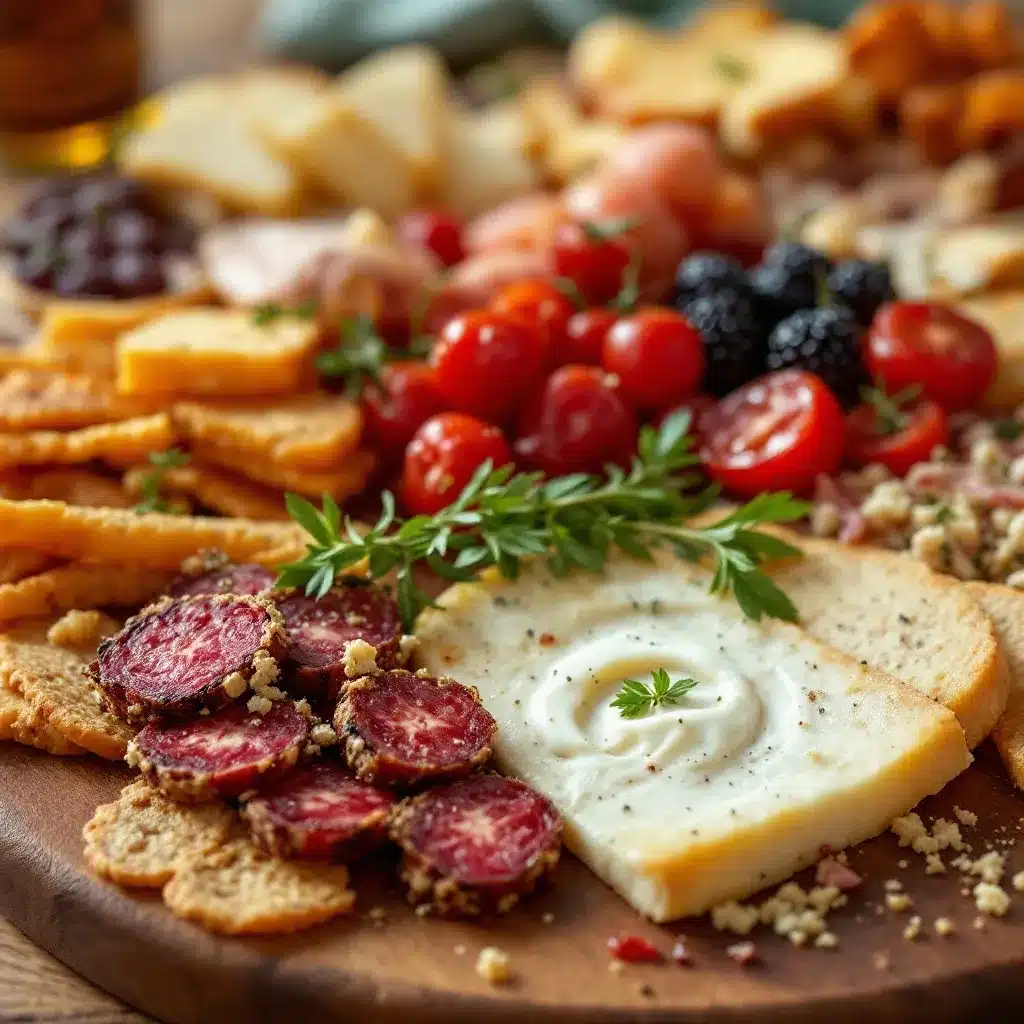
Assembling a charcuterie board is more about art than science, but there is a method to the madness that ensures everything looks and tastes its best. Follow these steps, and you will have a board that looks like it came from a fancy wine bar.
- Prep Your Ingredients (5 minutes): Start by taking your cheeses out of the refrigerator about 20 minutes before you plan to assemble the board. This allows them to come to room temperature, which enhances their flavor and texture. While the cheese warms up, slice the baguette into 1/2-inch thick rounds and lightly toast them in a 350°F oven for about 5 minutes, or until just golden. Cube the sharp cheddar into 1-inch pieces and slice the Manchego into thin wedges. Rinse the grapes and pat them dry.
- Place Your Bowls (2 minutes): Position your small ramekins on the board first. This is a crucial step because the bowls act as anchors for the rest of your arrangement. Place one bowl for the fig jam and one for the olives. I like to put them at opposite ends of the board to create a sense of balance. If you are using honey in a separate bowl, add that as well.
- Layer the Cheeses (3 minutes): Place the brie (still in its rind) on the board. Position it near the center-left or center-right, slightly off-center. Place the cubed cheddar and the Manchego wedges in different areas of the board. Do not cluster all the cheese together. You want the eye to travel around the board. Pro tip: fold a slice of prosciutto and place it under the brie to create a little “nest” for it—it looks beautiful and adds flavor.
- Arrange the Meats (4 minutes): This is where you can get creative. For the prosciutto, take each slice and fold it loosely into a ribbon or a small rosette. Place the rosettes near the brie. For the salami and soppressata, you can either leave them in thin slices or fold them into quarters. I like to fan them out in a line or a small pile. The key is to create volume and texture. Don’t just lay them flat—let them cascade over each other.
- Fill the Gaps with Accompaniments (4 minutes): Now, fill in the empty spaces on the board. Add small piles of the Marcona almonds, cornichons, and dried apricots or figs. Scatter the fresh grapes in a few small clusters around the board. The goal is to create a sense of abundance, so don’t be afraid to pile things up a little. If you see a bare spot, add a few more almonds or a couple of crackers.
- Add the Crackers and Bread (2 minutes): Arrange the toasted baguette slices and your crackers around the edges of the board, leaning them against the cheese or meats. This creates a beautiful, layered look. You can also tuck a few crackers into the folds of the salami for a fun, playful touch.
- Garnish and Finish (1 minute): Drizzle a little honey over the brie and the manchego. Place a few sprigs of fresh rosemary or thyme on the board for a pop of green and a subtle, aromatic finish. Give everything a final look. If something feels off, move it. The beauty of a charcuterie board is that it is endlessly forgiving.
One of my favorite tricks is to add a small bowl of creamy beer cheese pretzel dip on the side for a fun, unexpected twist. It adds a warm, comforting element that pairs surprisingly well with the cured meats. But for this classic board, the simplicity is the point.
Cooking Tips & Techniques
Over the years, I’ve made a few mistakes with charcuterie boards—like the time I put the brie next to the hot oven and it turned into a puddle. Here are the lessons I’ve learned so you don’t have to repeat them.
- The Room Temperature Rule is Real: I cannot stress this enough. Cheese straight from the fridge is bland and rubbery. Let it sit out for at least 20-30 minutes before serving. This allows the fats to soften and the flavors to fully develop. A good rule of thumb is to take the cheese out when you start setting the table.
- Don’t Overcrowd the Board: It is tempting to pile everything on, but a crowded board looks messy and makes it hard for guests to pick things up. Leave a little bit of breathing room between the elements. If you have too many ingredients, use a second board or a smaller plate for the extras.
- Balance Textures and Flavors: A great board has a mix of soft and hard cheeses, mild and spicy meats, sweet and salty accompaniments. If all your cheeses are soft, the board feels one-note. If all your meats are spicy, it becomes overwhelming. Think of it like a symphony—each element has a role to play.
- Prep Everything Before You Start: Charcuterie assembly should be a relaxing, creative process. Don’t be running back and forth to the fridge for ingredients. Have everything washed, sliced, and ready to go before you touch the board. This makes the whole process feel effortless.
- Use the “Three-Bite” Rule: When arranging, think about how someone will eat the board. They should be able to take a bite of cheese, a bite of meat, and a bite of something sweet or acidic in a single mouthful. This is why I always place the cornichons and fig jam near the salami—they are meant to be eaten together.
I once forgot to take the brie out of the fridge, and I tried to speed things up by microwaving it for a few seconds. It turned into a rubbery mess. Don’t do that. Patience is the secret ingredient here.
Variations & Adaptations
One of the best things about a charcuterie board is how adaptable it is. You can change it up based on the season, your dietary needs, or just your mood. Here are a few of my favorite variations.
- Seasonal Summer Board: Swap the dried apricots for fresh, juicy figs or sliced peaches. Add a handful of fresh raspberries or blackberries. Replace the Manchego with a fresh, creamy goat cheese. A drizzle of balsamic glaze over the berries adds a lovely tang.
- Spicy & Smoky Board: For a bolder flavor profile, use spicy chorizo instead of soppressata. Add a few slices of smoked gouda and some pickled jalapeños. A small bowl of spicy honey (honey infused with chili flakes) is a game-changer. This version pairs perfectly with a cold beer or a smoky mezcal cocktail.
- Vegetarian Board: Skip the meats entirely and double up on the cheese. Add some marinated artichoke hearts, roasted red peppers, and a variety of olives. A wedge of baked brie with a drizzle of honey and some chopped walnuts is a stunning centerpiece. You can also add some crispy baked buffalo cauliflower bites for a warm, spicy element that fills the savory void.
- Sweet & Savory Board: For a brunch or dessert twist, add some dark chocolate squares, fresh strawberries, and a dollop of mascarpone cheese. Pair this with a sparkling wine or a creamy latte. It’s a decadent, romantic treat that feels like a special occasion.
I once made a board for a friend who was vegan, and I used a cashew-based cheese, marinated mushrooms, and roasted chickpeas. It was a hit. The key is to keep the same principles of balance and texture, just with different ingredients.
Serving & Storage Suggestions
This board is best served immediately, at room temperature, with a glass of your favorite wine. A crisp Sauvignon Blanc or a light Pinot Noir are classic pairings that won’t overpower the delicate flavors of the cheese and meat. For a non-alcoholic option, a sparkling water with a splash of pomegranate juice is lovely.
If you are planning a surprise and need to make the board ahead of time, you can prep all the ingredients up to a day in advance. Store the sliced meats and cubed cheese in separate airtight containers in the refrigerator. The accompaniments (almonds, olives, dried fruit) can be stored at room temperature. When you are ready to serve, simply arrange everything on the board. The board itself should not be assembled more than an hour before serving, as the crackers can get stale and the cheese can dry out.
Storing Leftovers: If you have any leftover meat and cheese (which is rare in my house!), wrap them tightly in plastic wrap or store them in an airtight container. They will keep in the refrigerator for 3-4 days. The leftover olives and almonds can be stored in their original containers. The board itself should be wiped clean with a damp cloth and dried immediately to prevent the wood from warping.
Reheating Tips: This board is served cold or at room temperature, so there is no reheating required. However, if you have leftover toasted baguette slices, you can refresh them in a 300°F oven for a few minutes to crisp them back up. The flavors of the cheese and meat actually improve over time, so leftovers make for a fantastic lunch the next day.
Nutritional Information & Benefits
While a charcuterie board is an indulgence, it does offer some surprising nutritional benefits when enjoyed in moderation. The key is portion control—this board is designed for two people, so you get a satisfying amount without overdoing it.
| Nutrient | Approximate Value (Per Serving) |
|---|---|
| Calories | 450-550 |
| Protein | 25-30g |
| Fat | 35-40g |
| Carbohydrates | 20-25g |
| Fiber | 3-5g |
| Sugar | 10-15g |
Pin This Recipe!
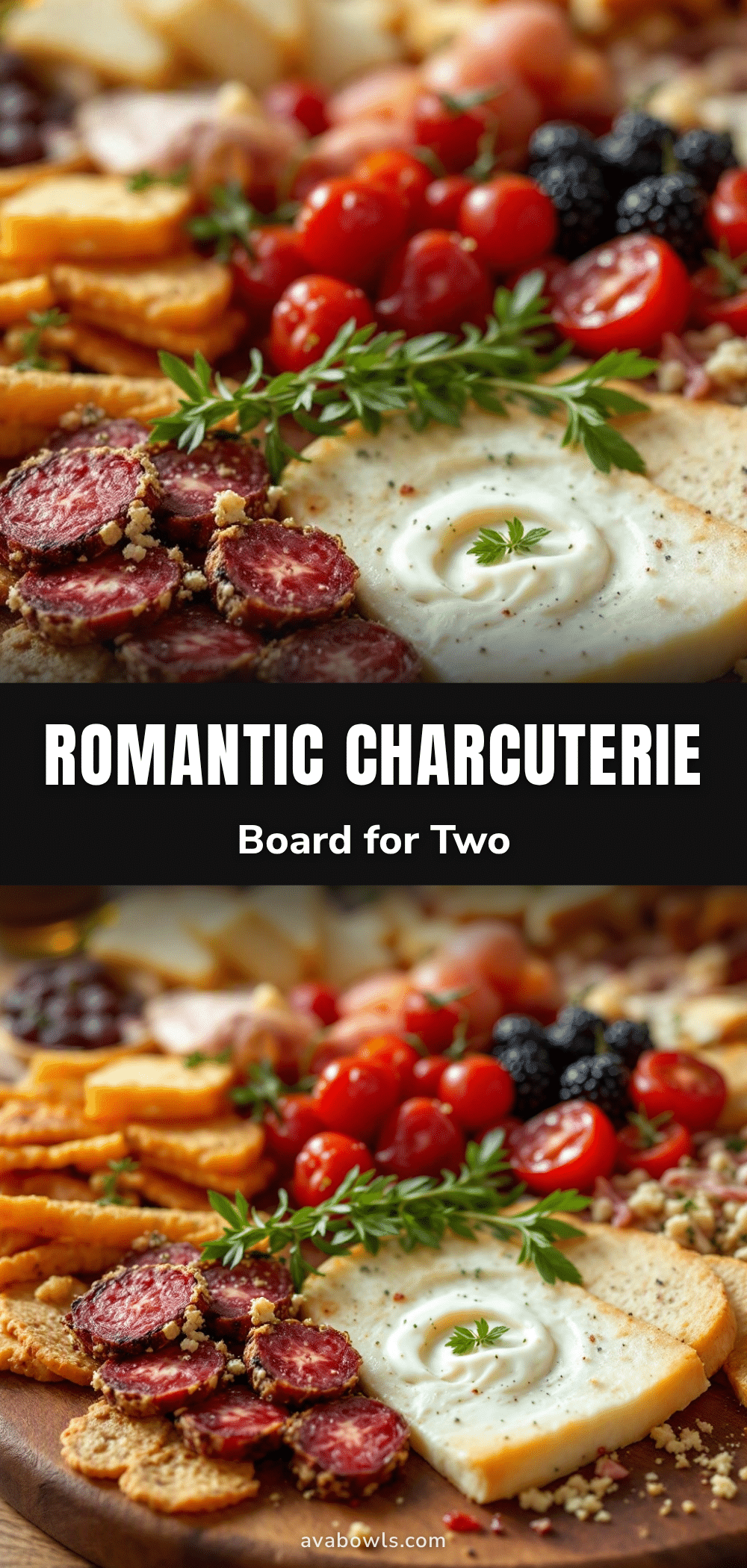
Easy Romantic Charcuterie Board for Two Recipe
A quick and easy charcuterie board designed for two, featuring a balanced selection of cured meats, cheeses, and accompaniments. Perfect for a relaxed date night or any occasion that calls for a simple, shared meal.
- Prep Time: 15 minutes
- Cook Time: 5 minutes
- Total Time: 20 minutes
- Yield: 2 servings 1x
- Category: Appetizer
- Cuisine: French
Ingredients
- 4 oz Prosciutto, thinly sliced
- 4 oz Genoa Salami, thinly sliced
- 4 oz Soppressata, thinly sliced
- 4 oz Brie, at room temperature
- 4 oz Sharp White Cheddar, cubed
- 4 oz Manchego, sliced into thin wedges
- 1/4 cup Fig Jam or Apricot Preserves
- 1/4 cup Honey
- 1/4 cup Marcona Almonds
- 1/4 cup Castelvetrano Olives
- 1/4 cup Cornichons
- 1/4 cup Dried Apricots or Figs
- A small handful of Fresh Grapes (red or green)
- A few sprigs of Fresh Rosemary or Thyme
- Optional: A small baguette, sliced and lightly toasted, or a box of your favorite crackers
Instructions
- Prep Your Ingredients (5 minutes): Start by taking your cheeses out of the refrigerator about 20 minutes before you plan to assemble the board. This allows them to come to room temperature, which enhances their flavor and texture. While the cheese warms up, slice the baguette into 1/2-inch thick rounds and lightly toast them in a 350°F oven for about 5 minutes, or until just golden. Cube the sharp cheddar into 1-inch pieces and slice the Manchego into thin wedges. Rinse the grapes and pat them d…
- Place Your Bowls (2 minutes): Position your small ramekins on the board first. This is a crucial step because the bowls act as anchors for the rest of your arrangement. Place one bowl for the fig jam and one for the olives. I like to put them at opposite ends of the board to create a sense of balance. If you are using honey in a separate bowl, add that as well.
- Layer the Cheeses (3 minutes): Place the brie (still in its rind) on the board. Position it near the center-left or center-right, slightly off-center. Place the cubed cheddar and the Manchego wedges in different areas of the board. Do not cluster all the cheese together. You want the eye to travel around the board. Pro tip: fold a slice of prosciutto and place it under the brie to create a little ‘nest’ for it—it looks beautiful and adds flavor.
- Arrange the Meats (4 minutes): This is where you can get creative. For the prosciutto, take each slice and fold it loosely into a ribbon or a small rosette. Place the rosettes near the brie. For the salami and soppressata, you can either leave them in thin slices or fold them into quarters. I like to fan them out in a line or a small pile. The key is to create volume and texture. Don’t just lay them flat—let them cascade over each other.
- Fill the Gaps with Accompaniments (4 minutes): Now, fill in the empty spaces on the board. Add small piles of the Marcona almonds, cornichons, and dried apricots or figs. Scatter the fresh grapes in a few small clusters around the board. The goal is to create a sense of abundance, so don’t be afraid to pile things up a little. If you see a bare spot, add a few more almonds or a couple of crackers.
- Add the Crackers and Bread (2 minutes): Arrange the toasted baguette slices and your crackers around the edges of the board, leaning them against the cheese or meats. This creates a beautiful, layered look. You can also tuck a few crackers into the folds of the salami for a fun, playful touch.
- Garnish and Finish (1 minute): Drizzle a little honey over the brie and the manchego. Place a few sprigs of fresh rosemary or thyme on the board for a pop of green and a subtle, aromatic finish. Give everything a final look. If something feels off, move it. The beauty of a charcuterie board is that it is endlessly forgiving.
Notes
Let cheeses come to room temperature for 20-30 minutes before serving for best flavor. Use small ramekins for wet ingredients to prevent sogginess. The board can be prepped a day in advance but assemble no more than an hour before serving.
Nutrition
- Serving Size: 1 serving (half of t
- Calories: 500
- Sugar: 12.5
- Sodium: 1200
- Fat: 37.5
- Saturated Fat: 15
- Carbohydrates: 22.5
- Fiber: 4
- Protein: 27.5
Keywords: charcuterie board, romantic dinner, date night, easy appetizer, cheese board, cured meats, Valentine's Day